


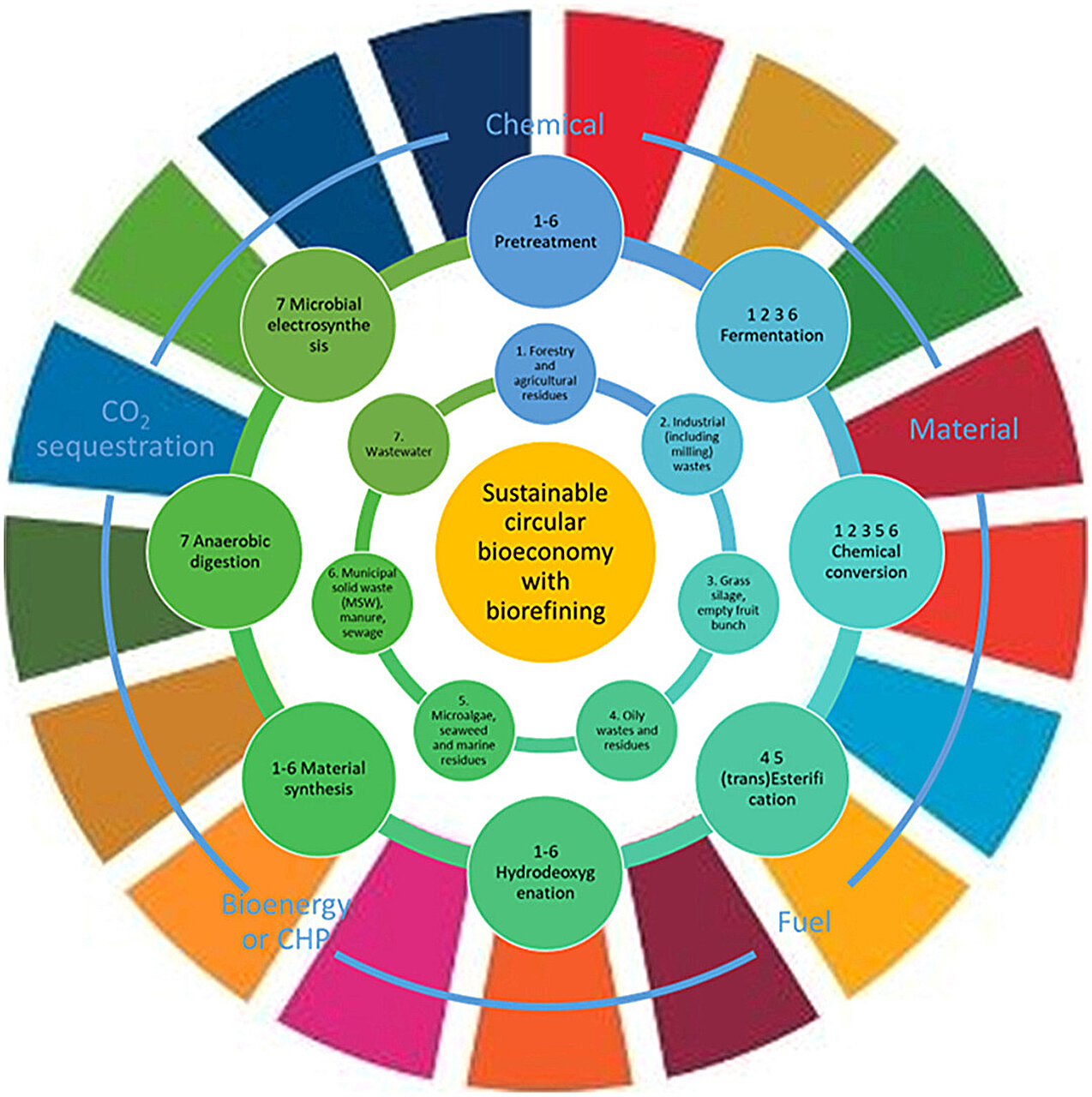
Mexico could grow its economy while saving the planet by building biorefineries that can turn seaweed, sugar cane, cooking oil and even vegetable peel into fuel and pharmaceuticals. Now, the country needs a new ‘bioeconomy plan’ to unlock its potential, according to a large study from the University of Surrey and Mexico’s Instituto Mexicano del Petroleo, published in the Journal of Cleaner Production.
Professor Jhuma Sadhukhan, from Surrey’s School of Civil and Environmental Engineering, said, “In the drive to net zero, it’s easy to fixate on growing crops to fuel our homes or cars. Our study shows Mexico can do so much more.
“Around the world, businesses are turning biomass into shoe soles, or skin cream. With the right investment and the right plan, there is no reason Mexico cannot lead the world in this growing industry.”
There are plenty of reasons to prefer biological material from agricultural, forestry or municipal waste over fossil fuels. Plants are renewable and absorb carbon dioxide while they grow.
Yet, biofuels are just one of many ways to replace fossil fuels in the chemical industry. For example, Mexico could produce 20 million tons of seaweed a year. This can be used to extract proteins and chemicals for making shoes, packaging or face cream.
The key is to build biorefineries—large plants that turn organic matter into chemicals. The more products made in the same facility, the better for the environment and the economy. Even better—they could generate energy and heat at the same time.
A biorefinery producing 220 kilotons per annum costs about the same as a petrochemical facility: $750 million.
Now, Mexico needs a national bioeconomy plan—removing barriers to make that investment work. The plan should carefully choose which plants to make into which chemicals—so the industry can be as sustainable and profitable as possible.
More information:
Jhuma Sadhukhan et al, Strategic navigation of world-leading biorefineries and Mexico’s policy landscape: A gateway to a sustainable circular bioeconomy, Journal of Cleaner Production (2023). DOI: 10.1016/j.jclepro.2023.140386
University of Surrey
Read the full article here


