


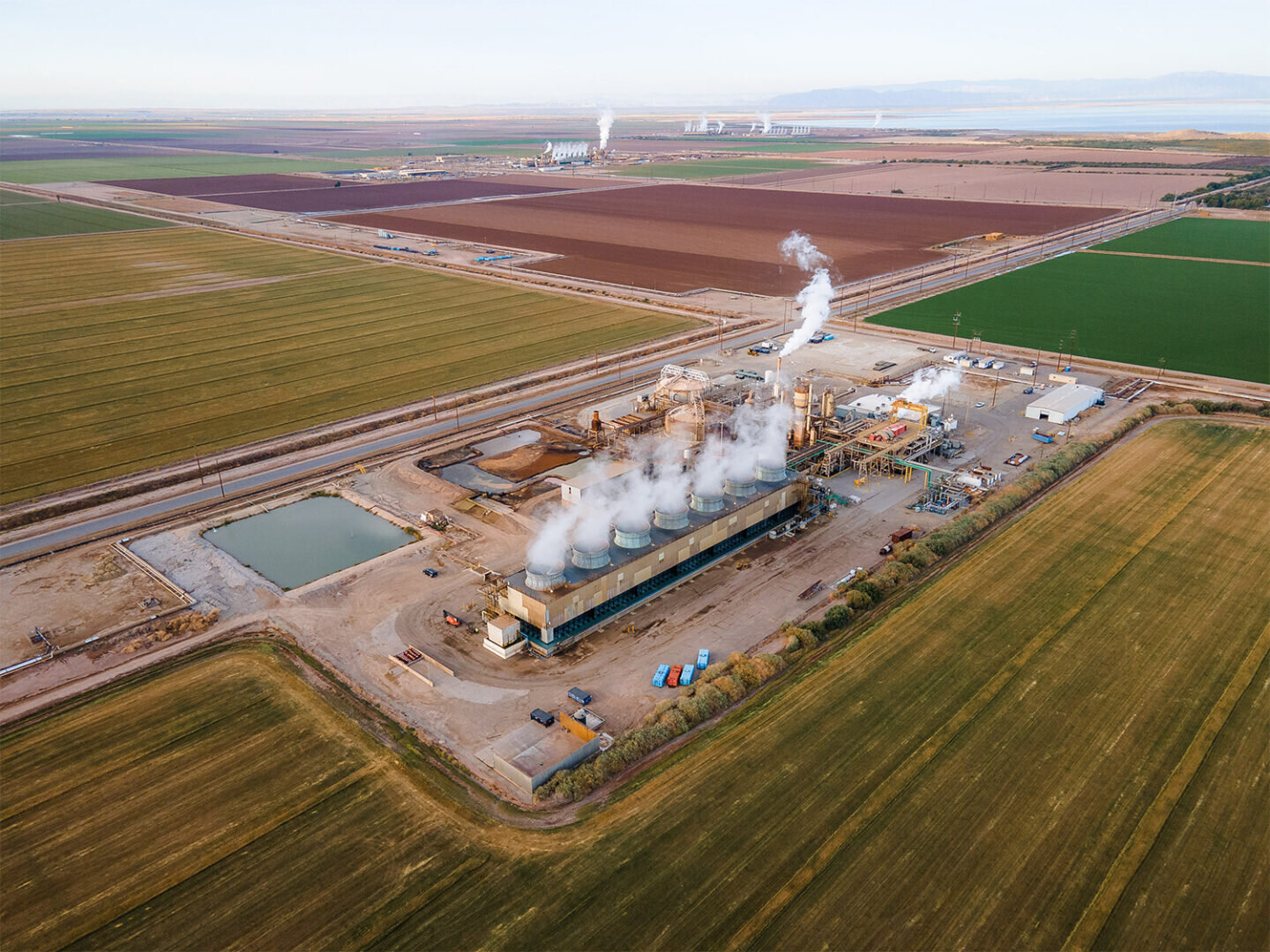
On Nov. 28, The U.S. Department of Energy announced results of the most comprehensive analysis to date quantifying the domestic lithium resources in southern California’s Salton Sea region.
The analysis led by DOE’s Lawrence Berkeley National Laboratory (Berkeley Lab) found that with expected technology advances, total resources in the region could contain more than 3,400 kilotons of lithium, enough to support over 375 million batteries for electric vehicles (EV)—more than the total number of vehicles currently on U.S. roads.
“Our analysis concludes that the geothermal brines from the Salton Sea Known Geothermal Resource Area have significant potential as a domestic source of lithium,” says Patrick Dobson, lead author and geological scientist at Berkeley Lab.
“Lithium is a critical mineral used in batteries for stationary storage and EVs, and a crucial component of our nation’s transition to a more sustainable and renewable future.”
The United States currently has limited capabilities to recover, refine, and produce domestically sourced lithium, meaning nearly all lithium for U.S. needs must be imported. Geothermal brines, which are a byproduct of geothermal electricity generation, can have high concentrations of minerals like lithium and zinc.
While exact concentrations of these minerals depend on the location and surrounding geology, the use of direct lithium extraction (DLE) from geothermal brines offers a promising opportunity to couple clean, renewable electricity with a source of domestic lithium.
Findings of the analysis are based on the ability to access the entire Salton Sea geothermal reservoir for electricity production, as well as the ability to fully extract lithium resources from resulting geothermal brines. In addition, because of the reservoir’s rich potential, accessing even a portion of the reservoir represents a significant lithium resource for the nation.
The analysis also evaluated many of the potential environmental impacts that could result from increased geothermal power production and associated lithium recovery operations.
More information:
Analysis: escholarship.org/uc/item/4x8868mf
Lawrence Berkeley National Laboratory
Read the full article here


