


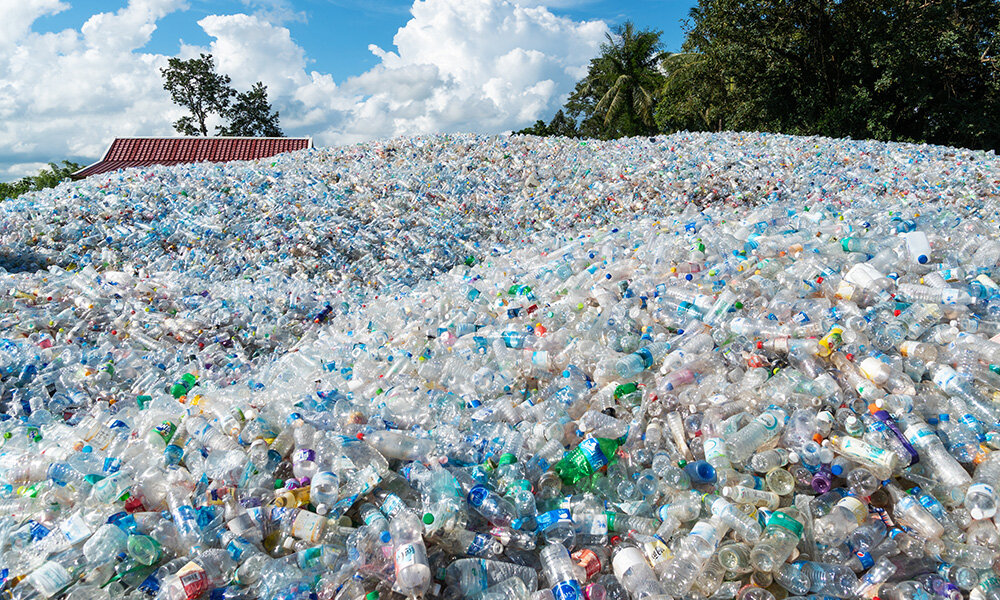
For years, unrecycled plastic bottles have been dumped in landfills. Now, thanks to new research from UBC Okanagan, those bottles may have a second life in that landfill—stabilizing its earth walls.
Used plastic bottles and textiles pose an increasing problem for landfills worldwide. Researchers say nearly a hundred million metric tons of polyethylene terephthalate (PET), also known as microplastics, are produced globally each year—with a fraction of that number being recycled—making it one of the largest sources of plastic waste.
“One way we can manage plastic waste is through integrating it into geotechnical construction,” explains doctoral student Alok Chandra. “By finding new ways to use these discarded plastics, we can divert them from landfills and use them to stabilize cover materials within landfills.”
Chandra and his supervisor, UBCO Engineering Professor Dr. Sumi Siddiqua, have developed a new method of incorporating PET waste into clay soil stabilization.
“Due to its nontoxicity, low biodegradability and accessibility, it shows considerable potential for use in landfill designs. However, a considerable amount of research is still required,” says Dr. Siddiqua. “This not only solves the solid waste problem but also increases the economic value of waste and encourages its re-circulation back from already polluted lands and oceans.”
The study suggests the reused material strengthens the soil and serves as a water-resistant layer that will keep pollutants such as lead from escaping the landfill.
“Our results show great potential, but there is still some work to be done before we will integrate the PET waste into landfill soil stabilization management,” says Chandra.
The study is published in the journal Waste Management.
More information:
Alok Chandra et al, Sustainable utilization of chemically depolymerized polyethylene terephthalate (PET) waste to enhance sand-bentonite clay liners, Waste Management (2023). DOI: 10.1016/j.wasman.2023.04.030
University of British Columbia
Read the full article here


