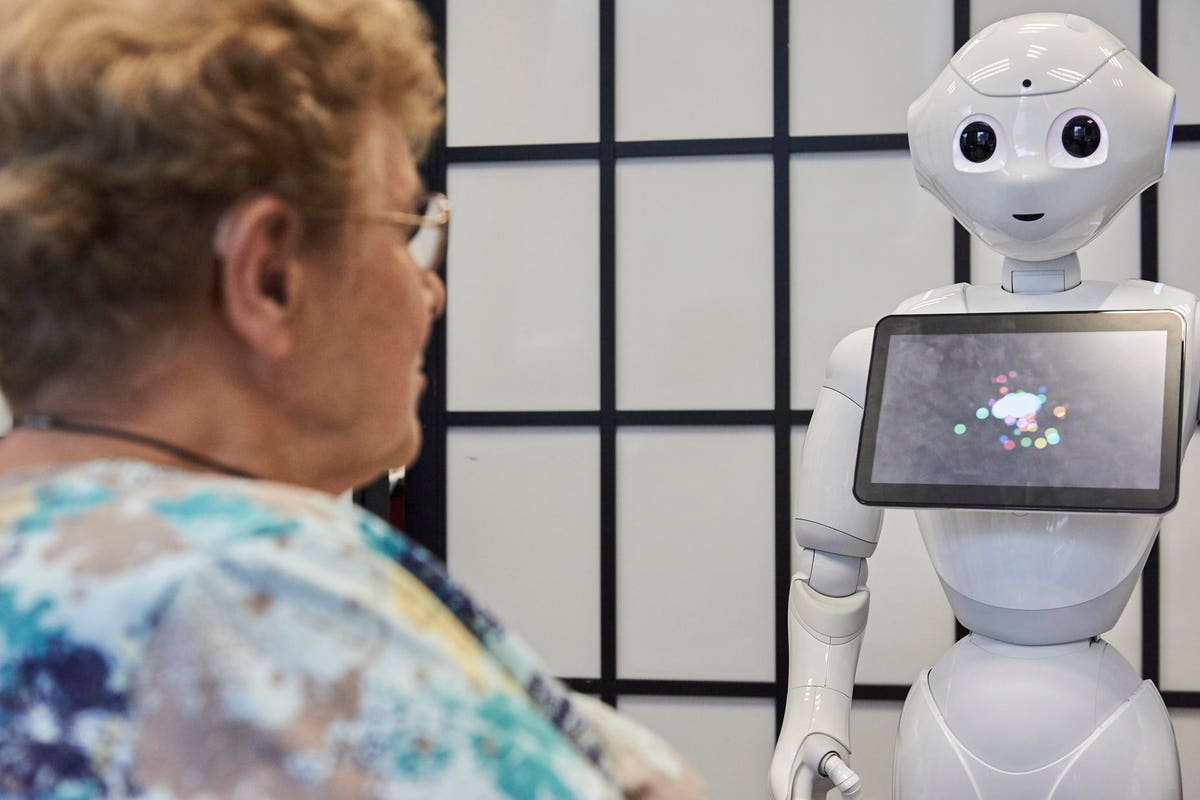
Imagine going to a doctor’s appointment where your doctor is taking a typical history and performing a physical exam on you. However, in addition to being able to ask your doctor questions, you are also able to get your important medical questions answered by a computer AI powered chatbot. This may be a reality in the future with the explosion of generative AI and emerging chatbot’s like OpenAI’s ChatGPT and more recently Google’s medical chatbot known as Med-PaLM . These tools provide human-like coherent answers to complex medical questions that patients may have regarding their care.
These AI tools have the potential to transform and revolutionize the way in which healthcare professionals deliver patient care, and their possibilities seem to be endless. Uses of AI in the healthcare space that are currently being used or explored include but are not limited to making specific diagnoses, communicating with patients, alleviating administrative physician tasks, transcribing prescriptions, and treating patients remotely. With all the promise of AI in healthcare, should physicians and patients be quick to accept this as a future reality?
There are several concerns that all physicians and patients should have and understand before widespread adoption of these AI tools. First, there are major ethical concerns surrounding AI powered chatbots. If these tools provide a recommendation that ultimately harms a patient, who is at fault and who is legally liable for the consequences to the patient?
Consider the example of a patient with a rare genetic disease, that gets recommended to take a drug by a chatbot to slow the progression of the disease. Instead of improving the disease, the drug results in life-threatening bleeding that requires an ICU admission for four weeks. In this scenario, who would be liable for the decision to administer the drug- the patient, physician, or chatbot? These are all ethical questions that must be considered and thought through carefully before adoption of these types of software in clinical practice.
Another major concern is bias, which is well recognized in AI-based models for medical applications. Most generative AI tools require data in some form for training purposes. Since all data is biased in some form or another, these tools that rely on data for adequate performance will also be biased.
As an example, consider a situation where a medical chatbot provides recommendations for how often a certain disease should be evaluated by an imaging study. The chatbot concludes that the population should receive a CT scan once every five years for a specific disease. However, the data used to make this recommendation relied on a population that was comprised primarily of White and Hispanic individuals, but not Black patients. Thus, the recommendation will be biased against Black individuals and the recommendation may not be appropriate for Black patients since the data was not representative of the health of Black patients. These recommendations, if used, could then promote health inequities and disparities amongst Black patients, which of course is unacceptable.
Finally, generative AI tools can also result in fabrication, or erroneous answers or outputs from chatbots. Providing inappropriate responses, and worse, acting upon those responses, can have devastating consequences for patients. With time, AI enabled chatbots will improve and continue to improve; however information from these chatbots cannot be solely relied upon when delivering patient care. The stakes are too high to rely strictly on AI when dealing with real people- patients and their loved ones.
AI will undoubtedly transform patient care and physicians should embrace the advancements that continue to occur with respect to healthcare. AI should be seen as a way physician practices can be augmented and improved, taking care of bureaucratic tasks like paperwork that contribute heavily to burnout. However it must be used with caution and definitely physician oversight in order to provide the most effective care for patients. Ultimately, physicians, and not computers, remain the stewards for patients and their care.
Read the full article here