


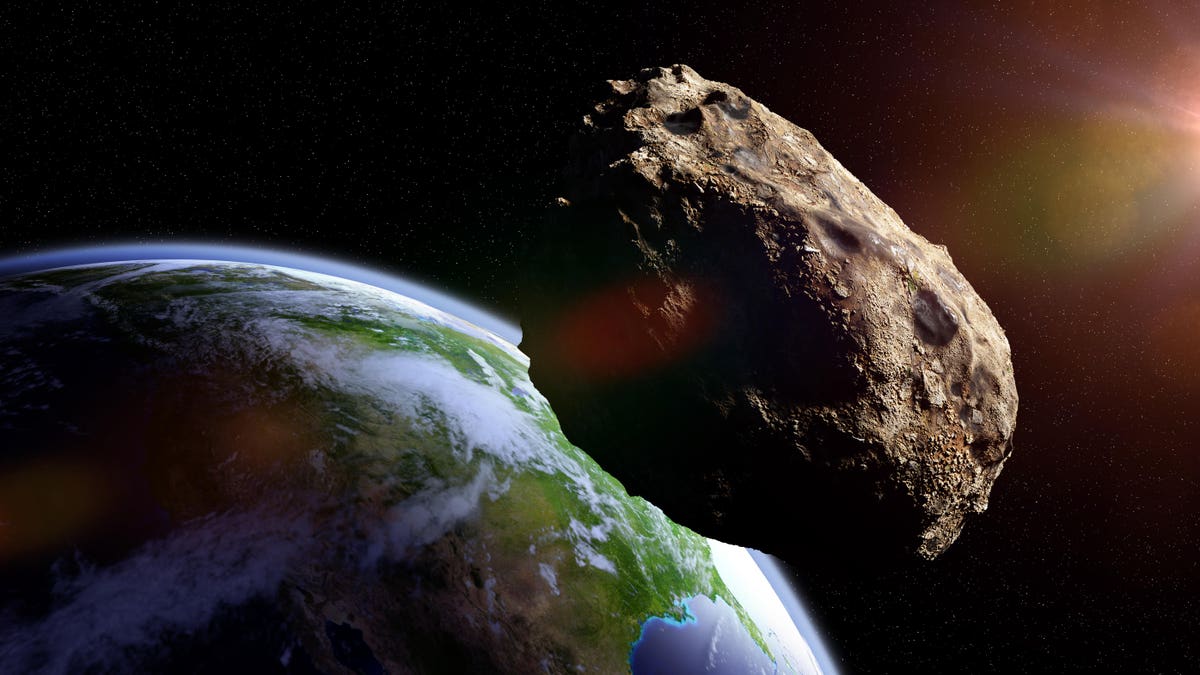
It came from the same direction as the most destructive meteoroid to impact Earth in a century, but it may be three times larger. And just like that asteroid that blew out windows in Chelyabinsk, Russia in 2013, no one saw this one coming.
What’s different is that this one fortunately zoomed right by our planet, but it’s yet another reminder of humanity’s big blind spot.
Asteroid 2023 NT1 was first spotted on Saturday, two days after it made its closest approach to Earth on July 13. In other words, by the time sky surveys and scientists were first made aware of the space rock’s existence, we were already in its rearview mirror.
This asteroid was hard to see earlier because it approached Earth from the direction of the sun, just like the Chelyabinsk bolide, which was never noticed by humans until it was breaking up over Russia and sending out a shock wave that shattered glass and a few walls, injuring hundreds.
This is a well-known hole in humanity’s planetary protection systems, and NASA is planning a mission called NEO Surveyor to try and fill it by the end of the decade. The European Space Agency’s planned NEOMIR will also help provide an early warning system for near Earth asteroids in the 2030s.
It’s estimated that the Chelyabinsk meteoroid was around 20 meters across when it impacted our atmosphere, whereas 2023 NT1 appears to be three times as wide, making it roughly the size of a hotel like the George Washington in New York City or the Idaho State Capitol.
To get a sense of what a direct hit from an object this size might do, we have to reach back into history a bit, to the Pleistocene epoch 50,000 years ago, when a slightly smaller asteroid formed the famed Meteor Crater in Arizona. There’s no way to know what kind of damage the impact did back then, but it’s thought the meteorite itself was instantly vaporized and it left behind some rare minerals that can only be created by shocks of extreme pressures like lightning, impact or a nuclear explosion.
The ESA estimates there could be around a million near-earth asteroids between 30 and 100 meters wide, and 98.9 percent of them remain undiscovered.
The vast majority of these asteroids seem to keep their distance on their own orbits around the sun most of the time. The close approach made by 2023 NT1 brought it within about 60,000 miles of Earth, which is obviously plenty of breathing room in reality but on the scale of space it’s just a hair away and it’s even closer to the region where some of our large satellites orbit.
New asteroids passing this close by Earth are discovered every week, however 2023 NT1 is among the largest seen in the past year.
Fortunately, it’s now in our catalog so next time it buzzes us we should see it coming.
Read the full article here