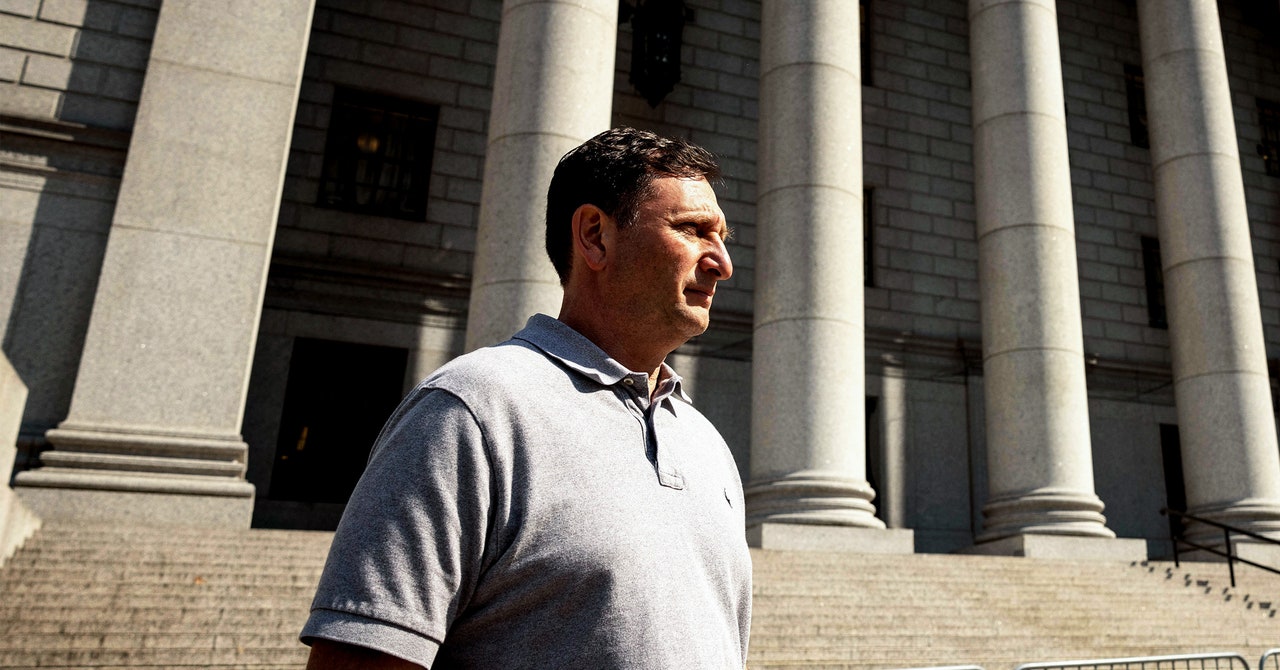
Alex Mashinsky has been living on borrowed time for months. In January, the founder and former CEO of bankrupt crypto lender Celsius was hit with a lawsuit by the New York Attorney General, alleging that he’d misled investors. Yesterday, Mashinsky was arrested and charged with seven counts of fraud by the US Department of Justice. If found guilty on all of the criminal counts, Mashinksy could face up to 115 years in prison. He pleaded not guilty and was released from custody on a $40 million bond.
Celsius’ collapse in June 2022 was part of a chain reaction—starting with the fall of the Terra Luna stablecoin in May 2022—that brought crypto to its knees, culminating in November in the bankruptcy of the crypto exchange FTX, whose founder, Sam Bankman-Fried, now faces 13 criminal charges.
The DOJ accuses Mashinsky of “orchestrating a scheme to defraud customers of Celsius through a series of false claims about the fundamental safety and security of the Celsius platform” and of conspiring with Roni Cohen-Pavon, chief revenue officer at Celsius, to inflate the price of the firm’s own-brand token, CEL. “The message we send today is quite simple: If you rip off ordinary investors to line your own pockets, we will hold you accountable,” said Damian Williams, US Attorney for the Southern District of New York. “Whether it’s old-school fraud or some new-school crypto scheme, it doesn’t matter one bit. It’s all fraud to us.”
The Securities and Exchange Commission, Commodities and Futures Exchange Commission, and Federal Trade Commission all simultaneously filed separate civil charges in Manhattan federal court on similar grounds. As part of a settlement with the FTC, Celsius has agreed to pay a $4.7 billion fine, but only after creditors have been reimbursed.
The law firm representing Mashinksy did not respond to a request for comment.
Mashinsky’s arrest will afford a moment of catharsis to Celsius creditors, whose money remains tied up in bankruptcy proceedings. But some in the industry fear the attitudes that created the conditions for the rapid growth and dramatic collapse of Celsius and FTX are still prevalent and that the industry remains vulnerable to influential individuals who are able to portray themselves as revolutionaries and pioneers.
“The crypto industry “has an enormous attack vector for intelligent sociopaths,” says Travis Kling, cofounder of hedge fund Ikigai Asset Management. “We haven’t been honest with ourselves about how bad that attack vector is and how damaging it’s been.”
Founded by Mashinsky in 2017, Celsius took in people’s crypto deposits, which it then invested or loaned out to fund interest payments to account holders and generate returns for itself. Customers were drawn in by promises of interest as high as 17 percent on deposits—tens of times greater than the rate offered by traditional banks at the time. At its peak, the company held custody of upwards of $25 billion in customer assets, the DOJ claims. At the peak of crypto fever in 2021, Celsius’ hours-long “Ask Mashinsky Anything” livestreams, in which the founder would preach weekly to his congregations of “Celsians,” would attract thousands of people.
Read the full article here