


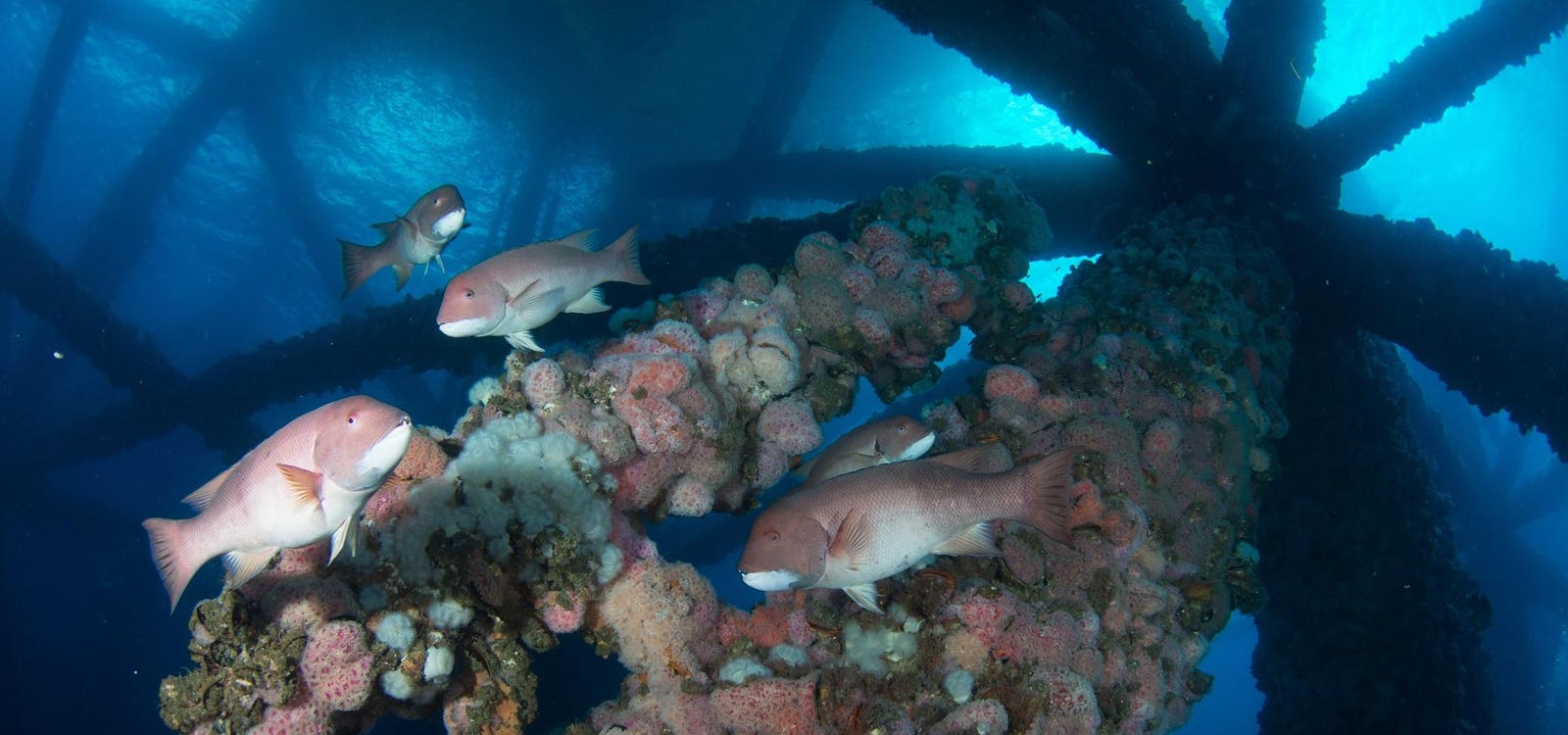
Ask any fisherman and they’ll tell you that fishing near the site of a known shipwreck is a sure-shot way to find fish. Shipwrecks create what scientists call “marine artificial structures”–providing an oasis of life in the otherwise vacant and desert-like seabed. Shellfish attach to the reef-like structures, smaller fish are lured in by the shellfish, and bigger fish move in to feed on the little fish. Like this, the cycle perpetuates.
Proponents of offshore wind argue that the same process could occur in and around offshore wind farm sites–creating new opportunities for aquatic life where none previously existed. This, they suggest, offsets some of the negative marine effects posed by the projects.
New research published in Nature Sustainability evaluates this claim–examining, specifically, whether offshore wind farms could be decommissioned as “artificial reefs,” thus benefiting the local marine ecosystem.
The authors, led by Anaëlle Lemasson of the University of Plymouth in the United Kingdom, conclude that while marine artificial structures can bring certain ecological benefits, there is limited evidence that decommissioning offshore wind farms as artificial reefs would positively impact the marine ecosystem. Here are three takeaways from their research.
1. Decommissioned Offshore Wind Farms May Not Help The Underwater Ecosystem, But They Won’t Hurt It Either
Examining data from 109 published studies, the researchers found that offshore wind farms had a neutral effect on underwater habitats on metrics including ecological abundance, diversity, biomass, reproduction and behavior.
The authors state, “In theory, if offshore wind farms acted as artificial reefs, decommissioning them by toppling, topping or reefing them […] could assist nations in reaching their environmental targets and achieve environmental net gain. However, we found no evidence to support or rebut the common assumption that these structures function as artificial reefs.”
“With that said, we found no evidence that reefing them would cause harm or be detrimental (for example, by reducing local biodiversity); thus, they may provide a viable option to enhance ecological benefits on natural sedimentary habitats, notwithstanding potential unforeseen consequences such as facilitating the spread of invasive species.”
2. Fish May Benefit More From Offshore Wind Farms Than Marine Invertebrates
The single statistically significant benefit identified by the researchers was an increase in the abundance of fish in and around offshore wind farms. This was not true of marine invertebrates (such as starfish, crustaceans and jellyfish).
Interestingly, the diversity of fish species found at offshore wind farm sites was unaffected. In other words, more fish were found at these sites, but not more species of fish.
3. Shipwrecks Help The Underwater Ecosystem More Than Offshore Wind Farms
The fisherman’s wisdom–that fish tend to coalesce around shipwrecks–is borne out by the data.
“Shipwrecks supported significantly greater abundances of both fish and invertebrates,” state the authors.
This raises an important question for future research: What is it about shipwrecks that create the conditions necessary for improved underwater ecosystems, and how might we be able to apply such learnings to offshore wind construction, maintenance and decommissioning?
Moreover, aside from the possibility of offshore wind sites enhancing underwater biodiversity, other ecological benefits have been theorized. For instance, scientists speculate that wind farms may produce a “sheltering” effect on ocean ecosystems, closing off large corridors to shipping and fishing activity. Other research suggests that offshore wind farms may be combined with aquacultural projects.
It is up to the scientific and engineering community to continue investigating whether the positives of offshore wind development outweigh the negatives.
There are, at present, hundreds of offshore wind farms producing energy around the world, with China, Germany and the U.K. leading the race. Many more are expected to be brought into service over the next decade.
Read the full article here