


The open internet once seemed inevitable. Now, as global economic woes mount and interest rates climb, the dream of the 2000s feels like it’s on its last legs. After abruptly blocking access to unregistered users at the end of last month, Elon Musk announced unprecedented caps on the number of tweets—600 for those of us who aren’t paying $8 a month—that users can read per day on Twitter. The move follows the platform’s controversial choice to restrict third-party clients back in January.
This wasn’t a standalone event. Reddit announced in April that it would begin charging third-party developers for API calls this month. The Reddit client Apollo would have to pay more than $20 million a year under new pricing, so it closed down, triggering thousands of subreddits to go dark in protest against Reddit’s new policy. The company went ahead with its plan anyway.
Leaders at both companies have blamed this new restrictiveness on AI companies unfairly benefitting from open access to data. Musk has said that Twitter needs rate limits because AI companies are scraping its data to train large language models. Reddit CEO Steve Huffman has cited similar reasons for the company’s decision to lock down its API ahead of a potential IPO this year.
These statements mark a major shift in the rhetoric and business calculus of Silicon Valley. AI serves as a convenient boogeyman, but it is a distraction from a more fundamental pivot in thinking. Whereas open data and protocols were once seen as the critical cornerstone of successful internet business, technology leaders now see these features as a threat to the continued profitability of their platforms.
It wasn’t always this way. The heady days of Web 2.0 were characterized by a celebration of the web as a channel through which data was abundant and widely available. Making data open through an API or some other means was considered a key way to increase a company’s value. Doing so could also help platforms flourish as developers integrated the data into their own apps, users enriched datasets with their own contributions, and fans shared products widely across the web. The rapid success of sites like Google Maps—which made expensive geospatial data widely available to the public for the first time—heralded an era where companies could profit through free, mass dissemination of information.
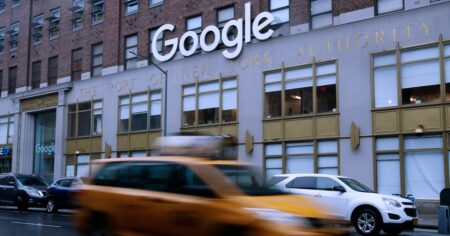
“Information Wants To Be Free” became a rallying cry. Publisher Tim O’Reilly would champion the idea that business success in Web 2.0 depended on companies “disagreeing with the consensus” and making data widely accessible rather than keeping it private. Kevin Kelly marveled in WIRED in 2005 that “when a company opens its databases to users … [t]he corporation’s data becomes part of the commons and an invitation to participate. People who take advantage of these capabilities are no longer customers; they’re the company’s developers, vendors, skunk works, and fan base.” Investors also perceived the opportunity to generate vast wealth. Google was “most certainly the standard bearer for Web 2.0,” and its wildly profitable model of monetizing free, open data was deeply influential to a whole generation of entrepreneurs and venture capitalists.
Of course, the ideology of Web 2.0 would not have evolved the way it did were it not for the highly unusual macroeconomic conditions of the 2000s and early 2010s. Thanks to historically low interest rates, spending money on speculative ventures was uniquely possible. Financial institutions had the flexibility on their balance sheets to embrace the idea that the internet reversed the normal laws of commercial gravity: It was possible for a company to give away its most valuable data and still get rich quick. In short, a zero interest-rate policy, or ZIRP, subsidized investor risk-taking on the promise that open data would become the fundamental paradigm of many Google-scale companies, not just a handful.
Read the full article here