


A detailed survey of the volcanic deposits found offshore Japan clarified the deposition mechanisms and the event’s magnitude of a volcanic eruption forming a large underwater caldera. As a result, the Kobe University research team found that the event 7,300 years ago was by far the largest volcanic eruption in the Holocene (the current geological epoch beginning approximately 11,700 years ago).
In addition to lava, volcanoes eject large amounts of pumice, ashes and gases as a fast-moving flow, known as “pyroclastic flow,” and its sediments are a valuable data source on past eruptions.
For volcanoes on land, geologists understand the sedimentation mechanism of pyroclastic flows well, but the sediments themselves get lost easily due to erosion.
On the other hand, for volcanoes on oceanic islands or near the coast, the pyroclastic flow deposition process is largely unclear, both because the interaction with water is less well understood and because reliable data of the deposits hidden beneath the water is difficult to obtain and therefore sparse.
For these reasons, it is difficult to estimate the impact of many past eruptions on the climate and on history.
A Kobe University research team around geologist Satoshi Shimizu took to the seas on the Kobe University-owned training vessel Fukae Maru and conducted seismic imaging as well as sediment sampling around the large submarine Kikai Caldera, off the south coast of Japan’s Kyūshū island.
“Due to the fact that volcanic ejecta deposited in the sea preserve well, they record a lot of information at the time of eruption. By using seismic reflection surveys optimized for this target and by identifying the collected sediments, we were able to obtain important information on the distribution, volume, and transport mechanisms of the ejecta,”explains Shimizu.
In their study, the geoscientists report that an eruption that happened 7,300 years ago ejected a large amount of volcanic products like ash and pumice, causing the collapse of the volcano and subsequent formation of the Kikai Caldera. The thick layer of ejected volcanic material can be tracked continuously thanks to its ability to reflect seismic waves. They confirmed that the sediments on the ocean floor and volcanic rocks found on nearby islands have the same origin, covering more than 4,500 square-kilometers around the eruption site.
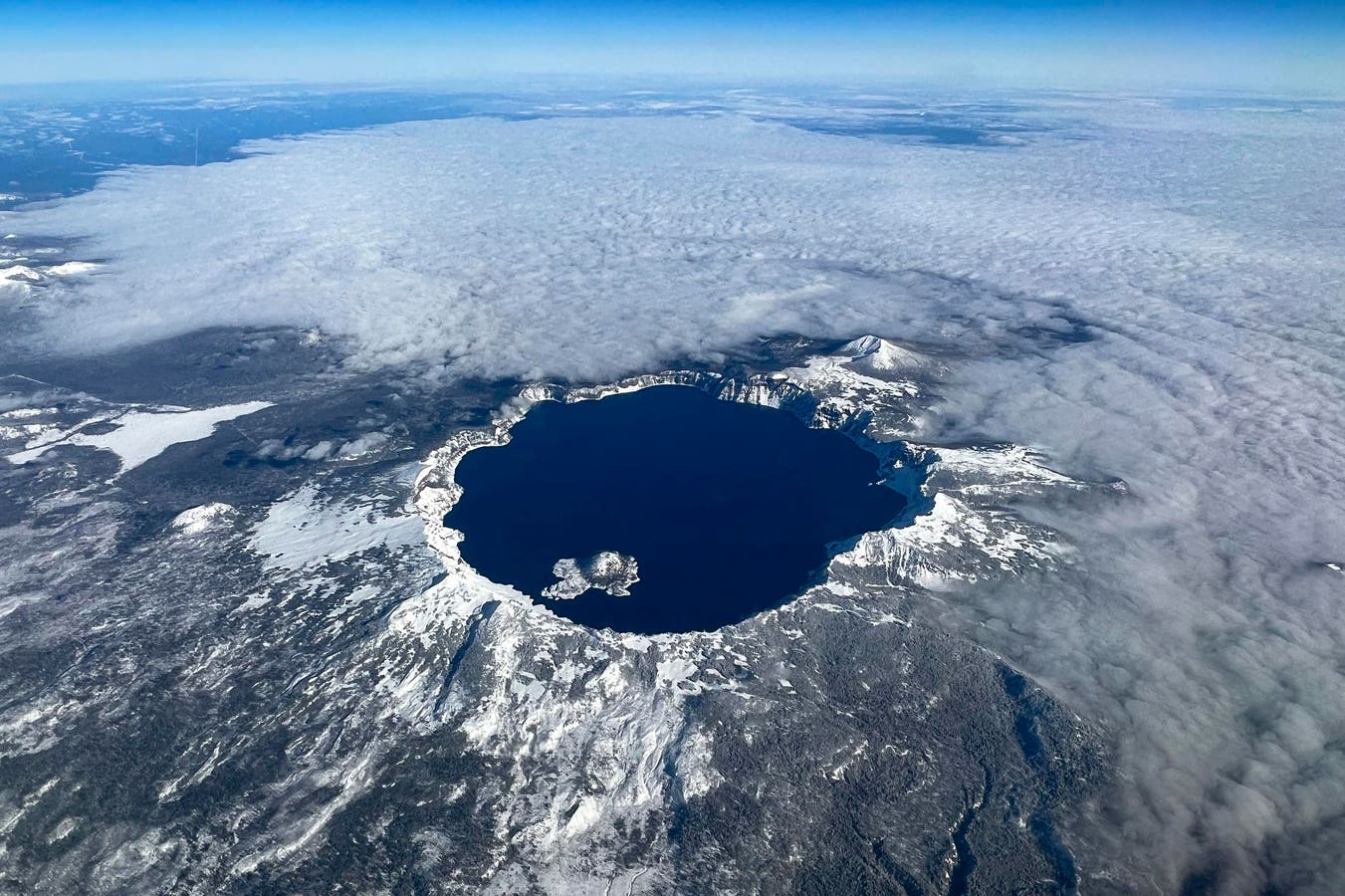
With an estimated rock equivalent volume of between 133 and 183 cubic-kilometers (Mount St. Helens erupted a mere one cubic-kilometer of rock in 1980, and the collapse of Mount Mazama 7,700 years ago, forming Crater Lake, involved “only” around 100 cubic-kilometers erupted material), the event was the largest volcanic eruption to have taken place within the last 11,700 years.
The research team’s findings yield new insights into the elusive dynamics of volcanic mega events that may prove useful in identifying the remains of other events as well as in estimating their size.
“Large volcanic eruptions such as those yet to be experienced by modern civilization rely on sedimentary records, but it has been difficult to estimate eruptive volumes with high precision because many of the volcanic ejecta deposited on land have been lost due to erosion. But giant caldera eruptions are an important phenomenon in geoscience, and because we also know that they influenced the global climate and thus human history in the past, understanding this phenomenon has also social significance,” study coauthor Nobukazu Seama concludes.
The full research paper “Submarine pyroclastic deposits from 7.3 ka caldera-forming Kikai-Akahoya eruption.” was published in the Journal of Volcanology and Geothermal Research and can be found online here.
Additional material and interviews provided by Kobe University.
Read the full article here