


In 11 days, a total solar eclipse will visit North America, throwing parts of Mexico, 15 U.S. states and Canada into darkness for a few minutes during the day as the moon’s shadow sweeps across.
It won’t be for the first time—nor the last.
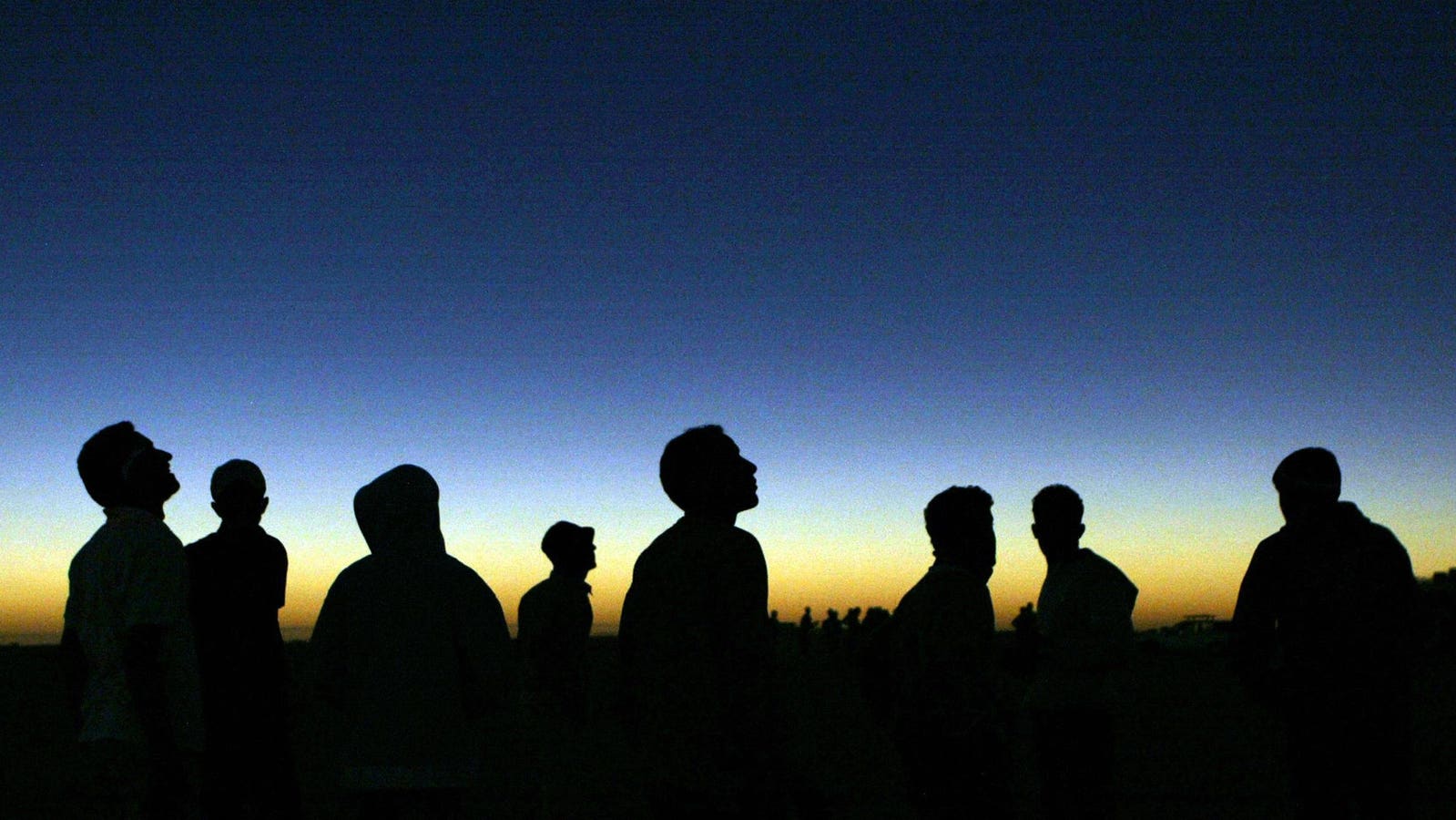
Every 18 years, 11 days and eight hours, a total solar eclipse occurs on our planet that is virtually identical to the last. The last time was on March 29, 2006, when totality came to Africa, with a long totality for Niger, Chad and Libya. On either side, an eclipsed sun was seen at sunrise from Natal, Brazil and sunset in Kazakhstan and China. Next comes April 8, 2024. After that, it’s April 20, 2042 in Malaysia and the Philippines.
The Saros Cycle
This is the Saros Cycle, a regular pattern of repeating moon shadows that fall on Earth’s surface like clockwork. “Imagine a clock with the hour hand, minute hand and seconds hand,” said Dr. Tyler Nordgren, an Ithaca, New York-based astronomer and eclipse artist at Space Art Travel Bureau, in an interview. “There will be a time when all three hands line up, but because they’re each going around at a different rate, it takes a certain amount of time to have all three come back into alignment.” That’s how it is with the Earth, the moon and the sun. “The Saros Cycle is the time between all things lining back up again,” said Nordgren.
It may seem utterly random, but the period of 18 years, 11 days and 8 hours between total solar eclipses of the same Saros “family” equates to exactly 223 “synodic” months (one orbit of the moon around Earth).
How The Saros Works
Take the three total solar eclipses mentioned: March 29, 2006, the “Great North American Eclipse” of April 8, 2024, and April 20, 2042. All are members of Saros 139 and nearly identical in duration. They are exactly 18 years, 11 days, and eight hours apart. The only reason they are not in almost the same place on Earth is because of the eight hours in which the Earth rotates a third of its daily spin. The alignment of the Earth, moon and sun is identical, so the moon’s shadow stays almost exactly the same.
“At the moment of an eclipse in the same Saros Cycle, the moon passes in front of the sun in just the same way it did last time,” said Nordgren. “All the eclipses in the Saros share something about the motion of the moon and the positions of the Earth and the sun.”
Saros 139
Moon shadows don’t last forever. Saros 139 has produced 10 of its 23 total solar eclipses and will do so every 18 years, 11 days and eight hours until March 26, 2601. By that time, the slight variation from one to the next will add up to enough for the moon’s central shadow to slip from the Earth and into space, its totality never to be seen again—until a passing space tourism rocketship intersects it, perhaps.
Luckily for us, there isn’t just one Saros. Currently, 40 active Saros produce total solar eclipses, meaning there’s a much shorter wait between one and the next. “Somewhere every 18 months, on average, there’s a total solar eclipse,” said Nordgren.
Born In The ’70s
The frequency of total solar eclipses on our planet makes the Saros Cycle, impressive though it is to understand and conceptualize, largely meaningless to the average eclipse chaser. “You don’t have to wait that long to see a total solar eclipse yourself—that’s the important thing,” said Nordgren.
However, there is a kicker for those in the U.S. who saw a total solar eclipse on March 7, 1970, for April 8 will see the return of the same moon shadow to the same continent—shifted just a few hundred miles west. This period of 54 years, 33 days between successive eclipses with similar properties and location, is called an “exeligmos.” For eclipse chasers with totality in their bones, becoming an “exeligmosan” is a rite of passage—and many in the U.S. are about to graduate.
For the very latest on the total solar eclipse—including travel and lodging options—check my main feed for new articles each day.
Wishing you clear skies and wide eyes.
Read the full article here