


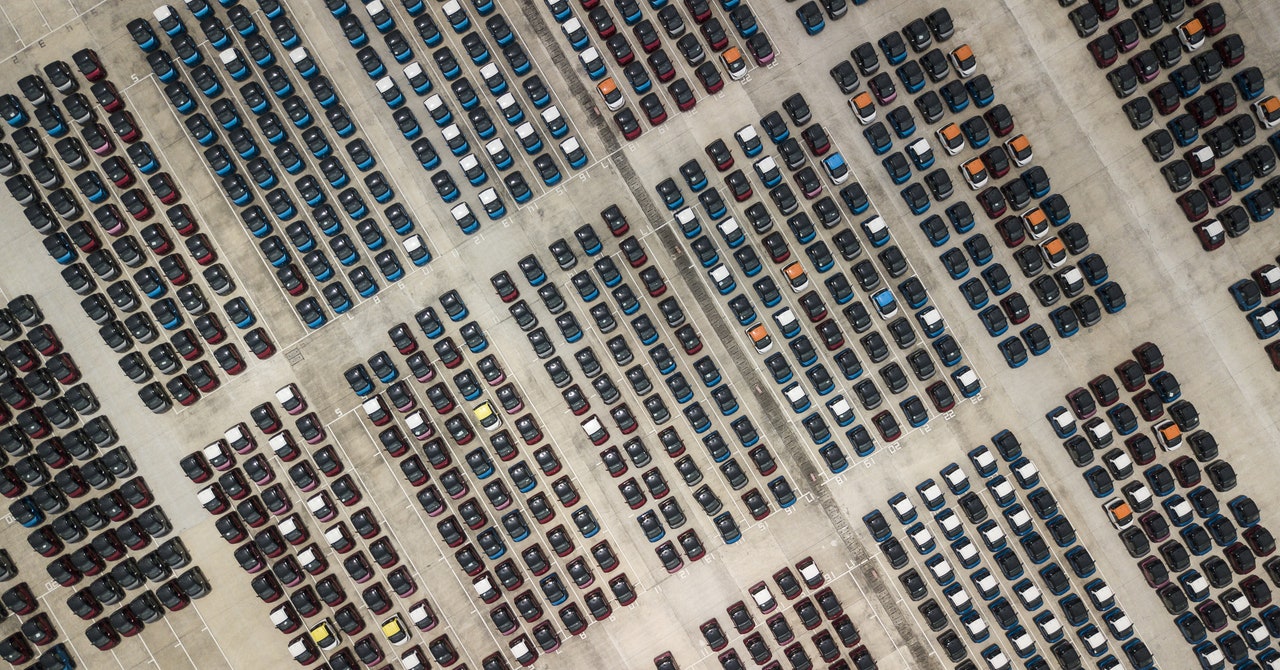
It’s the year 2035 and electric cars are taking over the roads. Petrol and diesel cars will soon be a thing of the past, the European Union has banned their sales in order to speed up the switch to cleaner mobility and mitigate climate change. Indeed, electric vehicles don’t emit any carbon dioxide when being driven, but their rechargeable batteries are causing environmental and social concerns of their own. They contain scarce and expensive metals. And once the batteries are past their prime, they are tough to recycle.
Ordinary lithium-ion batteries are made up of many individual cells and weigh hundreds of kilos. The battery pack used in the Nissan Leaf contains 192 pouch cells, that of the Tesla Model S contains 7,104 cylindrical cells, all bundled into modules that are screwed, welded and glued together to be controlled as one unit. As batteries start to pile up, carmakers, battery companies and researchers are trying to save them from ending up in landfills.
Recyclers are primarily interested in extracting the valuable metals and minerals in the cells. Getting to these materials is complex and dangerous: After removing the steel casing, the battery pack needs to be unbundled into cells carefully, to avoid puncturing any hazardous materials. The electrolyte, a liquid whose job it is to move lithium ions between the cathode and anode, can catch fire or even explode if heated. Only once the pack has been dismantled, recyclers can safely extract the conductive lithium, nickel, copper, and cobalt.
Used in the cathode, cobalt is the most sought-after material used in batteries. In its raw form, the rare, bluish-grey metal is predominantly sourced from the Democratic Republic of Congo, where miners work in perilous conditions. The world’s major electric car manufacturers are already moving away from cobalt, deterred by the human rights abuses, shortages in the supply chain, and fluctuating prices.
That raises the question of whether recyclers will still find it worthwhile to dismantle newer battery types lacking the most valuable ingredients. “When you move to more sustainable materials, and lower cost materials, the incentive to recycle and recover them diminishes,” says Jenny Baker, an energy storage expert at Swansea University. She likens this to a dilemma in consumer electronics: It is often cheaper to buy a new mobile phone than to get it fixed or recycled.
Recycling wasn’t much of an issue when EVs were still rare. There were 11 million electric cars and busses on the world’s roads by the end of 2020, and according to the International Energy Agency (IEA), there could be 145 million by 2030. Two- and three-wheelers are not even included in this figure.
As sales of EVs continue to surge, so will the volumes of spent batteries. Based on the million cars sold in 2017, researchers from the UK’s Faraday Institution, a research outfit focused on battery technology, estimated that some 250,000 tonnes of unprocessed battery packs will reach the end of their lives in 15 to 20 years. This equates to half a million cubic meters of spent batteries, enough to fill 200 Olympic-sized swimming pools—although some of these batteries will retire early when cars crash, or will be reused in other industries and recycled later.
Global capacity for recovering raw materials from used batteries is estimated at 830,0000 tonnes a year, according to the London-based consultancy Circular Energy Storage. “A lot of this is in China and not available for other markets, as import of waste batteries is banned in China,” says managing director Hans Eric Melin. Chinese companies occupy more than two-thirds of the supply chain for lithium-ion batteries. But the ban can be solved by going through recyclers in Southeast Asia, says Melin.
Read the full article here