


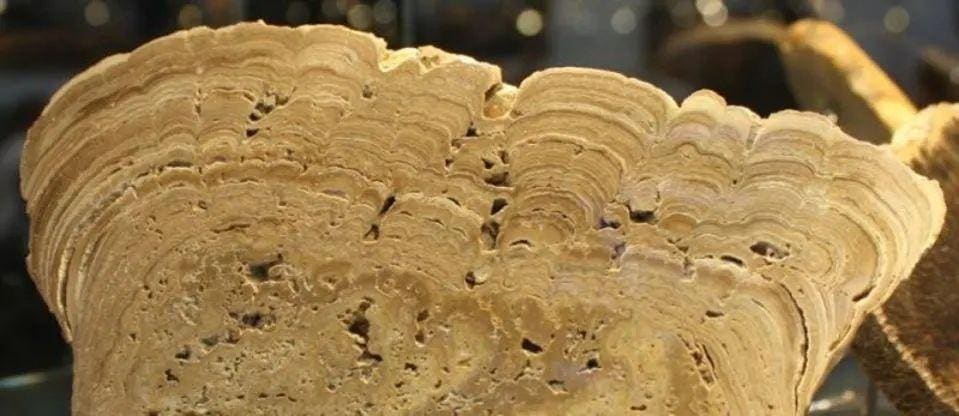
Microbial stromatolites represent the earliest geological record of life on Earth, which dominated the planet for almost 3 billion years.
Stromatolites, in general, refer to a range of microbial communities that are associated with layers of rock. They still exist on Earth today, but modern stromatolites tend to be relatively small. They also grow passively by trapping grains of sand and other detritus floating in the ocean.
Ancient stromatolites, in contrast, actively pulled in calcium and carbon dioxide from the surrounding water, causing minerals to precipitate around them and growing in large mats or forming dome-like structures.
Rare and sparsely scattered across the globe in the present day, modern “living” stromatolites are typically relegated to extreme environments.
In a new study, an international team reported the discovery of living shallow-marine stromatolites on Sheybarah Island in the Red Sea, Saudi Arabia.
The Sheybarah stromatolites occur in the shallow beach zones, just beneath sea-level during low tide, on the seaward-facing side of the island. Depending on the depth, they display three different growth forms–flat microbial mats, ovoid clusters and coarse-grained microbial mats–similar to fossil stromatolites.
The stromatolites likely thrive in the lagoon because this environment could resemble the conditions on ancient Earth, with the water being very salty and acidic.
Early stromatolites likely controlled Earth’s oxygenation. Using sunlight, water, and carbon-dioxide to create oxygen for over 2 billion years, they transformed Earth to become the oxygen-rich planet we know today.
The full research paper “Discovery of modern living intertidal stromatolites on Sheybarah Island, Red Sea, Saudi Arabia” was published in the journal Geology and can be found online here.
Read the full article here