


Since its inception four years ago, the Space Force has left many puzzled about its present and future roles, particularly with the increasing autonomy of satellite networks and the increasing privatization of the launch industry. The coincidental rise of aggressive great power competitors in space, alongside the impressive agility and utility of commercial space companies showcased in the Ukraine War, hints at the evolving nature of space warfare in the coming decades. It is now apparent that the conventional notion of a space operator has become outdated, paving the way for a new era symbolized by the term “Guardian.” However, the identity of these Guardians and the challenges they will encounter in this modern space age remain unclear.
Looking back at our history, humanity’s conquest of gravity propelled us to expand our horizons, revolutionizing the concepts of distance and time. This progression shifted warfare from land and sea to the skies, where combat demanded a blend of skill and technical prowess embodied by combat aircraft and their pilots. Similarly, the defense of space, our final frontier, hinges on technological superiority.
What distinguishes military prowess in space today? Satellites and rockets, once symbolizing man’s defiance of Earth itself, have now become commonplace. Rather than the recurrent hardware satellites all use, the software and the data it processes is what defines, differentiates, and protects a particular mission. With technological advancements, the effectiveness of the Space Force’s mission will be increasingly defined by its ability to design, develop, and deploy software capabilities, rather than adhering to traditional metrics like ammunition stockpiles or the number of mission-capable aircraft.
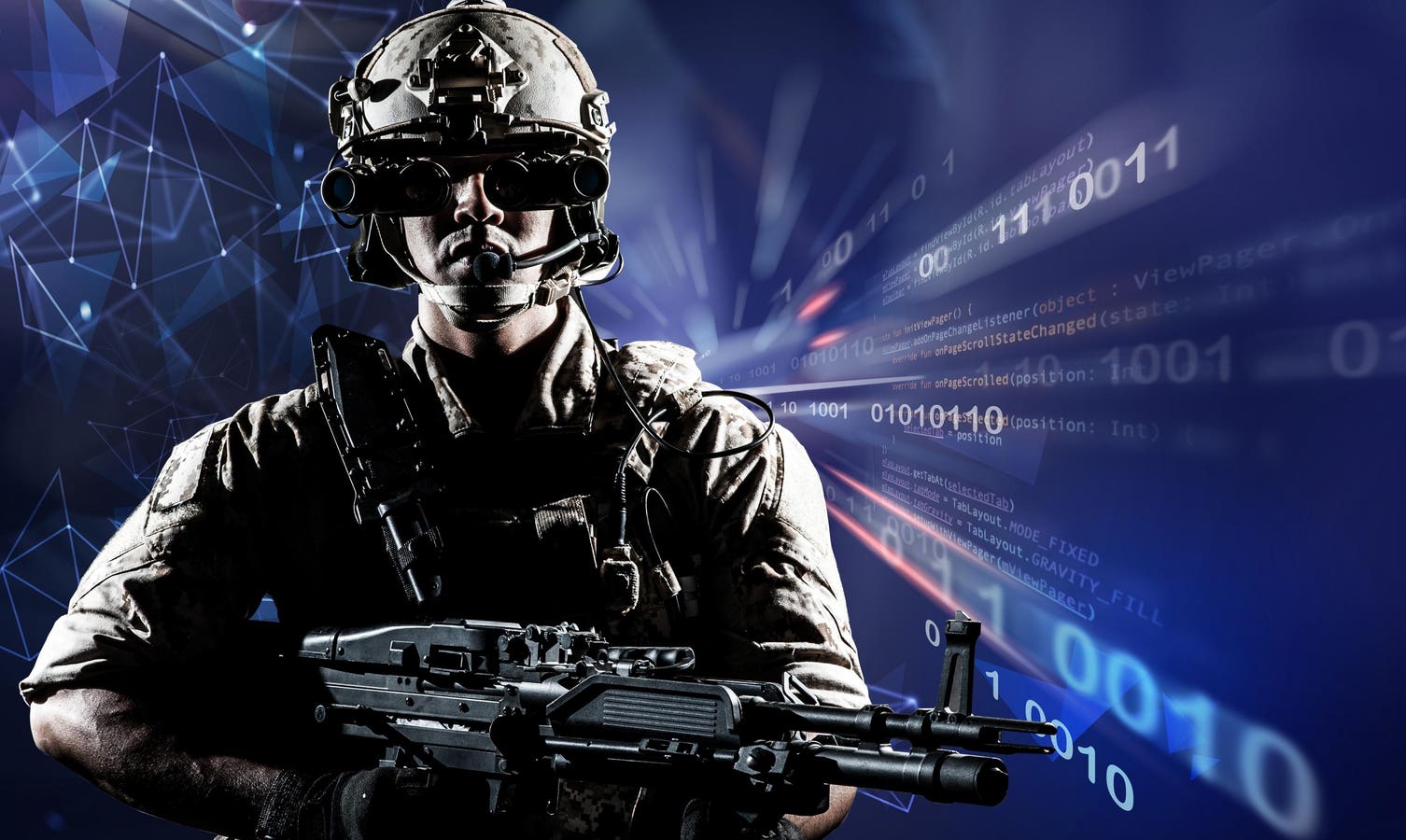
For the first time in military history, the need for this separate service – the US Space Force – requires all of us involved to fully appreciate the complete paradigm shift required to prepare for and lead a military battle in this domain. The hallmarks of traditional military power involve mass, maneuver, and kinetic destruction. For the Space Force, this must be replaced by a deep understanding of what software-defined operations means. The key to space dominance lies in mastering the space cyber domain, where layers of software on commercial hardware serve as the primary offensive and defensive weapons. The US Space Force is the first military branch in history that is software defined. At its core, it is a software defined service.
The magnitude of this paradigm shift is enormous. Just as the opportunities are boundless for how the tech world enhances our everyday life here on Earth, so too is the nearly infinite scale of opportunities, threats, and attack surfaces in the space cyber environment.
Many of the fundamental principles of war must be rethought. Mass and economy of force, for example, nearly disappear, while security and surprise present unprecedented challenges. The capabilities that machine learning, Artificial Intelligence (AI), and even generative AI bring to a militarily contested domain are in their infancy but must be explored.
The complexities of pro forma machine-to-machine communication combined with the new multi-orbit dimensionality present unique space cyber challenges including: ultra-low financial barriers to entry, inherent difficulties in attack attribution, and aggression deterrence. The most valued attributes of Guardians, when compared to their predecessors must be rethought: does proficiency with an M4 rifle or performance on an annual fitness test truly define their merit? What truly defines heroism in the Space Force? Are supra coders now the penultimate space warriors? And, most importantly, what kind of industry is truly necessary to support the mission, now primarily defined by software, data, and network intricacies?
Understanding this new nature of warfare will be crucial to the Space Force’s ability to organize, train, equip, operate, and sustain its force posture. Today’s Guardians will need to develop and mature a mindset and expertise in the application of data science and software, much like the airmindedness required of air combat leaders. While this seems an unconventional notion, it is just the next step in warrior evolution that has been anticipated with the transformation of modern warfare.
Beyond uniform choices and Congressional debates over space militarization, the true challenge for Space Force leaders lies in shaping a culture suited to this new frontier. They must theorize, conceive, develop, deploy, and utilize software systems on commercial computers in space, securing its accessibility for future generations.
Much like their air power predecessors, today’s Space Force stands at the forefront of a new era, where military strength is defined not by firepower or by contests of speed, but by software proficiency. Embracing this new reality will be pivotal in ensuring space dominance and safeguarding equitable access to space for years to come.
Read the full article here