

Close Menu
  • Home
  • News
  • Startups
  • Innovation
  • Industry
  • Business
  • Green Innovations
  • Venture Capital
  • Market Data
    • Economic Calendar
    • Stocks
    • Commodities
    • Crypto
    • Forex
Facebook X (Twitter) Instagram
[gtranslate]
Facebook X (Twitter) Instagram YouTube
Innovation & Industry
Banner
  • Home
  • News
  • Startups
  • Innovation
  • Industry
  • Business
  • Green Innovations
  • Venture Capital
  • Market Data
    • Economic Calendar
    • Stocks
    • Commodities
    • Crypto
    • Forex
Login
Innovation & Industry
Green Innovations

Researchers take next step toward better performing batteries using less critical raw materials

News RoomNews RoomFebruary 21, 2024No Comments2 Mins Read
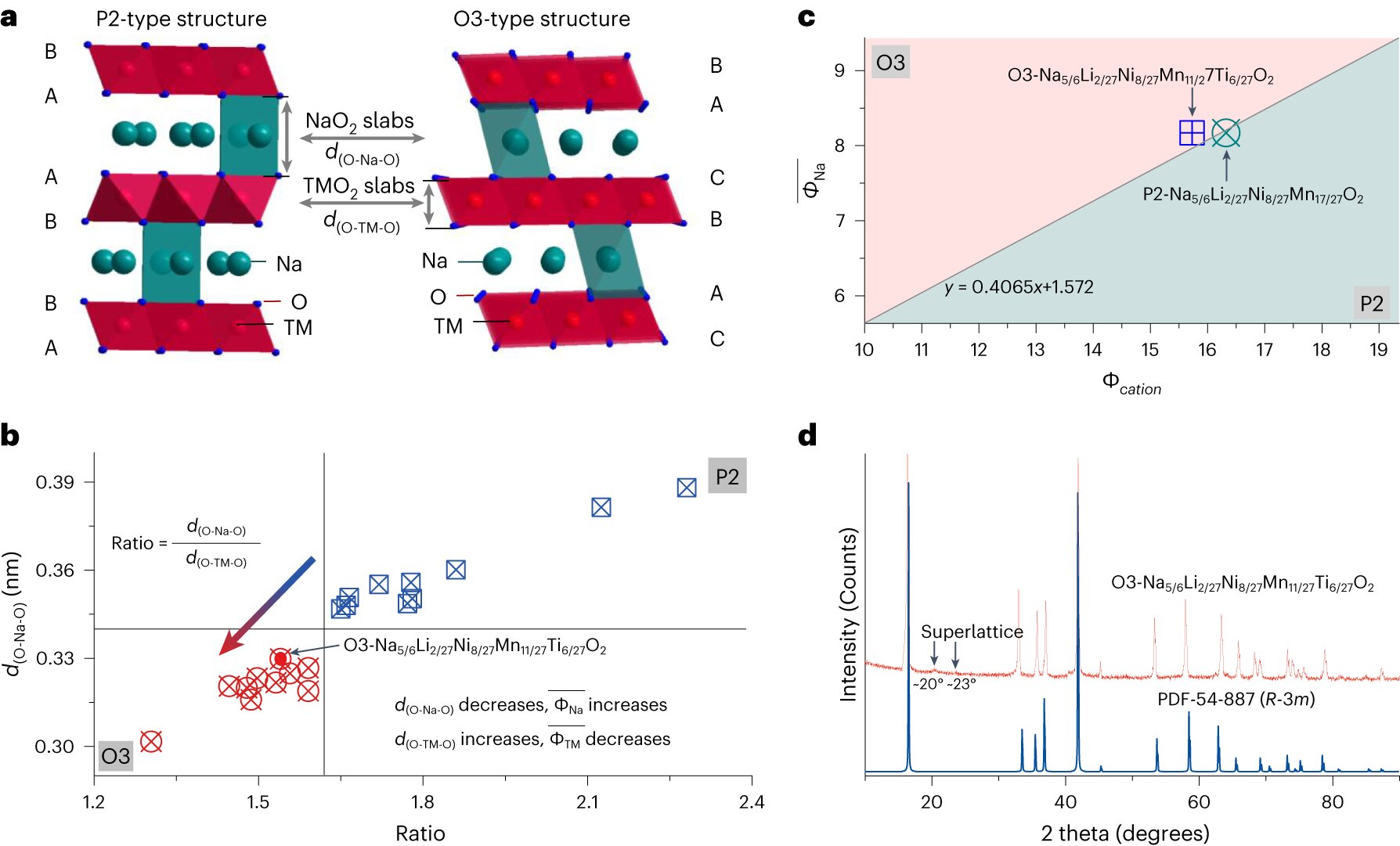
Designing O3-type layered oxides. Credit: Nature Sustainability (2024). DOI: 10.1038/s41893-024-01266-1

Marnix Wagemaker and Alexandros Vasileiadis in collaboration with researchers from the Chinese Academy of Sciences have published a paper in Nature Sustainability on fast-charging sodium-ion batteries and improvements made to the negative electrode. These can be made from organic materials. This reduces the dependence on rare materials that do not come from Europe.

The Delft researchers have also improved the other side and published about it. The new article details the development of a new positive electrode, based on design principles they published in Science in 2020 titled “Rational design of layered oxide materials for sodium-ion batteries.”

From these design principles, a material has been designed to combine the best of two possible structures. High energy density is combined with fast charging. As an added bonus, the material appears to change its structure very gradually during charging and discharging, making it last even longer. It also contains no cobalt as is still common in Li-ion cathodes.

Thanks to the growing knowledge about these battery materials, research in this area will continue. In addition to Li-ion batteries research, sodium-ion research will also be addressed nationally. The battery research will be further expanded, allowing this technology to be applied to national and European markets.

More information:
Qidi Wang et al, Fast-charge high-voltage layered cathodes for sodium-ion batteries, Nature Sustainability (2024). DOI: 10.1038/s41893-024-01266-1

Provided by
Delft University of Technology


Read the full article here

Related Articles

Neutron scattering study points the way to more powerful lithium batteries

Green Innovations April 16, 2024

Researchers can help shipowners achieve ambitious climate targets

Green Innovations April 16, 2024

Solar energy can uplift rural Ethiopians, but is hard to come by

Green Innovations April 16, 2024

A timer can shorten your shower even when you have no incentive to save water

Green Innovations April 16, 2024

High electric bills threaten California’s clean future: This plan could help

Green Innovations April 16, 2024

New insight about the working principles of bipolar membranes could guide future fuel cell design

Green Innovations April 16, 2024
Add A Comment
Leave A Reply Cancel Reply

Copyright © 2026. Innovation & Industry. All Rights Reserved.
  • Privacy Policy
  • Terms of use
  • Press Release
  • Advertise
  • Contact

Type above and press Enter to search. Press Esc to cancel.

Sign In or Register

Welcome Back!

Login to your account below.

Lost password?