


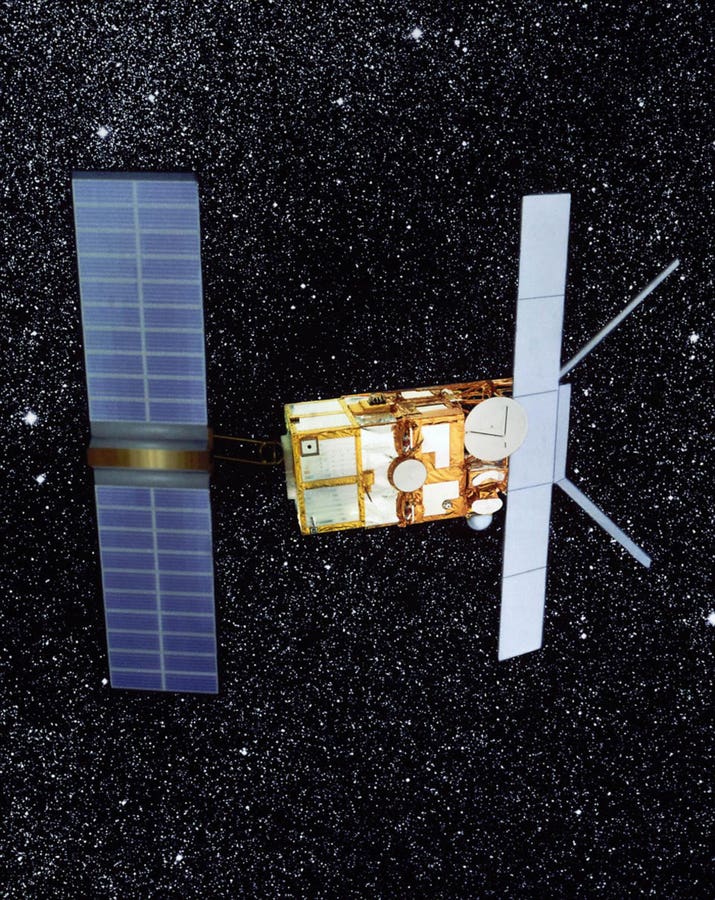
The European Space Agency’s (ESA) ERS-2 earth-observing satellite has spent nearly three decades in orbit, but was decommissioned in 2011 and moved into a position where it would eventually be pulled back to Earth for a fiery demise in the atmosphere.
That date with eternity is set to happen this week, perhaps even within a few hours of this writing.
The Aerospace Corporation, which monitors re-entries of all sorts of spacecraft and other manufactured objects, estimates that ERS 2 will impact our atmosphere and begin to blaze a path to oblivion early Wednesday, GMT. However, as of Monday the margin of error for that prediction was plus or minus 25 hours, which means that re-entry could happen just about anytime now.
HEO Space, working for the UK’s Space Agency, spotted the falling craft via cameras on its satellites. The doomed vehicle is giving off serious Star Wars Tie Fighter vibes.
As for where the satellite might impact over the planet, its path according to Aerospace takes it over much of Earth’s surface at one moment or another, meaning no regions are really inconceivable.
Fortunately the vast majority of Earth is covered by oceans or wilderness, making it extremely unlikely it will break-up over a populated area. And as satellites, rocket bodies and other big hunks of space junk go, ERS-2 is relatively small, weighing in at less than 3,000 kg. This means that almost all of the object can be expected to burn up before reaching the surface.
That said, it’s hard to say what components might be resilient enough to survive the extreme heat and pressure involved in re-entry. Charred bits of metal, foam and other pieces have been found after similar events.
According to ESA, the risk of any one person being injured by space debris over the course of a year is under one in 100 billion. This is pretty darn close to zero. You’re 65,000 times more likely to be struck by lightning.
ERS-2 launched in 1995 and was a pioneering eye on Earth for 16 years.
Check back for updates as ERS-2 progresses toward its final blaze of glory.
Read the full article here