


An international team of scientists has made a new discovery that may help to unlock the microscopic mystery of high-temperature superconductivity and address the world’s energy problems.
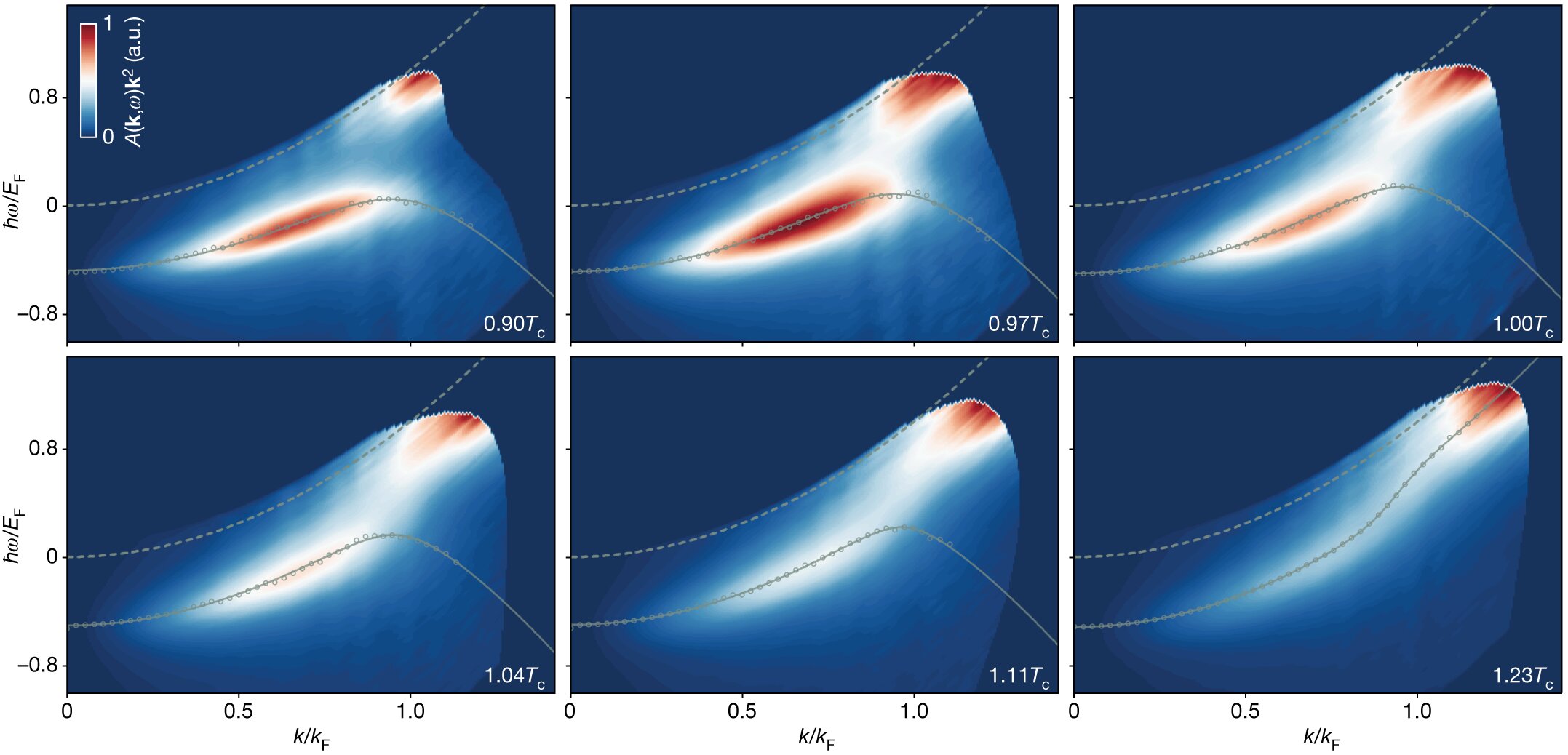
In a paper published in Nature, Swinburne University of Technology’s Associate Professor Hui Hu collaborated with researchers at the University of Science and Technology of China (USTC) in a new experimental observation quantifying the pseudogap pairing in a strongly attractive interacting cloud of fermionic lithium atoms.
It confirms the many-particle paring of fermions before they reach a critical temperature and exhibit remarkable quantum superfluidity, instead of just two particles
High-temperature superconducting materials hold the prospect of significantly improving energy efficiency by providing faster computers, allowing novel memory-storage devices and enabling ultra-sensitive sensors.
“Quantum superfluidity and superconductivity are the most intriguing phenomenon of quantum physics,” says, Associate Professor Hu, the only Australian researcher involved in the study.
“Despite enormous efforts over the last four decades, the origin of high-temperature superconductivity, particularly the appearance of an energy gap in the normal state before superconducting, remains elusive.”
“The central aim of our work was to emulate a simple text-book model to examine one of the two main interpretations of pseudogap—the energy gap without superconducting—using a system of ultracold atoms,” explains Associate Professor Hu.
The investigation of pseudogap pairing with ultracold atoms was attempted in 2010 but was unsuccessful. This new international experiment used state-of-the-art methods for preparing homogeneous Fermi clouds and removing unwanted interatomic collisions, with ultra-stable magnetic field control at unprecedented levels.
“These new technical advances lead to the observation of a pseudogap. Without the need to invoke any specific microscopic theories to fit the experimental data, we found the suppression of spectral weight near the Fermi surface in the normal state.”
“This discovery will undoubtedly have far-reaching implications for the future study of strongly interacting Fermi systems and could lead to potential applications in future quantum technologies.”
More information:
Xi Li et al, Observation and quantification of the pseudogap in unitary Fermi gases, Nature (2024). DOI: 10.1038/s41586-023-06964-y
Swinburne University of Technology
Read the full article here


