

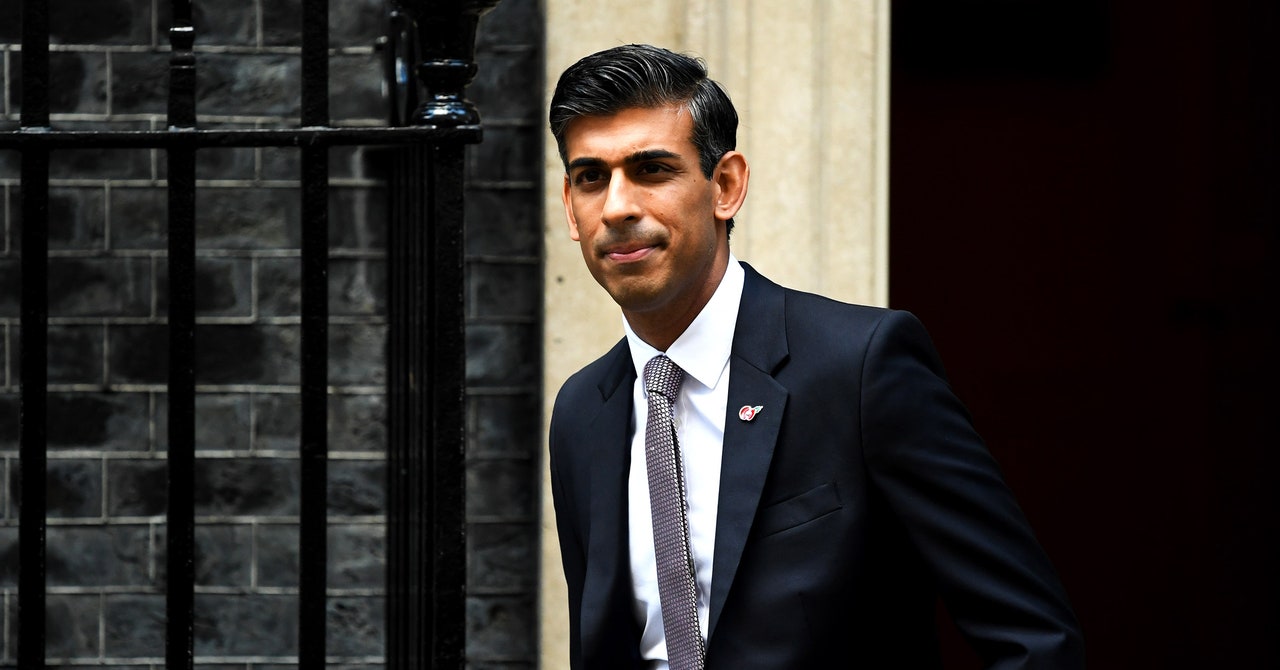
Rishi Sunak likes crypto. The UK’s prime minister was finance minister during crypto’s last hot streak in 2021, when the hype cycle pushed the value of cryptocurrencies to record levels. The following April, Sunak unveiled a plan to make the country “a global cryptoasset technology hub” by writing clear regulations that would “give [crypto companies] the confidence they need to think and invest long-term.” Crypto, Sunak said, was “the business of tomorrow.”
Since then, both crypto and the UK economy have quite dramatically come off their peaks. In July 2022, Sunak quit as chancellor, helping bring down his boss, then prime minister Boris Johnson. The UK is now on its third leader and fourth chancellor in under a year, after a disastrous “fiscal event” in September 2022 that blew a £60 billion ($76 billion) hole in the national budget. Economic growth has plateaued, and many in the country are struggling to stay afloat as prices rise and wages stagnate. At the same time, crypto has slumped. The meltdown of the Terra-Luna stablecoin in May 2022 sent the industry into a spin that led to the failure of crypto lender Celsius, hedge fund Three Arrows Capital and, in a roundabout way, crypto exchange FTX. Billions of dollars are now locked up in various bankruptcy proceedings, and the industry is under the intense scrutiny of regulators in the US and elsewhere.
Sunak’s enthusiasm for crypto, however, remains intact. On June 11, he celebrated the launch of a London office by venture capital firm Andreesen Horowitz (a16z)—one of whose funds has invested $7.6 billion into crypto—by saying, once again, that he is determined to “turn the UK into the world’s Web3 center.”
For firms like a16z, the UK offers an alternative to the US, where regulators have been accused of being both heavy-handed and failing to clarify the rules for the industry. But beyond vague promises to open pathways for crypto companies in the UK, so far there are few details as to what becoming a “crypto hub” might involve. Meanwhile, regulatory experts warn that, by tying future crypto regulation to a desire to drive economic growth and boost a financial sector that’s flagged since Brexit, the British government could put consumers at risk.
“It’s not hard to imagine politicians and the crypto industry putting pressure on the [regulator] to relax rules to encourage growth and competitiveness,” says Mick McAteer, a former board member at the Financial Conduct Authority (FCA), the UK’s top finance regulator. “It’s a way for short-term political expediency to override long-term regulatory objectivity.” That, he says, could lead to a regulatory “race to the bottom” in which ordinary people’s money is at stake.
Lately, the crypto industry has been asking regulators around the world to set out clear rules for how it should be governed. Large firms, including Coinbase, Binance, and Ripple, have said that they’re willing to comply with regulations, just as soon as questions are settled over how crypto assets should be classified (and therefore which agencies should regulate them) and clear rules set for the provision of crypto-related services.
Read the full article here