


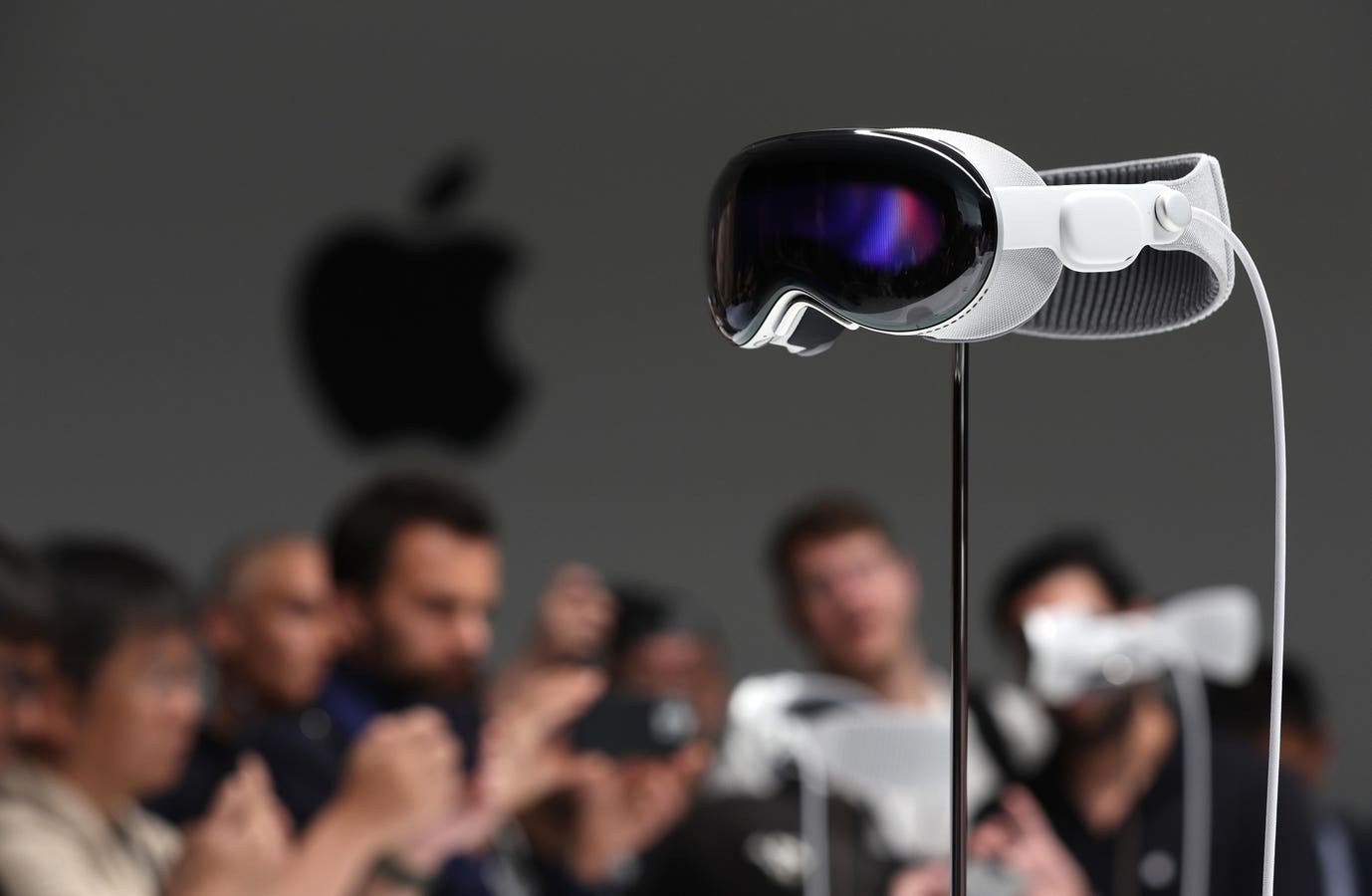
With the Apple Vision Pro, Apple is about to learn an important lesson Microsoft tried to teach the world in 2006. It’s all about developers, developers, developers.
Let’s put aside the number of apps that will run in an effective emulation window on the Vision Pro. I think it’s fair to say that these are not Vision Pro apps; these are just a happy coincidence that allows the marketing team to proclaim that millions of apps will run on the Vision Pro. I’m thinking about native apps designed to make the best use of the Vision Pro hardware… the sort of apps that make you stop and think that $3,500 (plus Apple Care) would be a good investment.
This week, an analysis by Appfigures suggests that the Apple Vision Pro Store has a little over 150 apps available for download.
Let’s not forget that many of the iOS and iPadOS developers Apple will be courting have spent their symbiotic careers working on small screens, packing in dense layers of information, and working with multi-touch and text input. The move to large windows, simulating wide and expansive spaces while leveraging eye-tracking and finger-clicking, is not an easy jump.
It’s also an expensive jump. Assuming they are already a registered developer with the correct software tools, they’ll need to test their apps. This means that many indie developers will be waiting for launch day to pick up the hardware (at the sticker price) to start developing their apps.
Balancing out that expense may be tricky. Noted analyst Ming-Chi Kuo reports that “between 160-180,000″ Vision Pro headsets were pre-ordered, taking up nearly half of Apple’s projected 400,000 sales in year one. That’s a very small audience to target app sales to—even allowing for these to be early adopters who will be looking for as many experiences as possible.
Finding not just the killer app but also the expected apps will be Apple’s short-term problem. Tim Cook and his team are already looking at major app developers refusing to develop for the new platform.
Netflix CEO Greg Peters says “We have to be careful about making sure that we’re not investing in places that are not really yielding a return, and I would say we’ll see where things go with Vision Pro.” Google has confirmed there will not be a YouTube app for the Vision Pro, neither will the iPad application run on the headsets. Instead, it has suggested that users open YouTube in the Safari web browser bundled with the device. Spotify has confirmed it has not announced any plans for a Vision Pro app; leaving room open in the future
While there are workarounds for these apps, and others, their absence will be noted by those looking to buy into Apple’s vision of AR and VR—although Apple would prefer everyone to call it Spatial Computing, presumably to try and create some space between existing players in the space.
These absent apps can damage the perception of a platform. Windows Phone may have had a superior user experience and an information-centred interface (as opposed to the current app-centred interfaces). Still, without any of the key smartphone apps, it was dead in the water—mainstream consumers moved away to Android and iOS.
Microsoft launched the ARM-powred Surface Pro X in 2019. Google has yet to release its Chrome web browser for the platform, even though the ARM-powered Chromebooks are literally built around the browser. There are workarounds, notably the open-source Chromium Project or Microsoft’s own Edge web browser, but they aren’t Chrome. The basic expectations were unfulfilled, and another sliver of confidence in the platform slipped away.
Anyone launching a new platform has these issues to deal with. Apple is better placed than most, given a pool of developers who have invested in the associated platforms, a fanatical community that it hopes will be inclined to spend more money on new product areas, and more space to develop ideas and hardware by the media.
Will that be enough?
Now read the latest Mac, iPhone, and iPad headlines in Forbes weekly Apple Loop news digest…
Read the full article here



