


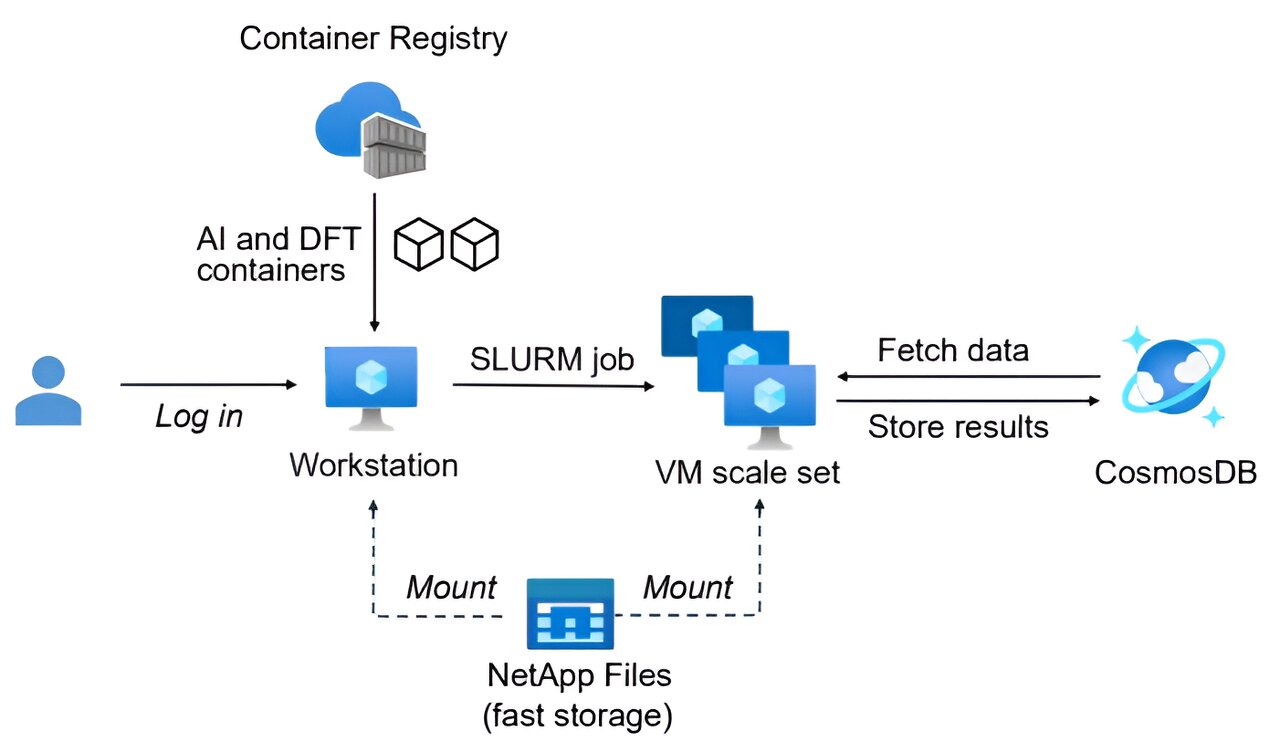
A team of AI researchers at Microsoft working with colleagues from Pacific Northwest National Laboratory has used AI to develop a battery that uses less lithium. Together, they have published a paper describing their work on the arXiv preprint server.
Lithium-ion batteries have become the industry standard for both electronics devices and electric vehicles and are expected to play a major role in the conversion to a green electric grid. But lithium is expensive, which has led multiple teams across the globe to look for alternatives. In this new effort, the research team looked for ways to reduce the amount of lithium used in batteries.
This would normally take a long time—likely many years—because of the exhaustive approach required. To reduce the workload and the time needed to process millions of candidates, the researchers turned to AI.
Noting that AI applications are good at using massive amounts of data to learn how to do things, the researchers designed one that could study millions of materials that might be added to a lithium battery to replace some amount of the lithium and test the results for factors such as stability and how a battery using a given material would behave.
Using this approach, the research team was able to reduce the list of possible candidates to just a few hundred possibilities. They then turned to materials scientists at Pacific Northwest National Laboratory for advice on how to trim the possibilities even further. The scientists suggested adding more specific screening criteria and more elimination rounds. After heeding that advice, the team arrived at a promising candidate and an approach that involved replacing approximately half of the lithium atoms in a battery with sodium atoms.
After building a working battery using the new approach, the researchers found it had lower conductivity than was needed—but they also believe that there is room for improvement. They plan to continue working on the approach and the process they used to find their solution, which they suggest could eventually solve other types of material processing problems.
More information:
Chi Chen et al, Accelerating computational materials discovery with artificial intelligence and cloud high-performance computing: from large-scale screening to experimental validation, arXiv (2024). DOI: 10.48550/arxiv.2401.04070
arXiv
© 2024 Science X Network
Read the full article here


