


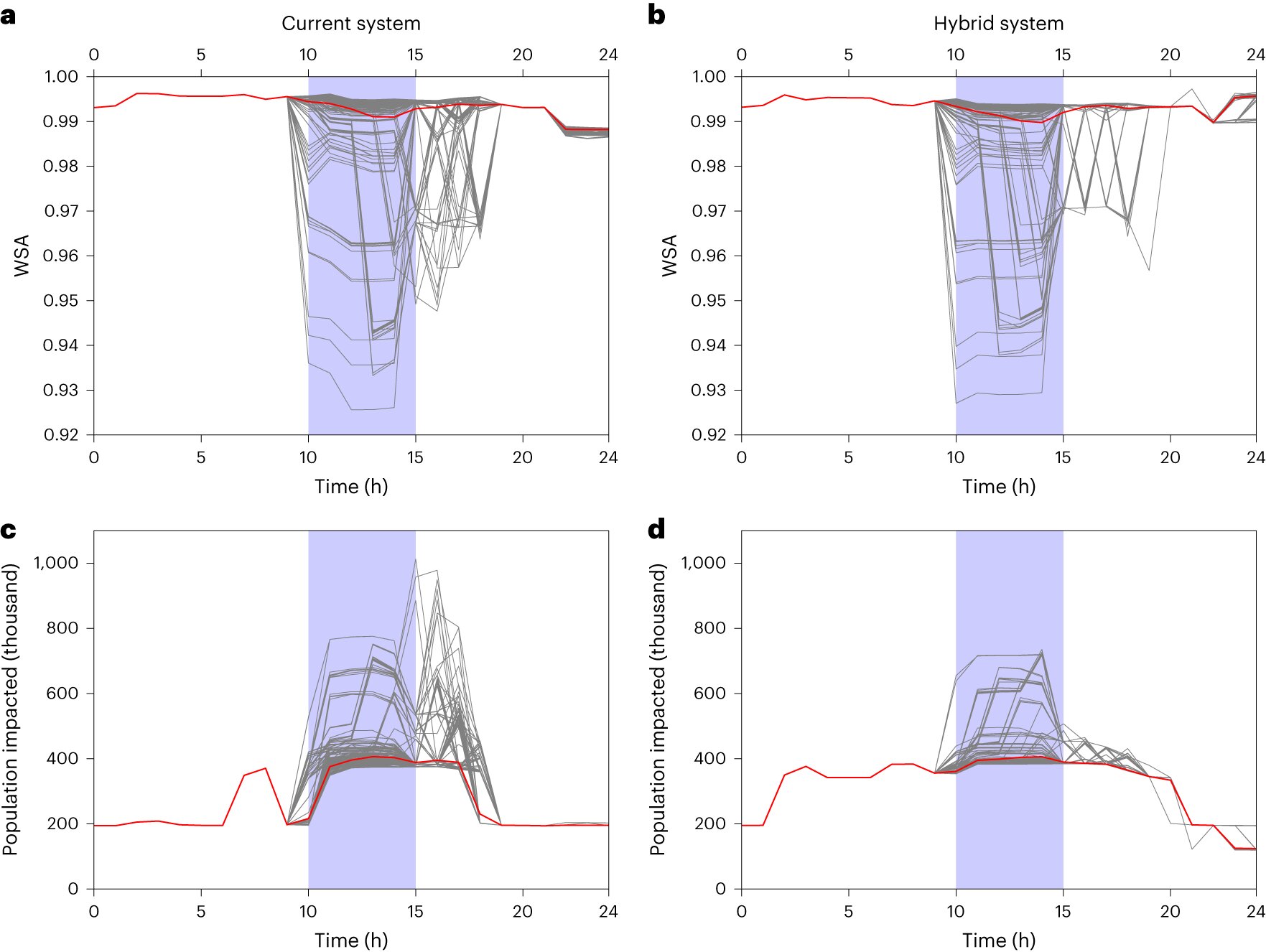
Houston’s water and wastewater system could be more resilient with the development of hybrid urban water supply systems that combine conventional, centralized water sources with reclaimed wastewater, according to a study by Rice University engineers now published in Nature Water.
“Such a system will save energy and help reduce the use of freshwater, a commodity that is becoming critically important around the world,” said Qilin Li professor of civil and environmental engineering and co-director of the Nanosystems Engineering Research Center for Nanotechnology Enabled Water Treatment (NEWT) at Rice.
“Our research shows that such a system is also more resilient against disruptive events such as hurricanes and flooding. It exhibits lower severity, range of impact and duration of substandard performance when disruption happens.”
Leonardo Dueñas-Osorio, a professor of civil and environmental engineering at Rice and a co-author on the study, said that hybrid water supply systems are more resilient than conventional centralized systems.
“Using Houston’s municipal water system as a case study, we explore the impact of various disruptions including pump station failures, pipe leakage and source water contamination,” Dueñas-Osorio said.
Li and her collaborators have identified vulnerable components in Houston’s existing water and wastewater system and proposed mitigation strategies. The urgency is compounded by the city’s aging infrastructure.
Nationally, the typical age of failing water mains is about 50 years, while the average age of the 1.6 million miles of water and sewer pipes in the U.S. is 45 years, according to the study. Some 6 billion gallons of treated water—roughly 15% of the U.S. daily public water supply—is lost each day from leaky pipes.
In addition, large cities around the world face unprecedented challenges as global climate change, population growth and continuing urbanization contribute to rapid increases in water demand, triggering water access issues and a growing financial burden due to water systems’ maintenance and upgrade needs.
On a small scale, cities around the world, including El Paso, have already enabled reclamation and reuse of municipal wastewater for both drinking and such non-potable uses as irrigation.
“Decreasing dependence on already stressed surface and groundwater resources has become increasingly important,” Li said. “An important challenge is to figure out how to best implement wastewater reclamation activities. The goal is to enhance sustainability and resiliency of big city water infrastructure. Our recent research shows the benefits of decentralized wastewater treatment and reuse.”
More information:
Lu Liu et al, Hybrid wastewater treatment and reuse enhances urban water system resilience to disruptive incidents, Nature Water (2023). DOI: 10.1038/s44221-023-00166-6
Rice University
Read the full article here


