


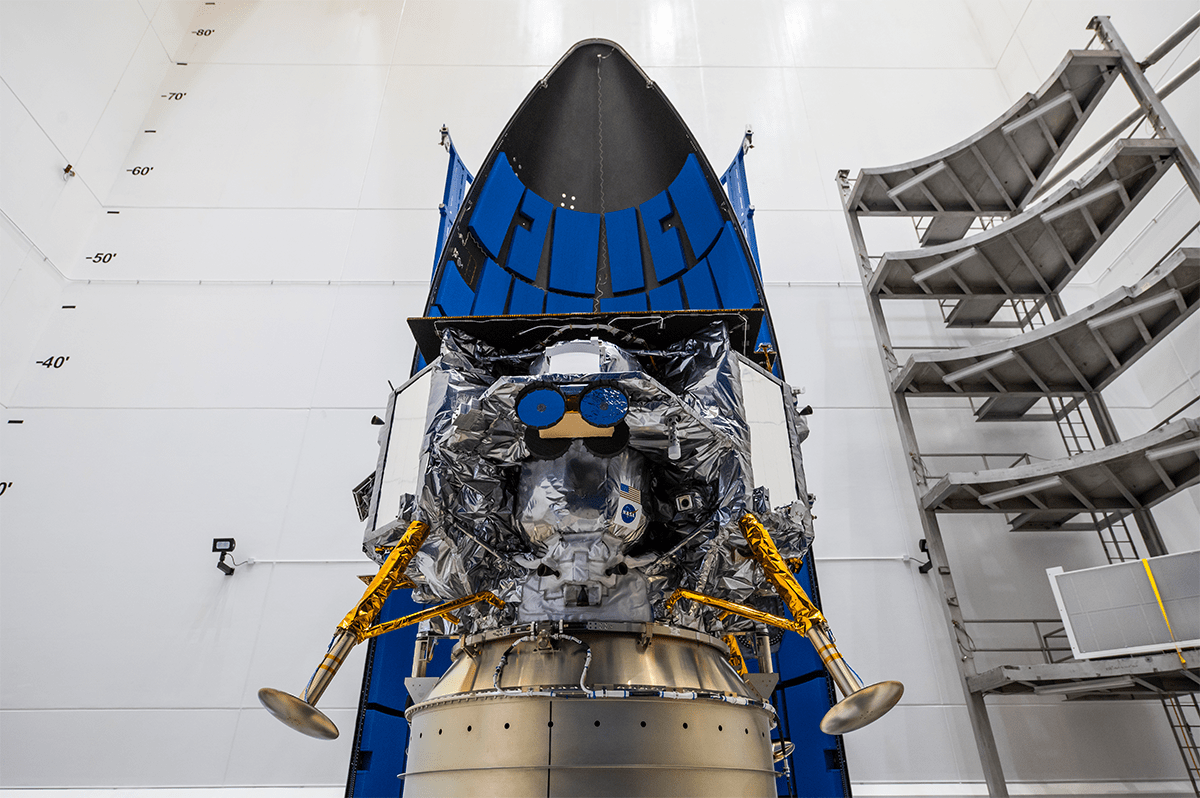
Astrobotic’s Peregrine lunar lander is still operating on orbit, with the company saying there is “growing optimism” that the spacecraft could survive in space longer than the current estimate.
The Pittsburgh-based startup has been releasing a series of updates to social media platform X since the spacecraft’s launch in the early hours of Monday morning. Shortly after separating from the launch vehicle, United Launch Alliance’s Vulcan Centaur, engineers immediately started encountering issues. Ultimately, those issues revealed a dire fuel leak in the spacecraft’s propellant system.
But despite all odds, Peregrine has been operational in space for more than four days, and the estimated operational time remaining continues to extend. Two days ago, Astrobotic said the spacecraft has around 36 hours of propellant remaining; but today, the company updated that estimate to 52 hours remaining as the leak continues to slow.
Astrobotic has also managed to receive critical data from many of the payloads on board, including scientific payloads from NASA, the German Aerospace Center and the European Space Agency. The company said yesterday that it has received data from all of the payloads designed to communicate with the lander, and has provided power to the 10 payloads requiring it. The remaining 10 payloads on board are passive, and do not require power or communications from the spacecraft.
“These payloads have now been able to prove operational capability in space and payload teams are analyzing the impact of this development now,” Astrobotic said in a statement. “We are proud of the mission team for achieving this incredible feat under such challenging circumstances.”
While a soft landing on the moon is still off the table, and a shortened lifetime is still a certainty due to the leak, extending the operational life is no doubt still a boon for both the Astrobotic team and the payload contributors.
Read the full article here