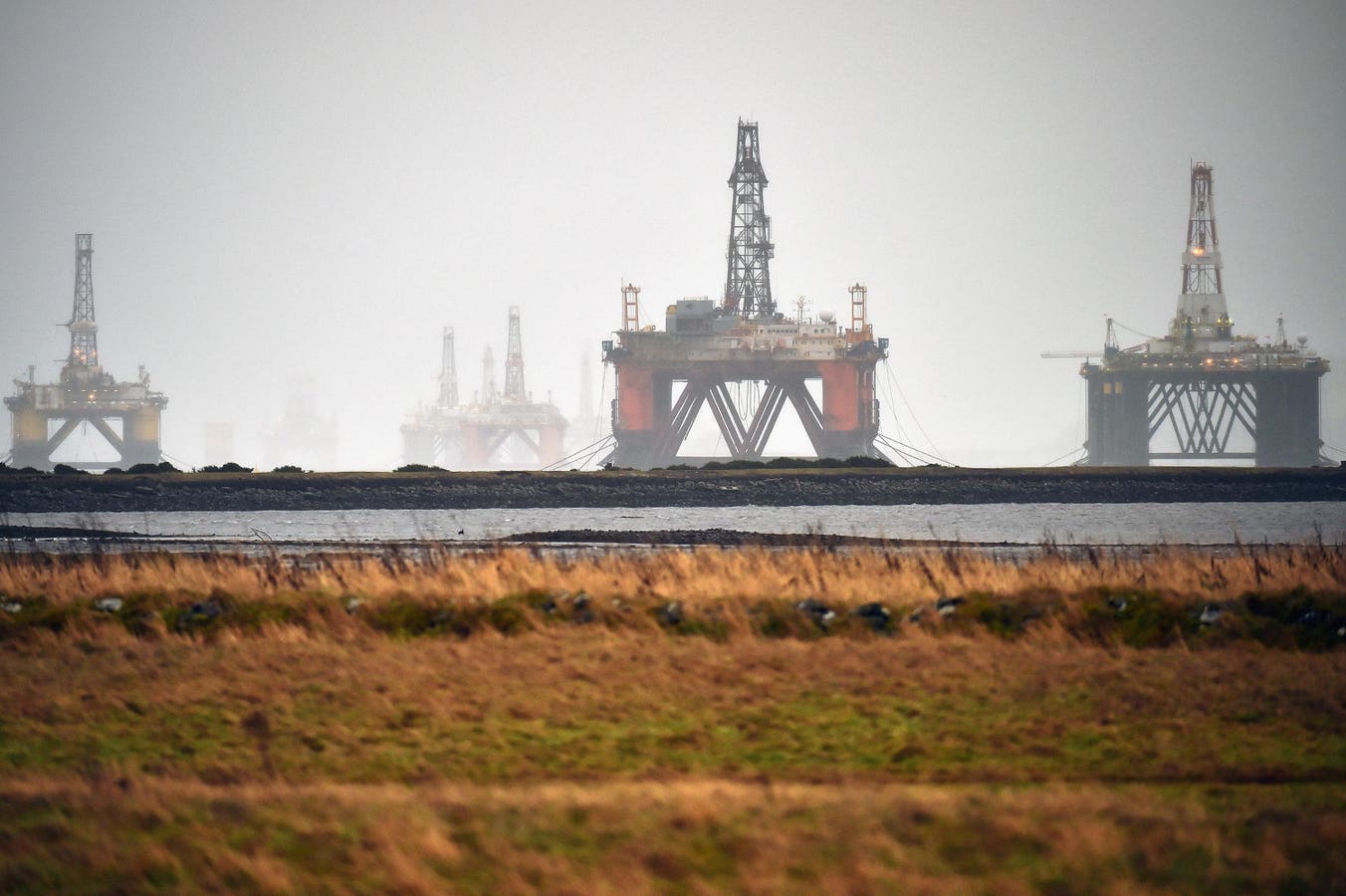
The British government has again found itself in troubled waters over its plans to extract more oil and gas from the North Sea, with new analysis finding that the strategy will do little to bolster the country’s energy security.
In a report released Monday, the U.K.’s Energy and Climate Intelligence Unit (ECIU), an independent non-profit, found that by 2030, extraction enabled by proposed new licensing law would increase by less than 1% the amount of domestically sourced fuel used in the country.
Using the government’s own figures, ECIU showed that, even under maximum expansion plans with no fall in demand for fossil fuels, oil and gas from U.K. extraction and refining would amount to just one in every 20 liters of petrol, and one out of every 50 liters of aviation fuel.
The analysis calls into question claims by both U.K. Prime Minster Rishi Sunak, and the Chancellor, Jeremy Hunt, that the new law—the Offshore Petroleum Licensing Bill 2023-24—would help ensure the country’s energy security.
“New licences are a distraction from policies that would have a real, lasting impact on the UK’s energy independence,” said ECIU’s Head of Analysis, Simon Cran-McGreehin. “Oil from new fields such as Rosebank will be traded internationally. As the government has admitted, this oil is not earmarked for the UK and it won’t make any real difference to UK prices.”
Gavin Bridge, Fellow of the Durham Energy Institute at Durham University, agreed, pointing out that oil prices tend to be dictated by international markets. “The reality is very little of the oil pumped from the North Sea is refined and sold on British soil,” Bridge said. “The notion that more drilling on the continental shelf boosts our energy security doesn’t stand up to scrutiny. Most of the oil is extracted by private or foreign state-owned companies over which the government has little control.”
It’s just the latest episode in a week of upsets for the controversial bill, which faces a vote by MPs on Monday night.
Last week, Conservative MP Chris Skidmore resigned over the bill, saying that it sent a “global signal that the U.K. is rowing ever further back from its climate commitments,” and that the decision to extract more oil would “only create stranded assets of the future.”
Then, on Monday morning, Conservative MP Alok Sharma, who presided over the U.K.’s hosting of the COP26 climate summit in 2021, told a BBC radio interviewer that he would not vote for the bill on Monday night. Speaking on Radio 4’s Today programme, Sharma said: “Just a few weeks ago at COP 28, the 28th UN climate conference, the UK government signed up to transition away from fossil fuels … This bill is about doubling down on granting more oil and gas production licences. It’s actually the opposite of what we agreed to do.”
But it remains to be seen whether the revolt, from members of the Prime Minister’s own party, will derail the bill.
The scientific community has been vocal in its opposition to expanding U.K. oil and gas production. In March of 2023, 700 U.K.-based scientists signed an open letter calling on the government to “commit to preventing any new oil and gas field development.” That’s because the burning of fossil fuels is responsible for almost 90% of the carbon dioxide emissions that are causing global warming. This being the case, bodies such as the International Energy Agency have warned that new fossil fuel extraction is not compatible with the goal of keeping temperature rise to within 1.5 degrees Celsius this century.
According to the U.K. Met Office, human-induced climate change meant that 2023 was the second-hottest year on record for the nation. Experts say this is one reason why the year was 11% wetter than the average, with flooding hitting multiple regions of the country in November and December—and flooding is likely to become more extreme as temperatures rise further. Recent research from Bristol University showed that the cost of flood damage to the U.K. could rise by 20% in the coming decades.
Read the full article here