


Researchers have identified a strategy that can offset the random and unpredictable nature of weather conditions that threaten carbon emission reduction efforts in the shipping sector.
Erratic weather is a major source of concern for ship owners installing modern sails to reduce carbon emissions. However, new research from The University of Manchester highlights operational strategies that can reduce shipping emissions by up to a quarter, strengthening confidence in sails as a decarbonization tool.
It is estimated that the international shipping sector contributes to 2%–3% of global carbon emissions annually and its target to cut carbon by 50% relative to 2008 levels by 2050 falls short of the cuts required in the Paris Climate Agreement, meaning the shipping sector requires urgent global action.
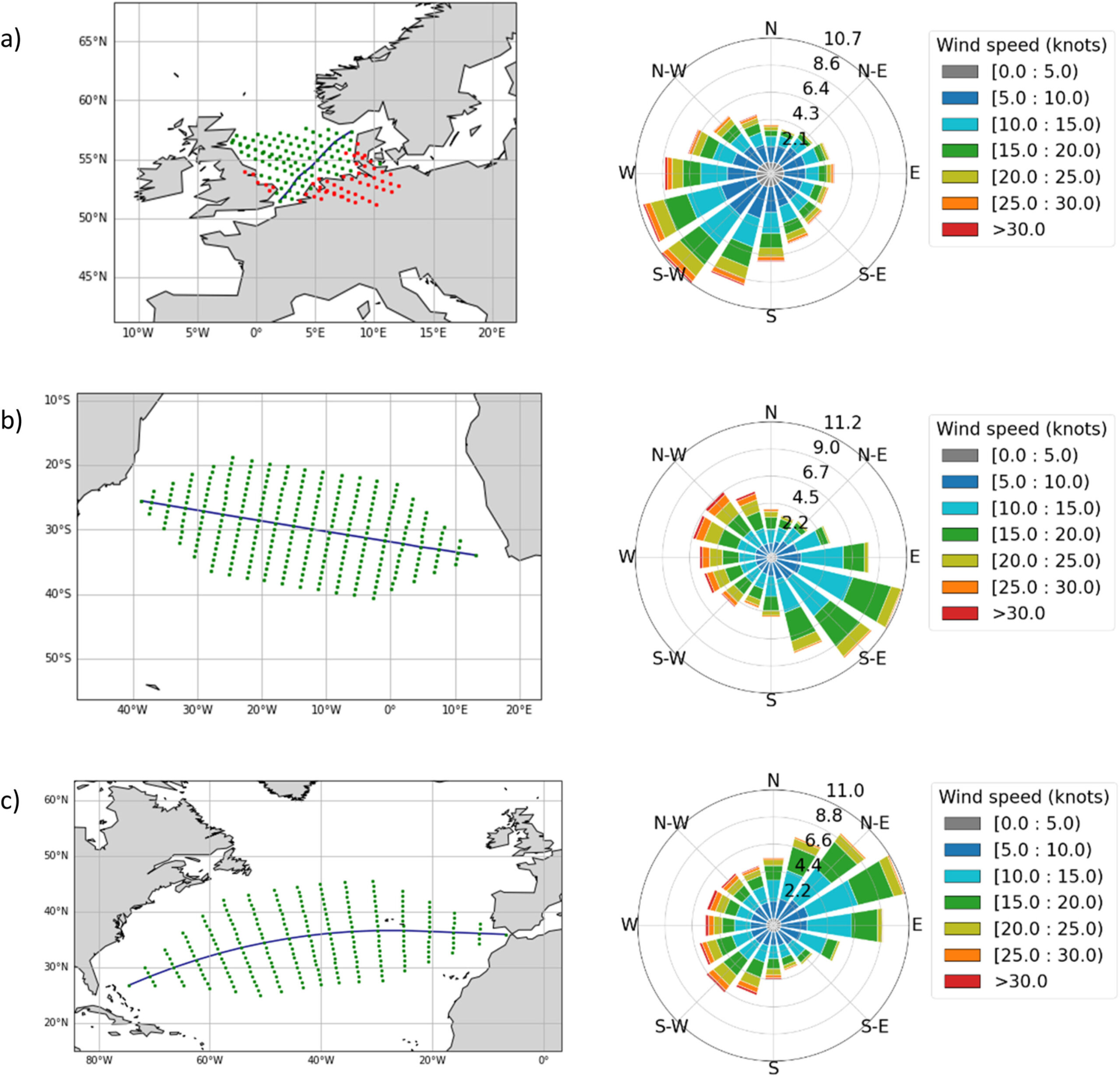
The research, published in the journal Ocean Engineering, calculated carbon emissions from more than 1,000 ship departures setting sail from three main shipping routes. The results found that combining modern sail technology with efficient routing systems could provide greater assurances of carbon savings by using the technique that reduces uncertainty from unpredictable weather patterns.
Dr. James Mason, previously a postdoctoral researcher and now a visiting academic at the Tyndall Center for Climate Change Research at The University of Manchester, said, “Current measures to reduce carbon emissions include fitting retrofit technologies, such as wind propulsion technology, where modern sails produce direct energy from the wind to reduce the power consumed by a ship’s engine. Weather routing is also used as an efficient routing system to allow a ship to deviate from standard shipping routes to search for new routes with more favorable winds.
“Current academic methods assume a perfect foresight of future weather rather than accounting for unpredictable winds that are happening in real-time. This can detrimentally reduce the carbon savings from weather routing and could present a real challenge for the shipping sector when trying to meet its climate reduction goals.”
Dr. Alejandro Gallego Schmid, a Senior Lecturer at the Tyndall Center for Climate Change Research, added, “This research provides an insight into which routes are most sensitive to changing weather forecasts when using wind propulsion and assesses a strategy that could help to mitigate the detrimental impact that unpredictable weather conditions can have.”
The strategy mirrors existing routing methods in the sector by updating weather and wind every 12 hours to allow ships to adjust their routes based on the most accurate weather forecast available.
To test the strategy, the study simulated 1,080 ship departures across eastbound and westbound journeys in the North Sea, South Atlantic Ocean and North Atlantic Ocean, which have voyage times of up to 12 days.
The research found that the method successfully reduced the uncertainty from unpredictable weather and showed that sails and efficient routing can provide annual carbon savings of up to 25%.
However, while the method reduces the uncertainty from unpredictable weather, it does not remove it entirely. Wind propulsion and efficient routing can provide maximum carbon savings of up to 29% in ideal conditions and weather uncertainty reduces these savings by 10%–20%. Further research is needed to understand how ships can achieve these maximum savings in practice.
Reducing shipping emissions by up to a quarter by using wind propulsion with efficient routing could provide profound benefits to the sector. The research offers a clearer understanding of the potential carbon savings achievable through wind propulsion decarbonization strategies, without which, objectives in the Paris Climate Agreement may become out of sight.
More information:
James Mason et al, Mitigating stochastic uncertainty from weather routing for ships with wind propulsion, Ocean Engineering (2023). DOI: 10.1016/j.oceaneng.2023.114674
University of Manchester
Read the full article here


