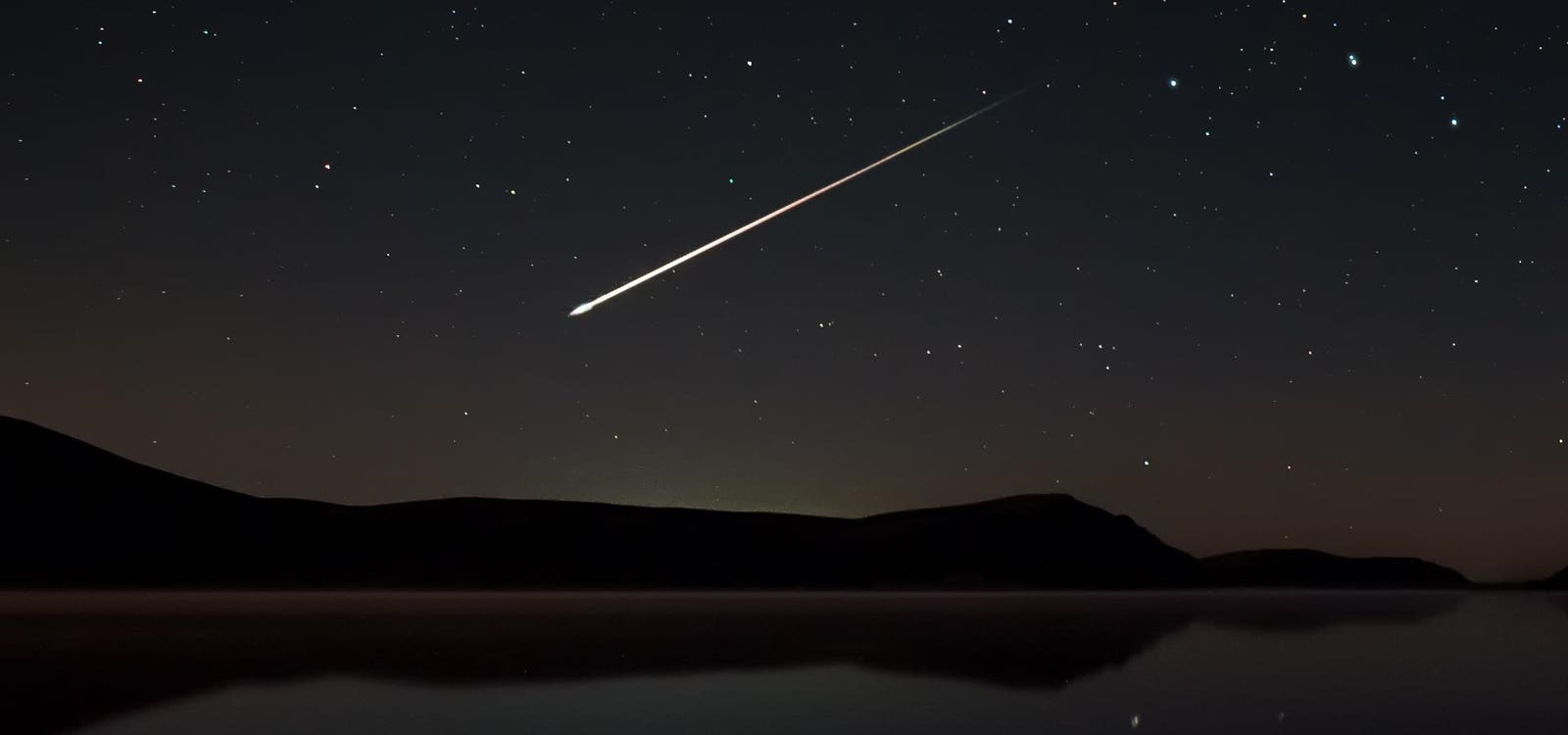
The Ursids, the final meteor shower of the year, has begun.
Running from December 17-26 this year, according to Timeanddate, the Ursid meteor shower will peak overnight on Thursday, December 21 through Friday, December 22.
They come just a week after the Geminids, which peaked earlier this week when over 100 “shooting stars” were seen during one of 2023’s strongest meteor showers.
That’s probably not the case for the Ursids, which will number around 10 “shooting stars” per hour at the peak. Still, numbers can sometimes reach 25, according to the American Meteor Society.
Why To See The Ursid Meteor Shower
This year, the peak of the Ursids coincides with December’s solstice. The two events are entirely unconnected, but Earth’s journey around the sun causes both—as Earth’s northern axis is at its maximum tilt away from the sun, it also busts into dust and debris left in the inner solar system by a comet.
What Causes The Ursid Meteor Shower
All “shooting stars” are caused by dust and dirt striking Earth’s atmosphere, though usually the source is a passing comet. For the Ursids, it’s 8P/Tuttle, a comet that takes 13.6 years to orbit the sun. It was last seen in the inner solar system in 2021 and is next due back in 2035.
In 2008, scientists used the now-defunct Arecibo Observatory’s huge radio dish to study 8P/Tuttle, which was discovered to be 2.8 miles (4.5km) in diameter and shaped like a peanut.
When To See The Ursid Meteor Shower
The radiant point of the Ursids—where the “shooting stars” will appear to emanate in the night sky—is the constellation Ursa Minor. These stars wrap around Polaris, the North Star, so you must look north. There’s more good news because since Ursa Minor is a circumpolar constellation—i.e., it’s “up” all night—you can start watching for “shooting stars” as soon as it gets dark (not so in the southern hemisphere, where the Ursids will not be visible).
However, there will be a waxing gibbous moon during the peak night of the Ursids, which isn’t ideal.
So wrap up warm, be patient and stay outside for an hour before supper—leaving any binoculars or telescopes inside—and you’ll have a chance of seeing a “shooting star” or two in the northern sky.
Wishing you clear skies and wide eyes.
Read the full article here