


Each Monday, I pick out the northern hemisphere’s celestial highlights (mid-northern latitudes) for the week ahead, but check my main feed for more in-depth articles on stargazing, astronomy, eclipses and more.
The Night Sky This Week: December 11-17, 2023
The final week of the year with a new moon makes it one of the last, with a sky dark enough for easy stargazing. However, a few extraordinary events are happening this week, from a rare eclipse of the bright red star Betelgeuse to the peak of the best meteor shower of the year, the Geminids.
Here’s everything you need to know about stargazing and the night sky this week:
Monday, December 11: Betelgeuse Occulted By An Asteroid
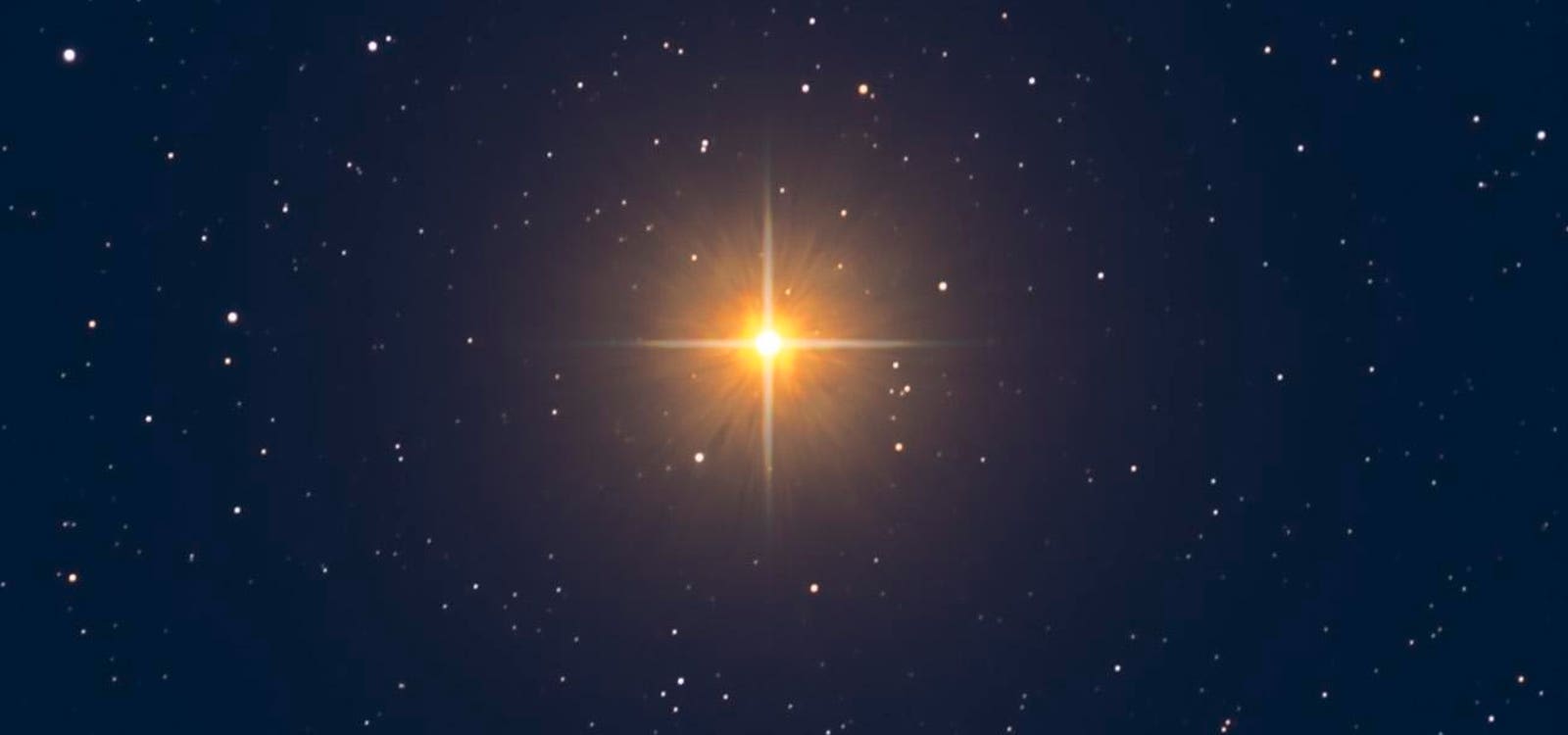
High above the eastern horizon at around 8:17 p.m. EST tonight, according to Sky & Telescope, Orion’s bright red supergiant star Betelgeuse will disappear from view behind an asteroid as seen by the naked eye. In an infrequent once-every-few-decades event, an asteroid called 319 Leona will pass in front of Betelgeuse and block its light for a few seconds as a shadow falls across Earth’s surface. It could cause a “ring of fire” annular eclipse. However, it will only be visible from a narrow path across the Earth’s surface from Asia to Florida and Mexico via southern Europe. Detailed information can be found here and here.
Tuesday, December 12: New Moon
At 18:32 EST today, the moon will enter its new phase as if it drifts roughly between Earth and the sun. It will be invisible but soon rise in the post-sunset sky as a delicate crescent.
Wednesday, December 13: Mercury Retrograde
From today through January 1, 2024, Mercury will be in a period of apparent retrograde motion”—appearing to go backward in the sky. The cause is Mercury’s orbit of the sun, which is slightly elliptical. When it gets close to Earth during its “inferior conjunction”—right now—its movement against the background of stars appears to slow down. Mercury seems to go backward briefly as Earth overtakes it, much like if you overtake a vehicle on the highway. It’s only a matter of perspective and has no significance to humans.
Wednesday/Thursday, December 13/14: Geminid Meteor Shower Peaks
The Geminid meteor shower will peak overnight when up to 150 multicolored meteors could be visible from the northern hemisphere. A clear night is essential—and a dark sky will help. Luckily, the moon will be completely absent. Even better for those not wanting to stand around in the cold late at night, Gemini—the apparent source constellation—will be high in the sky as true darkness descends. Consequently, according to the American Meteor Society, “shooting stars” could be visible by 10 p.m. local time, wherever you are. All you need is your naked eyes—binoculars and a telescope will make it more difficult.
Object Of The Week: The Magellanic Clouds
From the southern hemisphere, this week is perfect for a view of the Large and Small Magellanic Clouds (LMC and SMC), two dwarf galaxies orbiting the Milky Way from 160,000 and 200,000 light-years distant, respectively. They are named after Ferdinand Magellan, the Portuguese mariner who led the first successful circumnavigation of the Earth from 1519 to 1522 (though he died on the way).
The times and dates given apply to mid-northern latitudes. For the most accurate location-specific information, consult online planetariums like Stellarium and The Sky Live. Check planet-rise/planet-set, sunrise/sunset and moonrise/moonset times for where you are.
Wishing you clear skies and wide eyes.
Read the full article here



