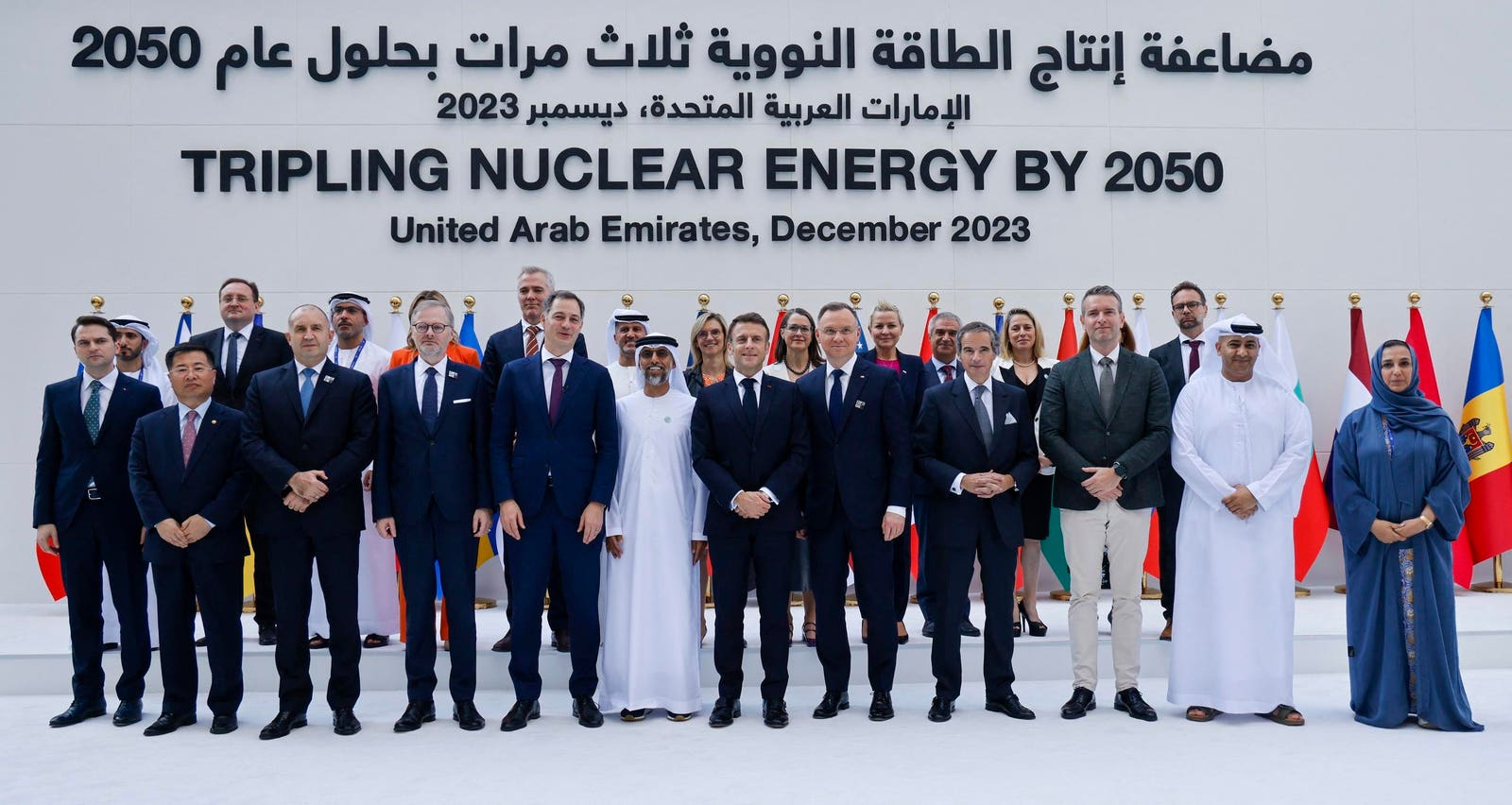
Among the less publicized achievements of COP28 has been a notable declaration by at least 20 countries, including the United States, the United Kingdom, Sweden and Canada to triple nuclear power capacity by 2050. This is a sensible science-based declaration, supported by the IAEA and the IPCC’s view that atomic energy has a role to play in decarbonization. The declaration thus deserves the attention of investors and the wider public. For too long, nuclear power has been stigmatized out of emotional fear rather than facts. The quest for a holy grail of global energy supply remains elusive, but much research continues to be cultivated and curated according to preferences and assumptions about a desired outcome.
The critics of nuclear energy tend to use selective science which needs to be confronted head-on. Let us use the example of a paper published a few years ago in the prestigious journal Nature Energy which reflects proclivities in favor of renewable energy with a clear objective of marginalizing nuclear power. Despite a very elegant hypothesis-driven conceptual framework, the authors have designed a study that diminishes the carbon benefits of nuclear by using a regression analysis that is not well-suited to the core societal question at hand: is the future of nuclear power likely to assist with carbon mitigation?
Instead of addressing this question, the authors use aggregate carbon emissions data for countries and compare nuclear energy versus renewable energy dominance for two historic periods until 2014. The correlations are based on asymmetric units of comparison (given that only 31 countries are nuclear power producers while the full sample of countries with renewable portfolios is 123 in their data set). What the analysis does usefully show is that a switch to renewable energy technologies has definitively led to reduced carbon emissions, and that there can be some competition between the energy sources in terms of investment prioritization.
The history of carbon comparisons research on nuclear is highly contentious as the range of life cycle analyses (LCA) and environmental product declarations (EPD) methods used to compare carbon footprints from mines to markets makes outputs astronomically different. Indeed, composite literature reviews conducted earlier reveal widely divergent assessments from 4 to 220 gCO2/kWh giving ample space for activist anti-nuclear scholars to pounce upon.
As further analysis by the OECD’s Nuclear Energy Agency has shown, much of the inflated carbon range with nuclear stems from assumptions about concentrations of uranium ore and the construction materials (specially concrete) of conventional plants. However, much less of this will likely be relevant with future nuclear development and that is where industrial ecological research investment should be made. The high capacity factors of nuclear as well as clearly demonstrable reduced carbon of future nuclear power has now been firmly acknowledged by the International Energy Agency.
Even the safety risks in terms of human mortality of nuclear considering the overall 70 plus years record of nuclear technology is better than wind power and far better than fossil fuels. This may even get better with future technologies and costs may well go down once the risk analysis is more equivalently presented as other energy sources. Therefore, even if we do not consider nuclear power to be a potential panacea, we should certainly rethink its characterization as a pariah.
Read the full article here