


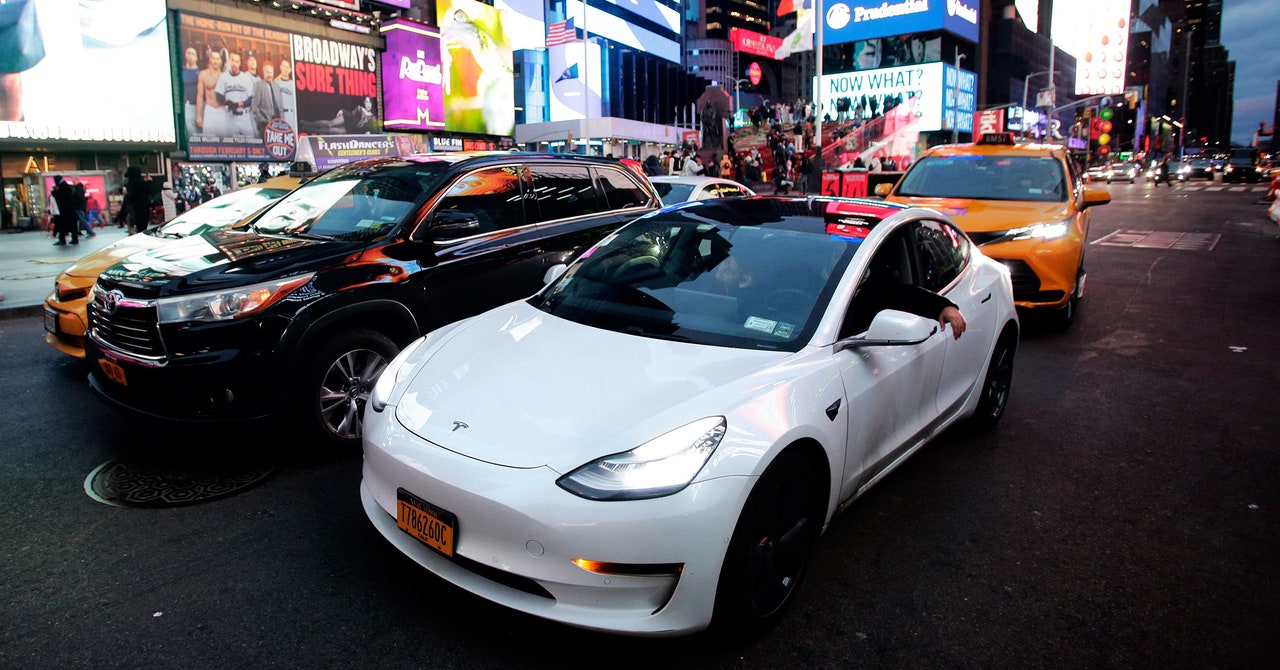
George Saliba didn’t get it: Why were all these people from the Bronx suddenly crowding his electric vehicle dealership in Ewing, New Jersey? Why did they all want Tesla’s black-on-black Model Y? And why did they keep coming?
Other electric vehicle sellers in the tri-state area were equally busy. The reason? A change of rules at New York City’s Taxi and Limousine Commission, or TLC. In mid-October, an update, the first in half a decade, allowed any aspiring Uber and Lyft driver to freely apply for a license to drive in New York. All they needed was an electric vehicle.
The program, part of a larger Taxi Commission program called Green Rides that aims to have an all-electric taxi and ride-hail fleet in New York by 2030, is part of the city’s strategy to get more people driving EVs. The logic goes: Suddenly increase the number of electrics on the road and charging companies will race to get their chargers into the ground. Lots of people want to drive for ride-hail companies, but New York, which regulates drivers more firmly than other American cities, has for years capped the number of Ubers and Lyfts allowed on the road. No more.
Win-win, right?
Not at all. Three weeks after the program was introduced, a group representing taxi and ride-hail workers in the city petitioned the court to intervene. They argued that city regulators hadn’t gone through the appropriate steps before creating the new program, and that it would drive down existing drivers’ wages and drive up traffic congestion. In early November, a state court judge ordered a pause on the program.
As governments at the local, state, and national levels race to hit ambitious electric vehicle goals, the incident highlights the political trickiness of implementing policies that might turn entire transportation systems on their heads. Plenty of places, including London in the UK and California in the US, see cars driven by gig workers using Uber and Lyft as big opportunities: Give these highly utilized ride-hail vehicles electric powertrains and get a local flywheel of adoption spinning. But leaning on lower-income and middle-class ride-hail drivers—who in New York City tend to own or lease their cars—has downsides. Now a court will likely decide the future of the city’s program.
Read the full article here





