



The knock-on effects could be substantial
OpenAI was never quite like other generative AI startups — or other startups period, for that matter. Its governance structure is unique and what ultimately led to the abrupt ousting of CEO Sam Altman on Friday.
Even after it transitioned from a nonprofit to a “capped-profit” company in 2019, OpenAI retained an unusual structure that laid out in no uncertain terms what investors could — and couldn’t — expect from the startup’s leadership.
For example, OpenAI backers’ returns are limited to 100x of a first-round investment. That means that if an investor puts in $1, for example, they’re capped to $100 in total returned profit.
OpenAI investors also agree — in theory, at least — to abide by the mission of the nonprofit guiding OpenAI’s commercial endeavors. That mission is to attain artificial general intelligence (AGI), or AI that can “outperform humans at most economically valuable work” — but not necessarily generating a profit while or after attaining it. Determining exactly when OpenAI has achieved AGI is at the board’s sole discretion, and this AGI — whatever form it takes — is exempted from the commercial licensing agreements OpenAI has in place with its current customers.
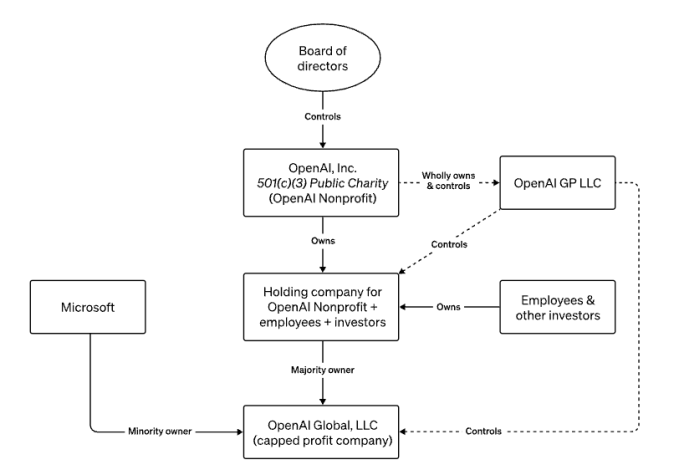
How OpenAI described its operating structure in the pre-turmoil days. Image Credits: OpenAI
OpenAI’s dual, mission-driven structure was aspirational, to say the least, inspired by effective altruism and intended to clearly delineate the company’s profit-making efforts from its more ambitious, humanistic goals. But investors didn’t count on the board exercising its power in the way it did. Neither did many employees, it seems.
Read the full article here