


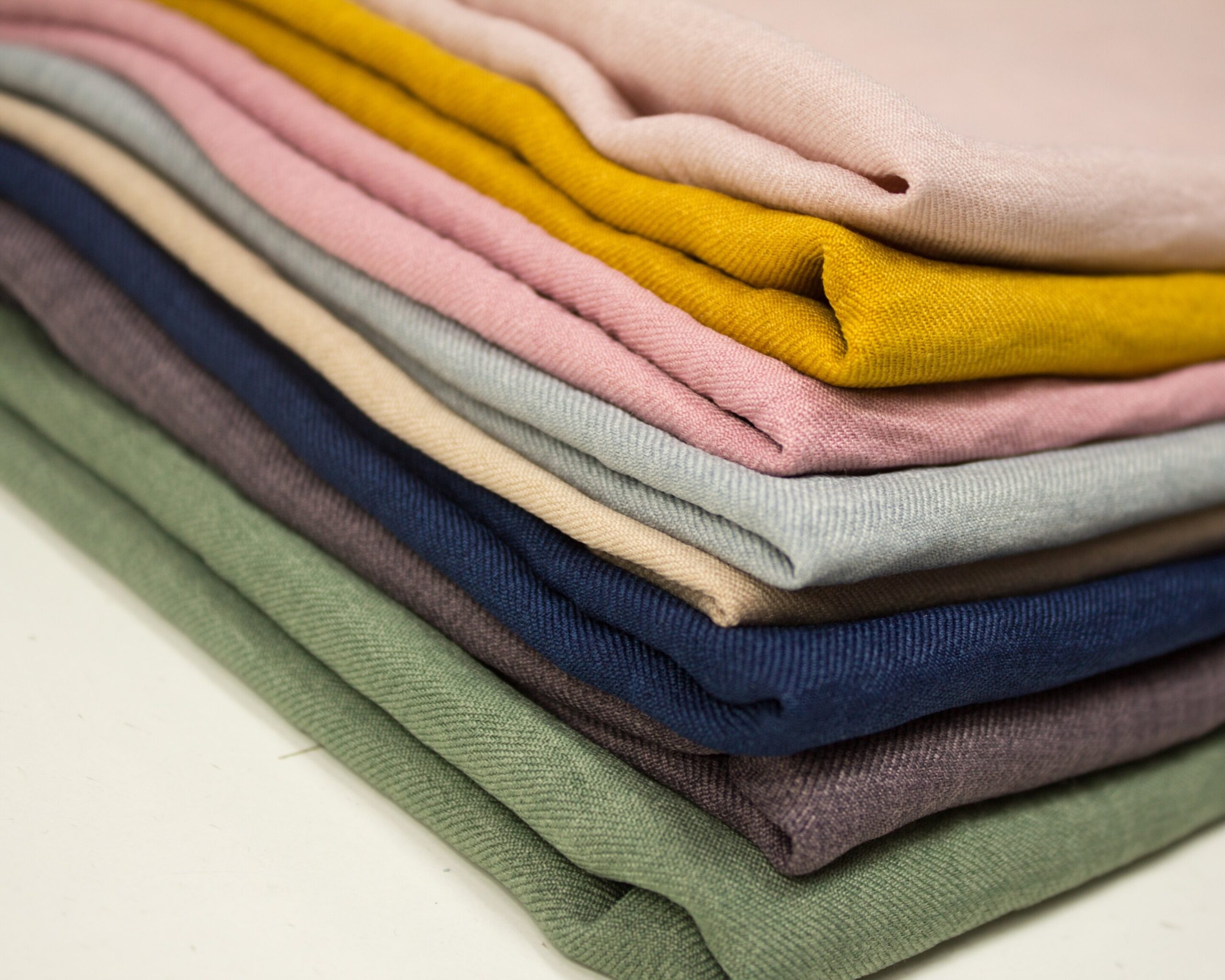
The pollution caused by the textile industry is often discussed, but its impact on health is less emphasized. Nevertheless, the petrochemical compounds used in the manufacturing of our clothes have harmful effects on workers, surrounding communities, and consumers. This issue has a global impact, but its assessment is complex due to our low chronic exposure to a “cocktail” of synthetic substances whose cause-and-effect relationships are difficult to identify.
Moreover, most of these substances prove to be toxic through interaction or degradation, as is the case with azo dyes that are ubiquitous and persistent in the environment.
Through my research in sustainable textile design, I explore how design can contribute to making the textile industry more environmentally friendly, focusing on raising ecological awareness among designers, decision-makers, and the general public.
Design-led solutions
In the 1960s, designer Victor Papanek was the first to address environmental issues related to industrial product design. Meanwhile, biologist Rachel Carson initiated the emergence of ecological consciousness, shedding light on the profound impact of human activity on the environment.
Then in the 1990s, green chemistry facilitated collaboration between design and biology to develop ecological textiles. Aligned with The Hannover Principles, these textiles aimed to enhance waste management and preserve water purity. Intending to harmonize the interdependence between human activity and the natural world by eliminating toxic inputs at their source, these principles also gave rise to the “Cradle to Cradle” ecodesign philosophy that popularized the concept of circular design in the early 2000s.
An inspired approach from nature
Humanity has always drawn inspiration from nature to create.
However, in the late 20th century, biologist Janine Benyus invited us to observe the operating mechanisms of living organisms, encouraging a reevaluation of manufacturing processes through biomimicry—a concept that draws inspiration from nature’s designs and processes to create more sustainable technologies.
Could we, for example, produce dyes at room temperature and without toxic molecules? This approach leads to a shared reflection between design, science and engineering. This multidisciplinary vision of design, where ecology, medicine, and politics play a role in the design process to better meet the needs of society, was already advocated by Papanek in 1969.
Developing ecological literacy
In 1990, educator David Orr introduced the concept of ecoliteracy to address a major gap in traditional education, centered on humans and ignoring their interconnectedness with nature. He advocated for environmental education to develop a sense of belonging to one’s living environment and establish production models that promote the resilience of ecosystems. This concept helps to understand the intricate connections between human activities and ecological systems, to foster a sense of responsibility and informed decision-making.
In the 2000s, fashion design researcher Kate Fletcher supported the development of this ecological literacy to help stakeholders in the industry (designers, consumers and manufacturers) understand the implicit interconnection of industrial and living systems, showing that fashion maintains a vital relationship with nature.
Then, in 2018, the sustainable design researcher Joanna Boehnert emphasized that ecological literacy not only promotes the development of new, more sustainable ways of producing, but also broadens our social, political, and economic vision to systemically address transdisciplinary sustainability challenges.
This is also supported by biologist Emmanuel Delannoy who offers a permaeconomy model, blending permaculture and economics to establish a symbiotic relationship between economic systems and the natural environment, fostering resilience and prompting a reevaluation of our connection with living organisms
A colorful heritage to rediscover
My research-creation proposes a critical reflection on textile dyeing.
This field of investigation leads me to explore coloring beyond its aesthetic to raise ecological, economic and pedagogical questions.
While the glamourous aspect of fashion obscures the health and socio-environmental issues of the textile industry, I direct my thinking toward a more global understanding of dyeing, including its origins, manufacturing methods and interactions with living organisms.
I explore the development of non-toxic dyes by studying, on one hand, literature on natural dyes since prehistory, and, on the other hand, by meeting experts in the field such as scientific historian Dominique Cardon or ecoliterate artisan Rebecca Burgess, founder of the Fibershed concept, which aims to produce biodegradable clothing in a limited geographical space.
I also study field practices, including those of the Textile Laboratory of Atelier Luma, which works at the intersection of ecology, textiles and regional economic development.
And, I keep an eye on design education programs that offer an art-science approach where deep ecology is integrated into the design process.
Symbiosis between nature and the textile industry
Additionally, in the research laboratory where I work, I experiment with the intersection of traditional and prospective dyeing recipes.
Inspired by the concept of industrial ecology (precursor of the circular economy), that values the waste of one industry as resources for another, I use agri-food waste as a coloring source, combined with the use of pigment-producing bacteria to expand the color palette.
Thus, tannins from various waste materials can be used in dye recipes.
But coloring a textile is only the visible part of the iceberg, as fiber preparation takes place upstream to ensure the color’s resistance to light and washing, known as “mordanting.” Whether the fiber is animal or vegetable, different mordants will be used.
This expertise acquired iteratively between theory, prototyping, and results analysis contributes to gaining “textile ecoliteracy.” Coupled with a knowledge of biology, this allows for understanding the deleterious interactions between the material and living worlds.
Ultimately, the synthesis of ecoliteracy and biomimicry concepts has led me to reflect on a macro-vision of the fashion industry ecosystem, and to consider the concept of “textile ecoliteracy” as a means to deploy a network of intersectoral collaborations between design, health, education, and industry.
My research aims to show that textile materiality must harmonize symbiotically with natural ecosystems so that both parties benefit from their interaction.
In conclusion, the textile industry’s environmental and health impacts necessitate urgent attention and innovative solutions. This article has delved into the historical context, explored interdisciplinary approaches, and proposed the concept of “textile ecoliteracy” as a collaborative means to address these challenges.
By focusing on sustainable design, education, and the utilization of innovative practices, designers can play a pivotal role in reshaping the industry. The synthesis of ecological awareness and biomimicry principles highlights the potential for a harmonious coexistence between textile materiality and natural ecosystems.
As we move forward, fostering a symbiotic relationship between the textile industry and the environment is not just a choice but a collective responsibility—one that promises a healthier future for both people and the planet.
The Conversation
This article is republished from The Conversation under a Creative Commons license. Read the original article.
Read the full article here


