


When politicians, tech executives, and researchers gathered in the UK last week to discuss the risks of artificial intelligence, one prominent worry was that algorithms might someday turn against their human masters. More quietly, the group made progress on controlling the use of AI for military ends.
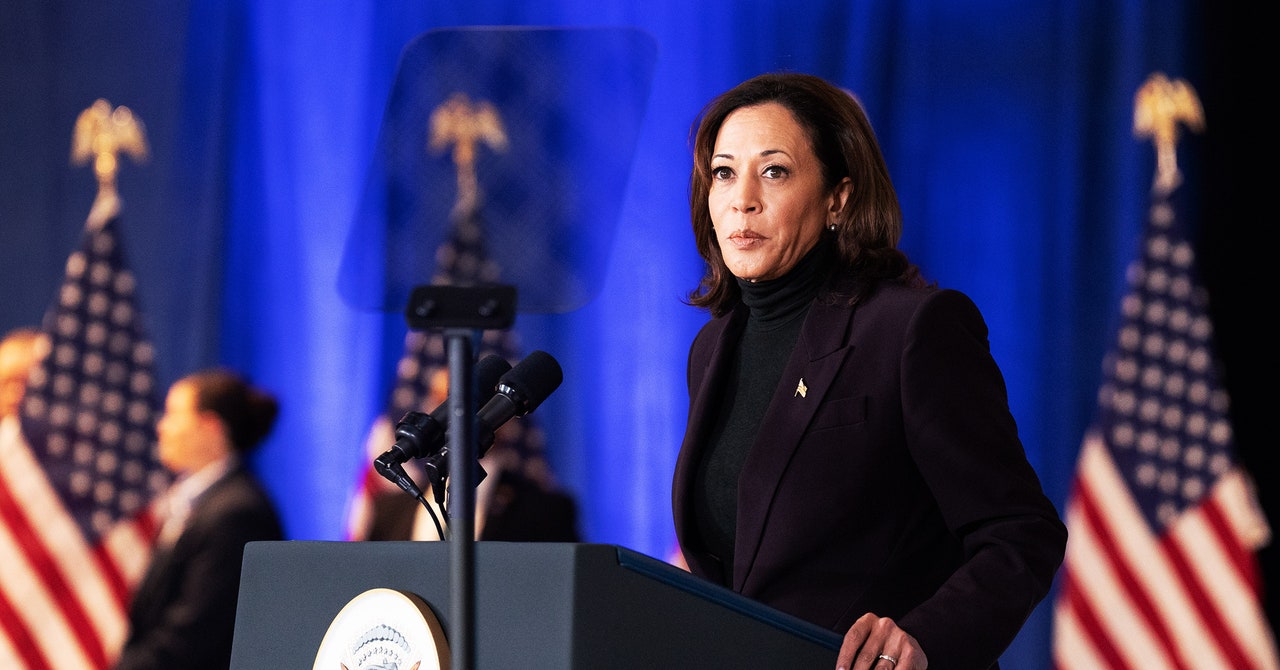
On November 1, at the US embassy in London, US vice president Kamala Harris announced a range of AI initiatives, and her warnings about the threat AI poses to human rights and democratic values got people’s attention. But she also revealed a declaration signed by 31 nations to set guardrails around military use of AI. It pledges signatories to use legal reviews and training to ensure military AI stays within international laws, develop the technology cautiously and transparently, avoid unintended biases in systems that use AI, and continue to discuss how the technology can be developed and deployed responsibly.
“A principled approach to the military use of AI should include careful consideration of risks and benefits, and it should also minimize unintended bias and accidents,” the declaration says. It also says that states should build safeguards into military AI systems, such as the ability to disengage or deactivate when a system demonstrates “unintended behavior.”
The declaration is not legally binding, but it is the first major agreement between nations to impose voluntary guardrails on military AI. On the same day, the UN announced a new resolution from its General Assembly that calls for an in-depth study of lethal autonomous weapons and could set the terms for restrictions on such weapons.
Lauren Kahn, a senior research analyst at the Center for Security and Emerging Technology (CSET) at Georgetown University, calls the US-led declaration “incredibly significant.” She says it could offer a practical path toward binding international agreement on the norms around how nations develop, test, and deploy AI in military systems, providing greater safeguards and transparency around applications involving weapons systems. “I really believe that these are common sense agreements that everyone would agree to,” Kahn says.
The nonbinding declaration was first drafted by the US following a conference attended by representatives from different nations that focused on military use of AI and was held in The Hague in February. The US has also asked other nations to agree that humans remain in control of nuclear weapons. The new declaration states that the nations behind it will meet in early 2024 to continue discussions.
Read the full article here





