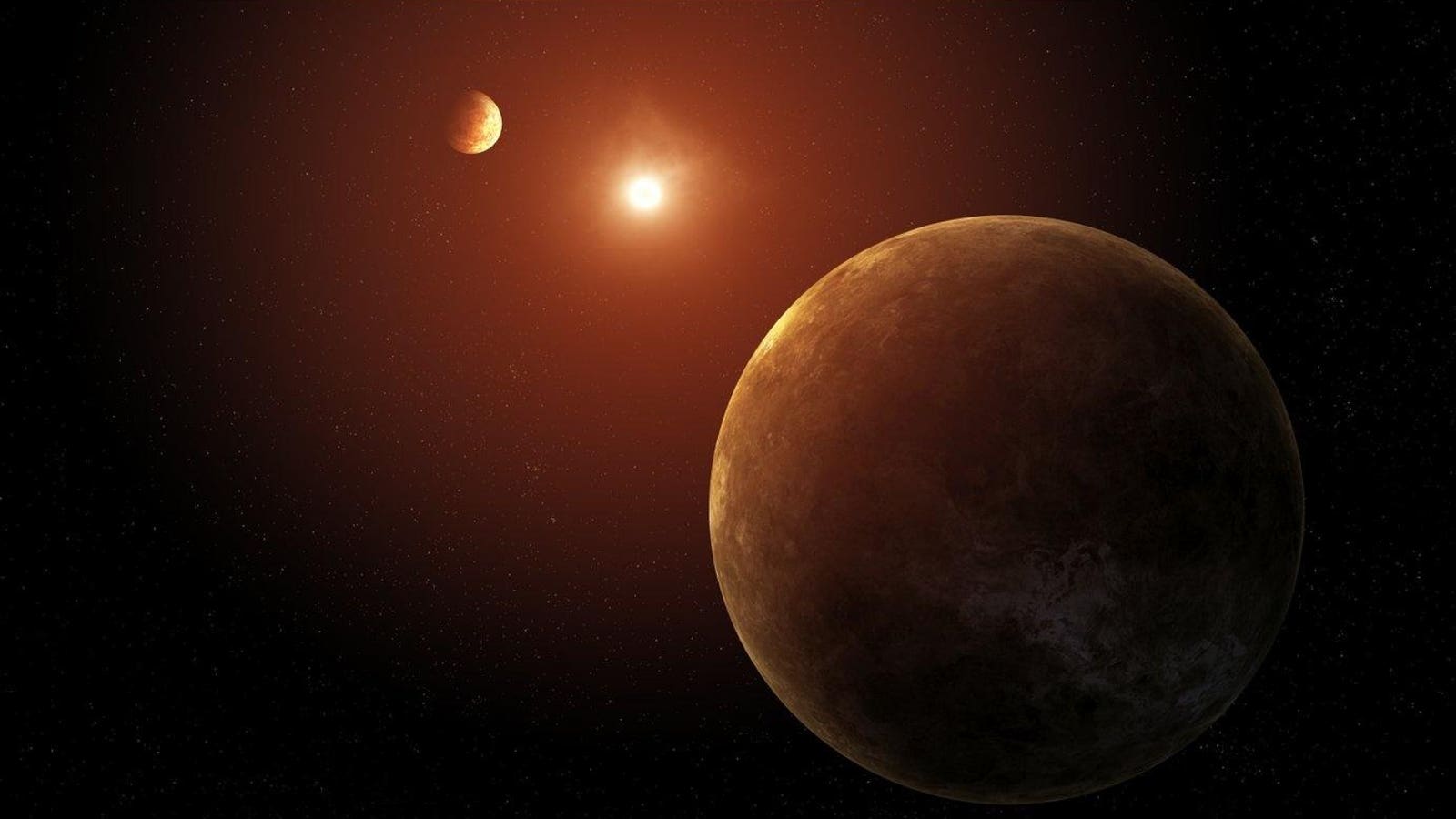
Exoplanet-hunters have found a rare star system containing seven planets after poring through data from a space telescope that stopped working in 2018. Exoplanets are planets that orbit around stars other than our sun.
Meet Kepler 385
Kepler 385, a roughly sun-sized star around 4,670 light-years distant in the constellation Cygnus, the swan, was first suspected of having planets in 2014. They appeared in data from NASA’s Kepler Space Telescope.
However, new analysis has confirmed the presence of seven planets, all larger than Earth yet smaller than Neptune. The two planets closest to their host star are thought to be rocky and may have thin atmospheres.
However, all of the seven planets are hotter than any planet in our solar system, according to NASA. That’s a first for a multi-planetary system.
Accurate List
“We’ve assembled the most accurate list of Kepler planet candidates and their properties to date,” said Jack Lissauer, a research scientist at NASA’s Ames Research Center in California’s Silicon Valley and lead author of a paper published this week in the Journal of Planetary Science. “NASA’s Kepler mission has discovered the majority of known exoplanets, and this new catalog will enable astronomers to learn more about their characteristics.”
Kepler’s Legacy
The Kepler Space Telescope observed nearly 200,000 stars to calculate what fraction of stars in the Milky Way have Earth-size planets in their habitable zone. The mission found 2,662 exoplanets between 2009 and 2018 before technical problems ended it. However, scientists will be using its data for many years.
NASA says that there are more than 5,500 confirmed exoplanets beyond our solar system.
Wishing you clear skies and wide eyes.
Read the full article here