


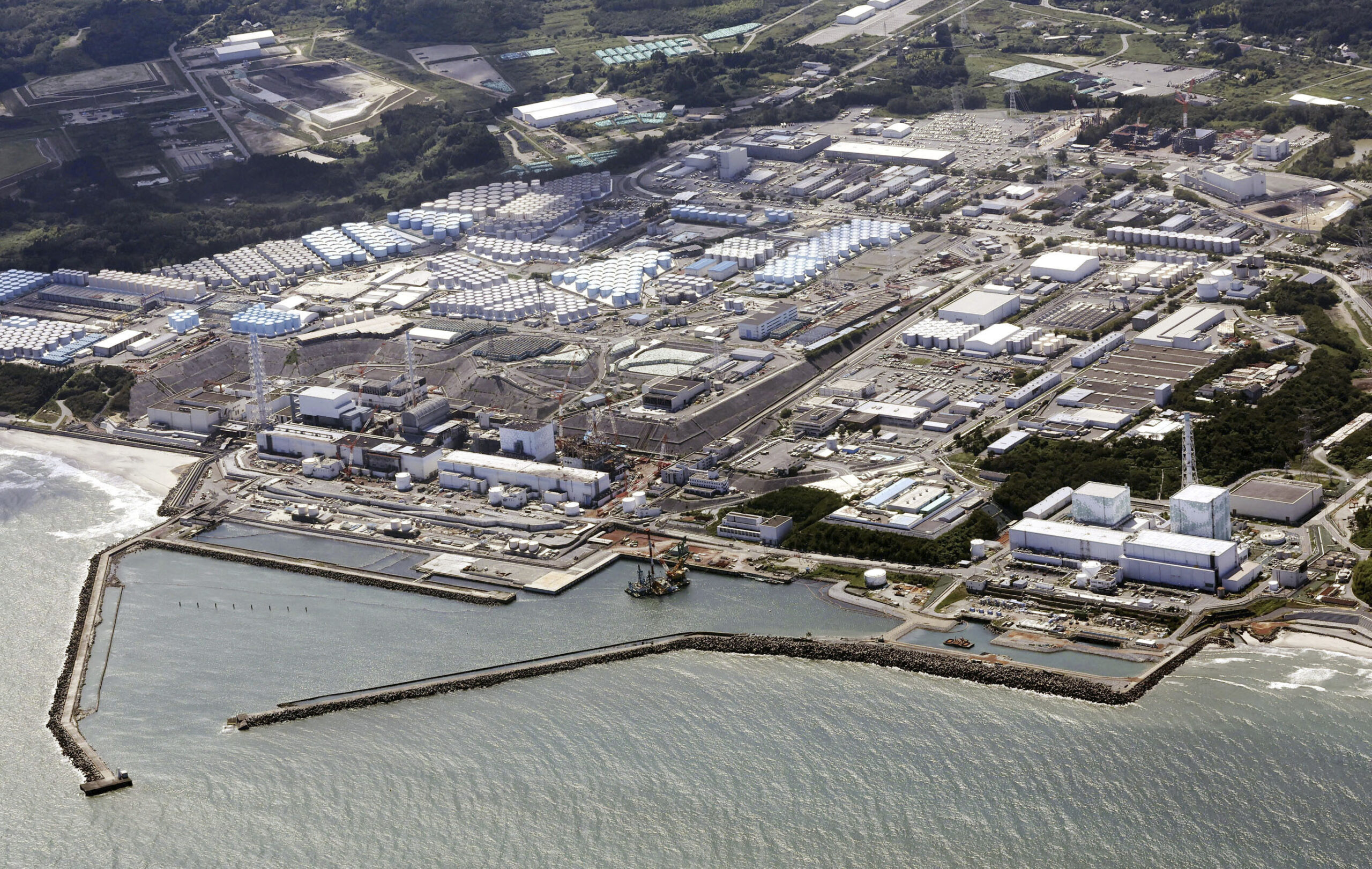
The tsunami-damaged Fukushima Daiichi nuclear power plant began its third release of treated and diluted radioactive wastewater into the sea Thursday after Japanese officials said the two earlier releases ended smoothly.
The plant operator discharged 7,800 tons of treated water in each of the first two batches and plans to release the same amount in the current batch through Nov. 20.
Tokyo Electric Power Company Holdings said its workers activated the first of the two pumps to dilute the treated water with large amounts of seawater, gradually sending the mixture into the Pacific Ocean through an undersea tunnel for an offshore release.
The plant began the first wastewater release in August and will continue to do so for decades. About 1.34 million tons of radioactive wastewater is stored in about 1,000 tanks at the plant. It has accumulated since the plant was crippled by the massive earthquake and tsunami that struck northeastern Japan in 2011.
TEPCO and the government say discharging the water into the sea is unavoidable because the tanks are nearly full and the plan needs to be decommissioned.
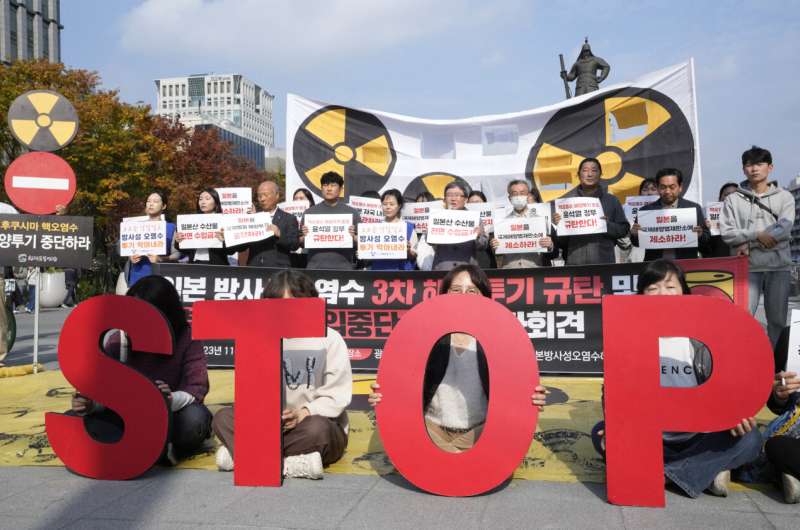
The wastewater discharges have been strongly opposed by fishing groups and neighboring countries including South Korea, where hundreds of people staged protests. China immediately banned all imports of Japanese seafood, badly hurting Japanese seafood producers and exporters.
Japan’s government has set up a relief fund to help find new markets and reduce the impact of China’s seafood ban, while the central and local governments have led a campaign to eat fish and support Fukushima, now joined by many consumers.
The water is treated to remove as much radioactivity as possible then greatly diluted with seawater before it is released. TEPCO and the government say the process is safe, but some scientists say the continuing release is unprecedented and should be monitored closely.
So far, results of marine samplings by TEPCO and the government have detected tritium, which they say is inseparable by existing technology, at levels far smaller than the World Health Organization’s standard for drinking water.
In a recent setback, two plant workers were splashed with radioactive waste while cleaning piping at the water treatment facility and were hospitalized for exposure.
-
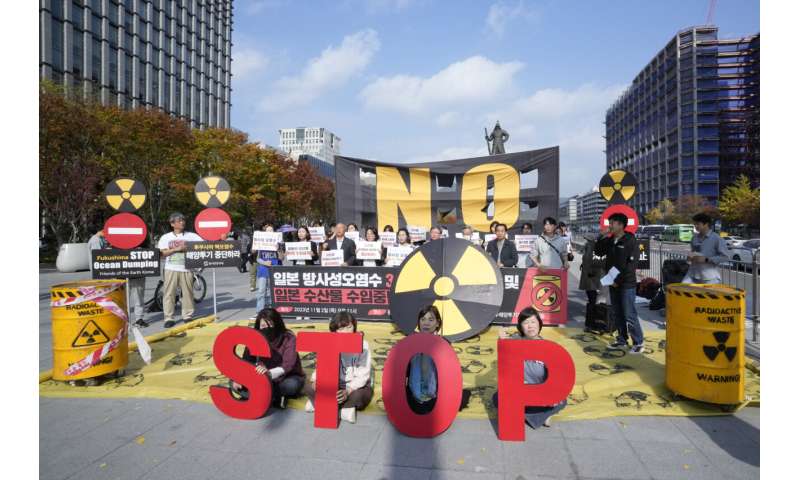
Members of civic groups stage a rally to demand the stop of the Japan’s release of treated radioactive water from the damaged Fukushima nuclear power plant into ocean, in Seoul, South Korea, Thursday, Nov. 2, 2023. Credit: AP Photo/Ahn Young-joon
-
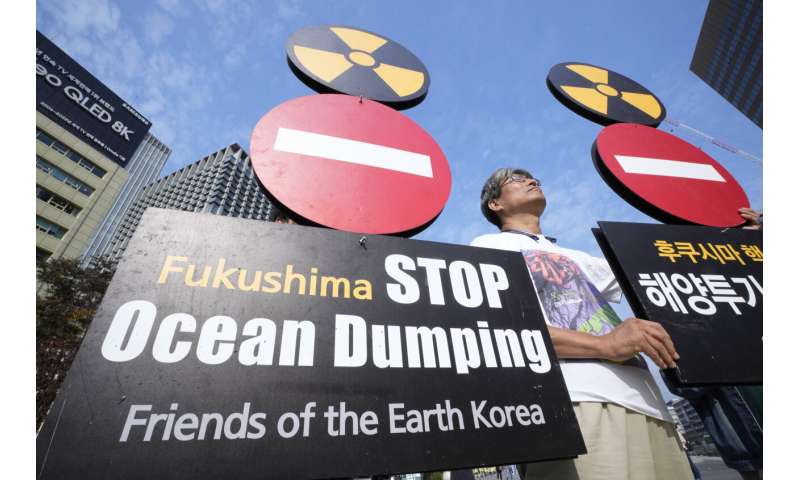
A member of civic groups participates in a rally to demand the stop of the Japan’s release of treated radioactive water from the damaged Fukushima nuclear power plant into ocean, in Seoul, South Korea, Thursday, Nov. 2, 2023. Credit: AP Photo/Ahn Young-joon
The International Atomic Energy Agency has concluded that if the release is carried out as planned, it would have a negligible impact on the environment, marine life and human health. IAEA mission officials said last month they were reassured by the smooth operation so far.
© 2023 The Associated Press. All rights reserved. This material may not be published, broadcast, rewritten or redistributed without permission.
Read the full article here


