


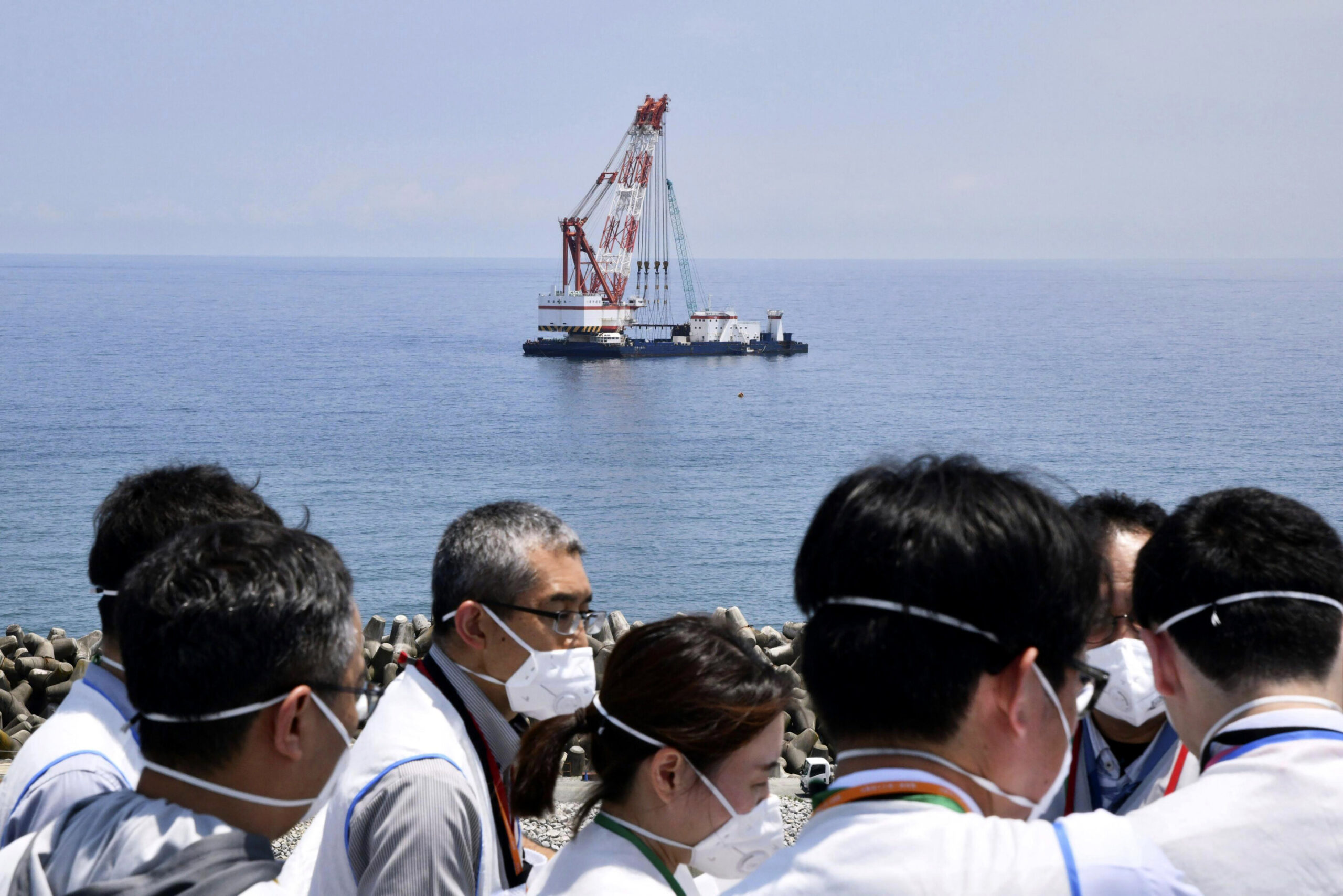
Japanese regulators began the final inspection Wednesday before treated radioactive wastewater is released from the wrecked Fukushima nuclear plant into the Pacific Ocean.
The inspection began a day after the plant operator Tokyo Electric Power Company Holdings had installed the last piece of equipment needed for the release—the outlet of the undersea tunnel dug to discharge the wastewater 1 kilometer (1,094 yards) offshore.
TEPCO said the Nuclear Regulation Authority inspectors were to examine the equipment related to the treated water transfer and its safety systems as part of their three-day inspection through Friday. The permit for releasing the water could be issued about a week later, and TEPCO could start discharging the water soon after, though an exact date has not been decided.
The plan has faced fierce protests from local fishing groups concerned about safety and reputational damage. The government and TEPCO in 2015 promised not to release the water without consent from the fishing community, but many in the fishing community say the plan was pushed regardless. Neighboring South Korea, China and some Pacific Island nations have also raised safety concerns.
Government and utility officials say the wastewater, currently stored in about 1,000 tanks at the plant, must be removed to prevent any accidental leaks and to make room for the plant’s decommissioning. They say the treated but still slightly radioactive water will be diluted to levels safer than international standards and will be released gradually into the ocean over decades, making it harmless to people and marine life.
-
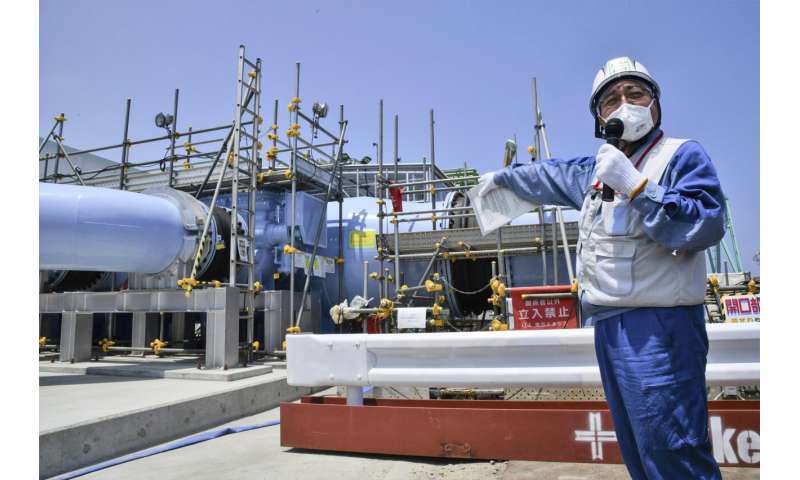
An employee of Tokyo Electric Power Company explains about the facility to be used to release treated radioactive water to media at Fukushima Daiichi nuclear power plant in Fukushima, northern Japan, Monday, June 26, 2023. All equipment needed for the release into the sea of treated radioactive wastewater from the wrecked Fukushima nuclear plant has been completed and will be ready for a safety inspection by Japanese regulators this week, the plant operator said Monday, as opposition to the plan continues in and outside Japan over safety concerns.Credit: Kyodo News via AP
-
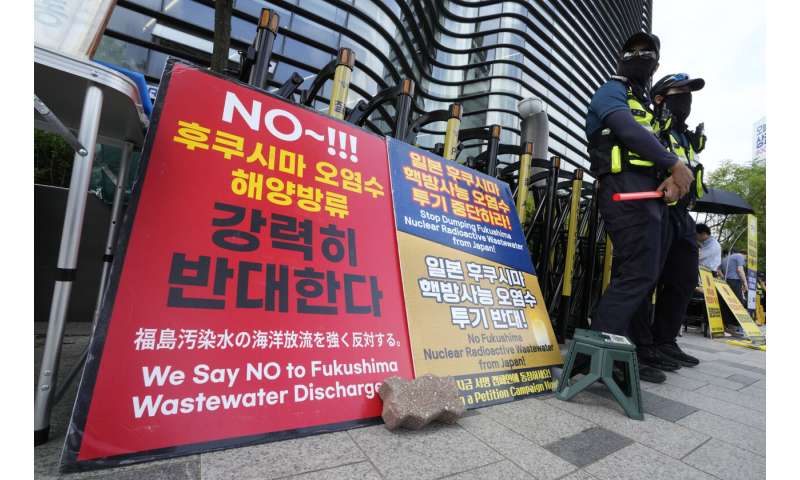
Banners are displayed to protest against Japanese government’s decision to release treated radioactive wastewater from Fukushima nuclear power plant, near a building which houses Japanese Embassy in Seoul, South Korea, Wednesday, June 28, 2023. Japanese regulators began the final inspection Wednesday before treated radioactive wastewater is released from the wrecked Fukushima nuclear plant into the Pacific Ocean. Credit: AP Photo/Ahn Young-joon
-
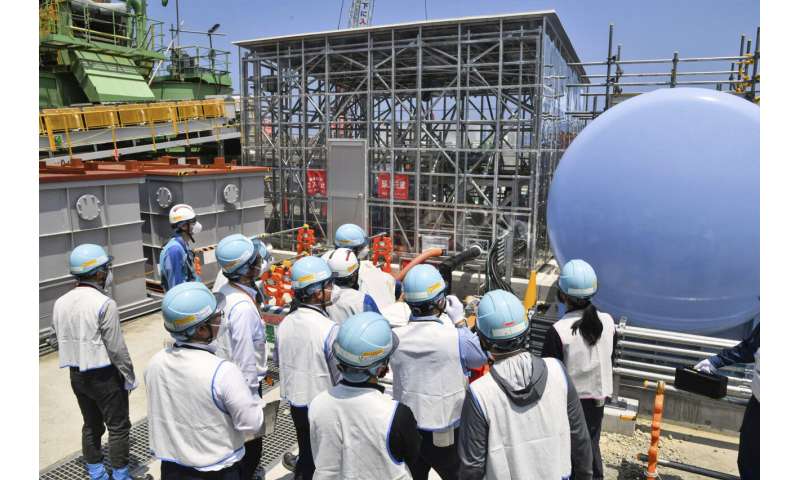
An equipment to be used to dilute the water with seawater is shown to media at the Fukushima Daiichi nuclear power plant in Fukushima, northern Japan, Monday, June 26, 2023. All equipment needed for the release into the sea of treated radioactive wastewater from the wrecked Fukushima nuclear plant has been completed and will be ready for a safety inspection by Japanese regulators this week, the plant operator Tokyo Electric Power Company Holdings said Monday, as opposition to the plan continues in and outside Japan over safety concerns.Credit: Kyodo News via AP
-
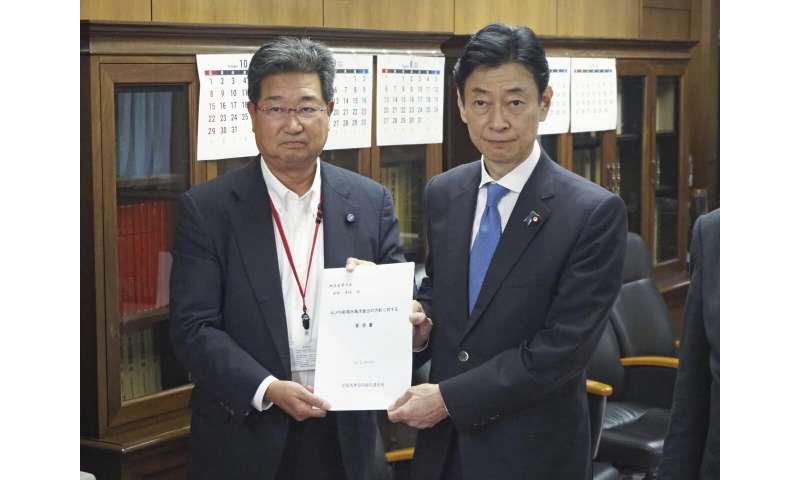
Masanobu Sakamoto, left, head of Japanese national fisheries cooperatives, meets with Japan’s Industry Minister Yasutoshi Nishimura, right, at the latter’s ministry in Tokyo, Thursday, June 22, 2023. Sakamoto, president of JF Zengyoren, has reiterated his group’s rejection to Japan’s planned discharge of treated radioactive water into sea from the tsunami-wrecked Fukushima nuclear power plant, demanding the government take full responsibility over possible negative impact on the industry.Credit: Kyodo News via AP
-
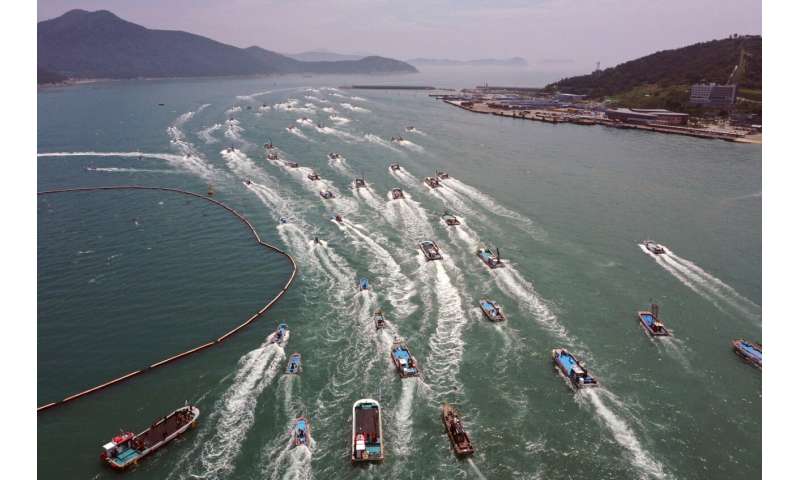
South Korean fishing boats stage a maritime parade to protest against the planned release of treated radioactive water from the wrecked Fukushima nuclear power plant into the sea, on the seas off Wando, South Korea, Friday, June 23, 2023. Credit: Jo Nam-soo/Yonhap via AP
Some scientists say the impact of long-term, low-dose exposure to radionuclides is unknown and the release should be delayed. Others say the release plan is safe but call for more transparency, including allowing outside scientists to join in sampling and monitoring the release.
Japan has sought support from the International Atomic Energy Agency to gain credibility and ensure that safety measures meet international standards. IAEA has dispatched several missions to Japan since early 2022, and its final evaluation report is expected soon, though the organization has no power to stop the plan. IAEA chief Rafael Mariano Grossi is expected to visit Japan in early July to meet Prime Minister Fumio Kishida and visit the plant.
A massive earthquake and tsunami on March 11, 2011, destroyed the Fukushima Daiichi nuclear plant’s cooling systems, causing three reactors to melt and their cooling water to be contaminated and leak continuously. The water is collected, treated and stored in the tanks, which will reach their capacity in early 2024.
© 2023 The Associated Press. All rights reserved. This material may not be published, broadcast, rewritten or redistributed without permission.
Read the full article here


