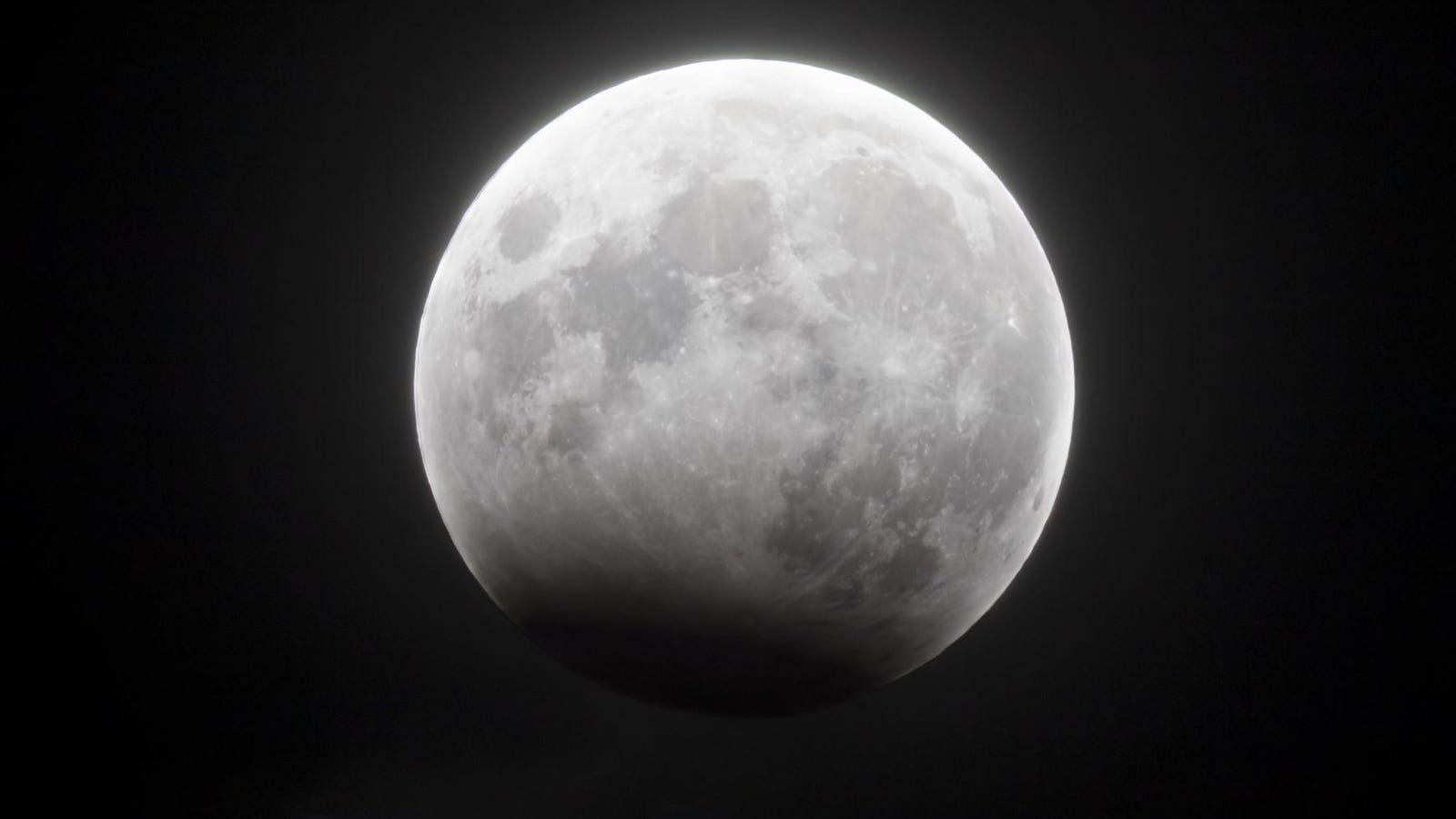
October’s full moon, the “Hunter’s Moon,” rose on Saturday night and was, for some, partially eclipsed.
The full moon itself was visible across the world, though the partial lunar eclipse was best seen by those in Europe, Africa and Asia.
Here are a selection of the best and most impressive images of the full moon and the partial lunar eclipse from around the globe:
The moon became full at 3:35 p.m. EST on Saturday, October 28 and was best seen at moonrise close to that time. The moon becomes full every 29.5 days. It actually takes just 27.3 days to complete one orbit around Earth. However, because, during that time, Earth moves slightly further around the sun in its own orbital path, the gap between any specific phases of the moon is slightly longer.
A lunar eclipse can only occur at full moon. It’s caused by the moon entering Earth’s shadow, which it can only do when it’s on the opposite side of the Earth to the sun. What occurred on Saturday was a partial lunar eclipse. Earth has two shadows in space, its dark inner umbra and it’s lighter outer penumbra. During this eclipse, the moon mostly entered the penumbra. Only 6% of the moon entered the umbra at peak eclipse, which left it looking like a small bite had been taken out of it.
It was also possible to see Jupiter just 3º below the full moon as it rose higher into the sky. Like all full moons, the “Hunter’s Moon” was visible all night, rising in the east at sunset and setting in the west at sunrise. October’s full moon is generally known as the “Hunter’s Moon” moon because it’s all-night brightness helped in the hunting of game in the vital weeks before cold weather kicked in throughout the northern hemisphere.
A total lunar eclipse—also called a “Blood Moon”–can only occur when all of the moon enters Earth’s umbra. That will next happen on March 13/14, 2025. Total lunar eclipses typically come along in groups of three in a single lunar year (which lasts 354 days), with the other dates in that triumvirate being September 7/8, 2025 and March 2/3, 2026.
It may seem logical that a lunar eclipse should happen each and every month. After all, every full moon must be on the opposite side of Earth to the sun to be fully illuminated. However, the moon’s orbital plane is tilted by 5% with respect to Earth, which is enough to ensure that it’s rarely in the exact position to move through Earth’s shadow.
The moon’s tilted orbit is also why solar eclipses—which are caused by the moon moving precisely in front of the sun, from our point of view—are relatively rare. However, it’s no accident that this partial lunar eclipse occurred two weeks after an annular solar eclipse, which was visible in the Americas. It may have a tilted orbit with respect to Earth’s, but the moon’s orbital path must cross Earth’s twice each month. When that happens at the point of new or full moon, a solar or lunar eclipse must occur. Two weeks later, another one usually occurs.
The next penumbral lunar eclipse will occur on March 24/25, 2024, according to Timeanddate.com, two weeks before the “Great American Eclipse” total solar eclipse on April 8, 2024 in Mexico, the U.S. and Canada. Get your solar eclipse glasses!
The next full moon after the “Hunter’s Moon” will be the full “Beaver Moon” on Monday, November 27, 2023.
I’m an expert on eclipses—the editor of WhenIsTheNextEclipse.com and author of The Complete Guide To The Great North American Eclipse of April 8, 2024. For the very latest on the “ring of fire” solar eclipse—including travel and lodging options—check my main feed for new articles each day.
Wishing you clear skies and wide eyes.
Read the full article here