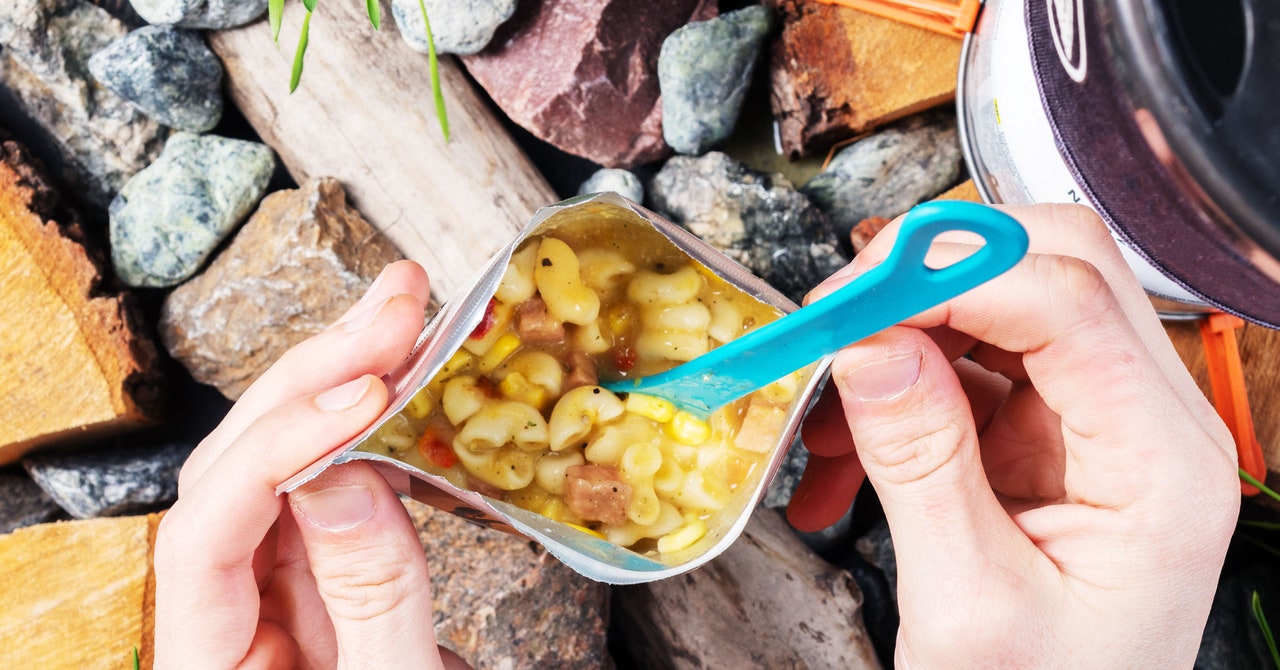
I’m looking at two bowls of lasagna. These ready-to-eat meals with a 25-year shelf life come from two US-based survival food companies. Preparation is simple: Just add hot water. One can be eaten after about 12 minutes, the other after just six.
Neither looks particularly appetizing. It probably doesn’t help that I’m a picky eater, but they prove hard to swallow. There is no relation to actual lasagna in taste or texture. One is exceptionally salty, with a particularly unpleasant smell. The other has the aftertaste of a protein shake and a disconcerting mouthfeel. However, I’m not starving or fighting to survive in the middle of the apocalypse. Under such circumstances, I assume these would make an acceptable meal—perhaps even an enjoyable one.
Since the pandemic, survival food like this has been in high demand: “Covid increased our sales tenfold,” says Tim Lawlor, vice president of marketing at Readywise, which can make up to 1 million food servings a day out of its 100,000-square-foot facility in Salt Lake City.
“We went from fringe to mainstream—all of a sudden a lot of my friends were calling me and asking if they could get some emergency food. I think people now understand the importance of having a bit of food insurance, just like they have car insurance or health insurance. It’s since dropped slightly down, but people are still on edge.”
Readywise’s best seller is a four-week, one-person bundle that retails for $300 and supplies 2,000 calories a day. It includes breakfast and dinner options, such as pancake mix, pasta Alfredo, and dried banana chips: “With a month’s worth of food, you get to put together a good plan,” Lawlor says. “And so that’s what most people want to do. But we do have a very big celebrity that is buying up to $50,000 worth of food—that’s five years.”
Most of Readywise’s products can last 25 years, when stored correctly. The food is freeze-dried to pull out all its moisture, then stored in a mylar pouch with an oxygen absorber. One big problem is fat, which doesn’t last that long: “The reason we do a meat bucket separately is that fats degrade over time,” Lawlor says. “The meats have a 15-year shelf life because after about 15 years the fats will start to degrade.”
Read the full article here