


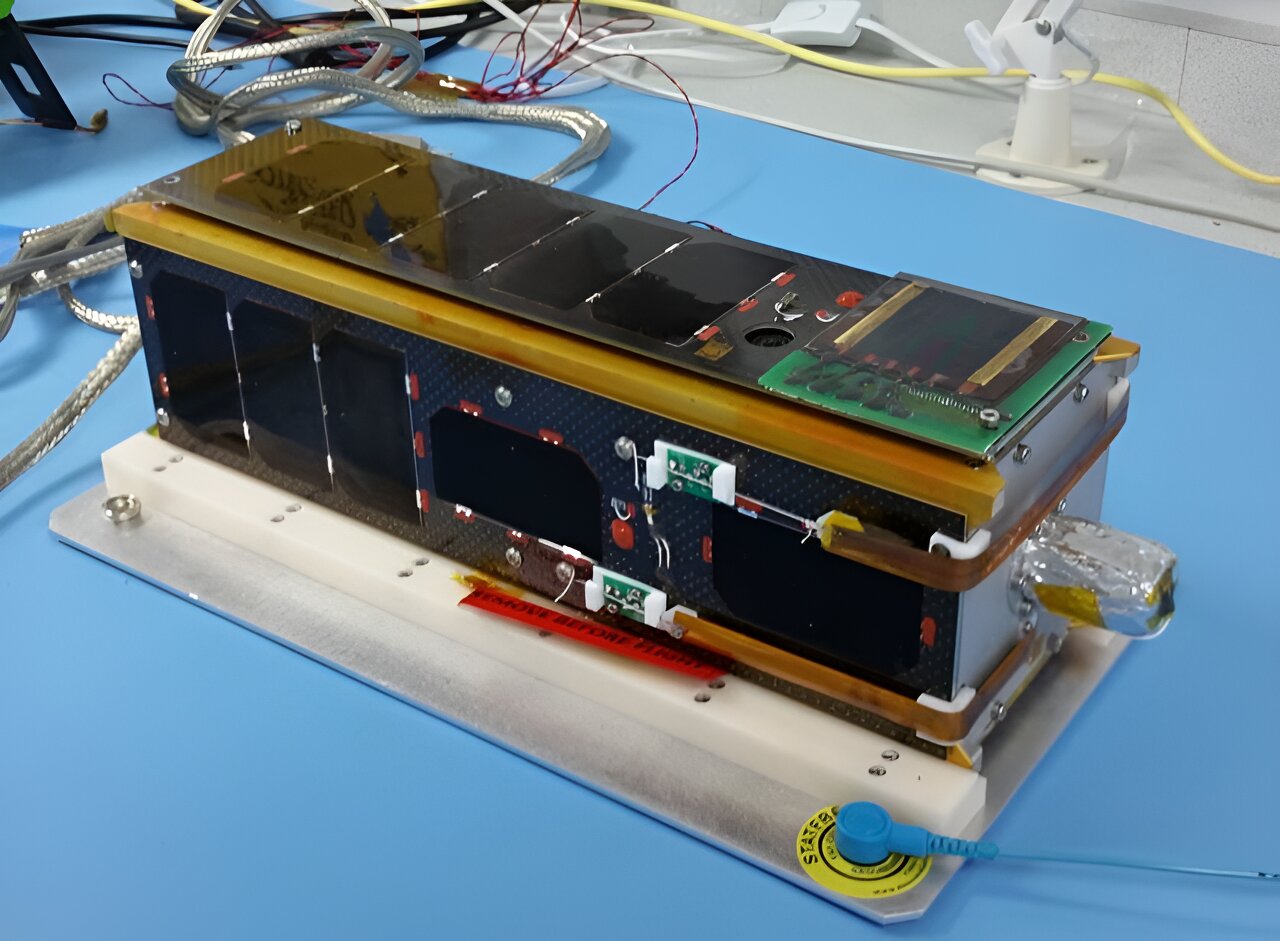
It’s viable to produce low-cost, lightweight solar panels that can generate energy in space, according to new research from the Universities of Surrey and Swansea.
The first study of its kind followed a satellite over six years, observing how the panels generated power and weathered solar radiation over 30,000 orbits.
The findings, published in the journal Acta Astronautica, could pave the way for commercially viable solar farms in space.
Professor Craig Underwood, Emeritus Professor of Spacecraft Engineering at the Surrey Space Center at the University of Surrey, said, “We are very pleased that a mission designed to last one year is still working after six. These detailed data show the panels have resisted radiation and their thin-film structure has not deteriorated in the harsh thermal and vacuum conditions of space.
“This ultra-low mass solar cell technology could lead to large, low-cost solar power stations deployed in space, bringing clean energy back to Earth—and now we have the first evidence that the technology works reliably in orbit.”
Researchers from the University of Swansea’s Center for Solar Energy Research developed new solar cells from cadmium telluride. The panels cover a larger area, are more lightweight, and provide far greater power than current technology—as well as being relatively cheap to manufacture.
Scientists from the University of Surrey designed instruments that measured their performance in orbit. The satellite itself was designed and built at the Surrey Space Center in partnership with a team of trainee engineers from the Algerian Space Agency (ASAL).
Although the cells’ power output became less efficient over time, researchers believe their findings prove that solar power satellites work and could be commercially viable.
Dr. Dan Lamb from the University of Swansea said, “The successful flight test of this novel thin film solar cell payload has leveraged funding opportunities to further develop this technology.”
“Large area solar arrays for space applications are a rapidly expanding market and demonstrations such as this help to build on the UK’s world class reputations for space technology.”
More information:
Craig Underwood et al, IAC-22-C3.3.8 Six years of spaceflight results from the AlSat-1N Thin-Film Solar Cell (TFSC) experiment, Acta Astronautica (2023). DOI: 10.1016/j.actaastro.2023.08.034
University of Surrey
Read the full article here


