


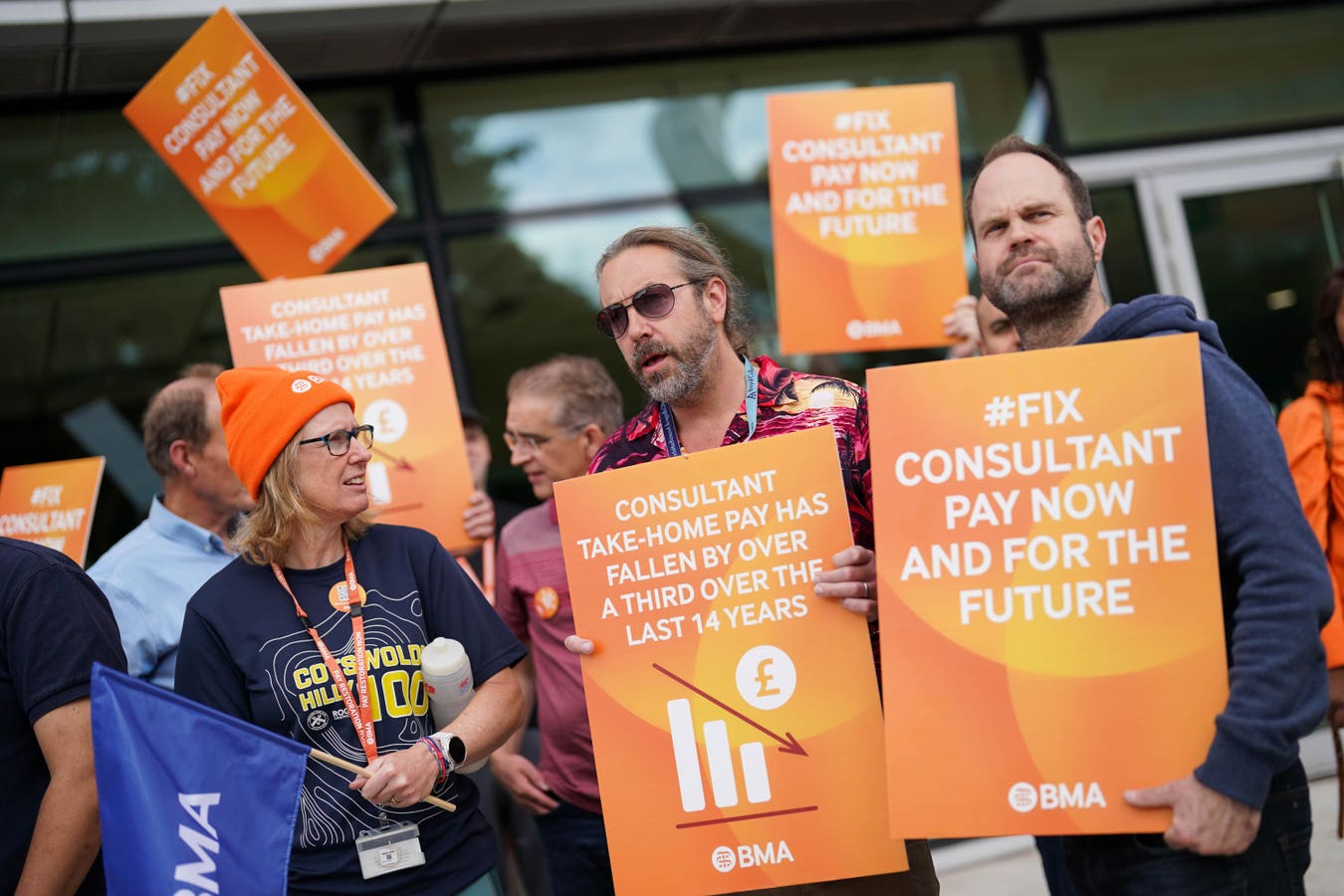
Senior doctors in England will halt months of strike action as labor unions finally sit down to negotiate with government ministers.
Although officials say increasing pay is not an option, industry leaders are “cautiously optimistic” this could signal an end to the “highly disruptive” walk-outs.
Public healthcare staff have been staging strikes for almost a year, with doctors, nurses, ambulance staff, physiotherapists and radiographers all walking out over pay that’s lagged behind soaring inflation.
The strikes continue to squeeze already-overstretched services, and have led to the cancellation of more than a million hospital appointments.
Although some disputes have come to an end, action from senior doctors began relatively recently. Known as “consultants” in the U.K., these doctors walked out for the first time in July.
Their multi-day strikes—some of which coincided with junior doctor walk-outs—have been particularly hard to manage as other staff aren’t qualified to perform much of their work.
Hundreds of thousands of hospital outpatients and elective appointments have had to be rescheduled during consultant strikes, leaving many patients waiting in pain for care.
Labor unions argue consultant pay has risen far below inflation, falling by a third over the last 14 years. They say better compensation is needed to recruit and retain doctors in the National Health Service—particularly given the challenged working conditions hospital staff are currently facing.
Demand for both emergency and non-urgent care has risen sharply as the pandemic has waned, putting hospitals under extreme pressure and pushing up waiting lists for care. Staffing shortages are a constant battle at many providers.
Ministers say a 6% pay rise given to consultants earlier this year, as well as reforms to a controversial pensions scheme, were “fair and reasonable,” as the BBC reports. But the British Medical Association, which is representing the doctors, wants a rise closer to 12%.
Although the government says salary hikes are off the table, leaders are likely to offer other forms of incentive when they sit down with BMA leaders.
Healthcare industry experts say there is reason to hope this could be the beginning of the end for consultant strikes—even if not for other groups of doctors.
Matthew Taylor, chief executive of healthcare employer body NHS Confederation said in a statement: “Given the huge disruption that industrial action has caused to patient care over the last ten months, health leaders will be cautiously optimistic about the government’s invitation to the BMA’s consultants committee to begin negotiations.”
He called the news a “positive step” that “could signal the end”, but cautioned against celebration.
“With the government and the junior doctors committee still at a standstill, and the results of the indicative ballot for [specialist doctors] imminent, the looming threat of further strikes facing the NHS remains.”
The negotiations could, however, act as a “springboard” for negotiations with other medical groups, he added.
BMA chair Vishal Sharma said in a statement that it was “good to see the government is willing to come to the table,” and asked ministers to “commit to serious negotiations with a view to bringing this avoidable dispute to a conclusion.”
A crucial part of talks, he added, should focus on reforming a “broken pay review process,” in which an independent body recommends by how much healthcare salaries should rise each year.
He implied the process was not “truly independent,” and said the union was “expecting to… explore other solutions” to determining public health sector pay.
Read the full article here



