


Metal halide perovskites, solution-processable materials with advantageous optoelectronic properties, have recently emerged as suitable candidates for developing photovoltaic technology. Recent studies demonstrated metal halide perovskite-based solar cells (PSCs) with power conversion efficiencies (PCEs) above 25.8%, which are within the range of some solar technologies on the market today.
While these results are promising, existing fabrication processes for creating metal halide perovskite solar cells are far from ideal. In particular, to reach PCEs above 25%, these solar cells so far had to be fabricated in an inert (i.e., chemically inactive) atmosphere, such as that within a nitrogen glovebox.
This inability to fabricate highly performing metal halide PSCs at ambient conditions greatly limits their large-scale production and deployment, as it adds requirements that would significantly increase their fabrication costs. In a paper published in Nature Energy, researchers at North China Electric Power University introduced a strategy to create metal halide PSCs with PCEs above 25% in ambient air.
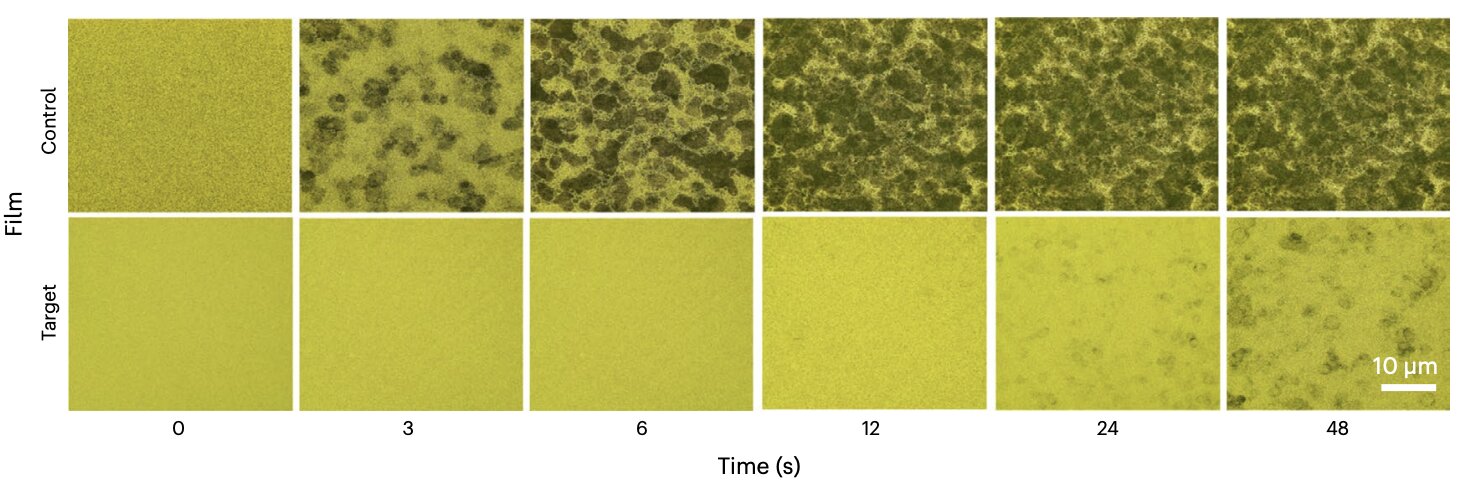
“The fabrication of perovskite solar cells (PSCs) in ambient air can accelerate their industrialization,” Luyao Yan, Hao Huang and their colleagues wrote in their paper. “However, moisture induces severe decomposition of the perovskite layer, limiting the device efficiency. We show that sites near vacancy defects absorb water molecules and trigger the hydration of the perovskite, eventually leading to the degradation of the material.”
To fabricate their solar cells in ambient air conditions, Yan, Huang and their colleagues blocked the pathway through which perovskite layers can become hydrated and consequently suffer severe damage. They did this using the acetate salt form of the chemical compound guanabenz, known as GBA.
“Guanabenz acetate salt eliminates both cation and anion vacancies, blocking the perovskite hydration and allowing the crystallization of a high-quality film in ambient air,” the researchers wrote in their paper. “With guanabenz acetate salt, we prepare PSCs in ambient air with a certified efficiency of 25.08%.”
In initial tests, the fabrication strategy proposed by this team of researchers appeared to yield remarkable results, enabling the successful creation of stable solar cells based on metal halide perovskites exhibiting commercially viable PCEs above 25%. Remarkably, these solar cells also appeared to retain their performance over time, even after operating in humid environments.
“The PSCs without encapsulation maintain around 96% of their initial efficiency after 2,000 hours of aging in ambient air and after 500 hours of operating at the maximum power point under simulated air mass (AM) 1.5 G solar light in a N2 atmosphere,” Yan, Huang and their colleagues wrote. “The encapsulated devices retained 85% of their initial efficiency after 300 hours under damp heat conditions (85°C and 85% relative humidity).”
The recent work by this team of researchers could contribute to the future commercialization of metal halide PSCs, by opening a new avenue for their low-cost fabrication. In the future, the new strategy they devised could also be adapted and perfected to further enhance the performance of resulting solar cells.
More information:
Luyao Yan et al, Fabrication of perovskite solar cells in ambient air by blocking perovskite hydration with guanabenz acetate salt, Nature Energy (2023). DOI: 10.1038/s41560-023-01358-w
© 2023 Science X Network
Read the full article here


