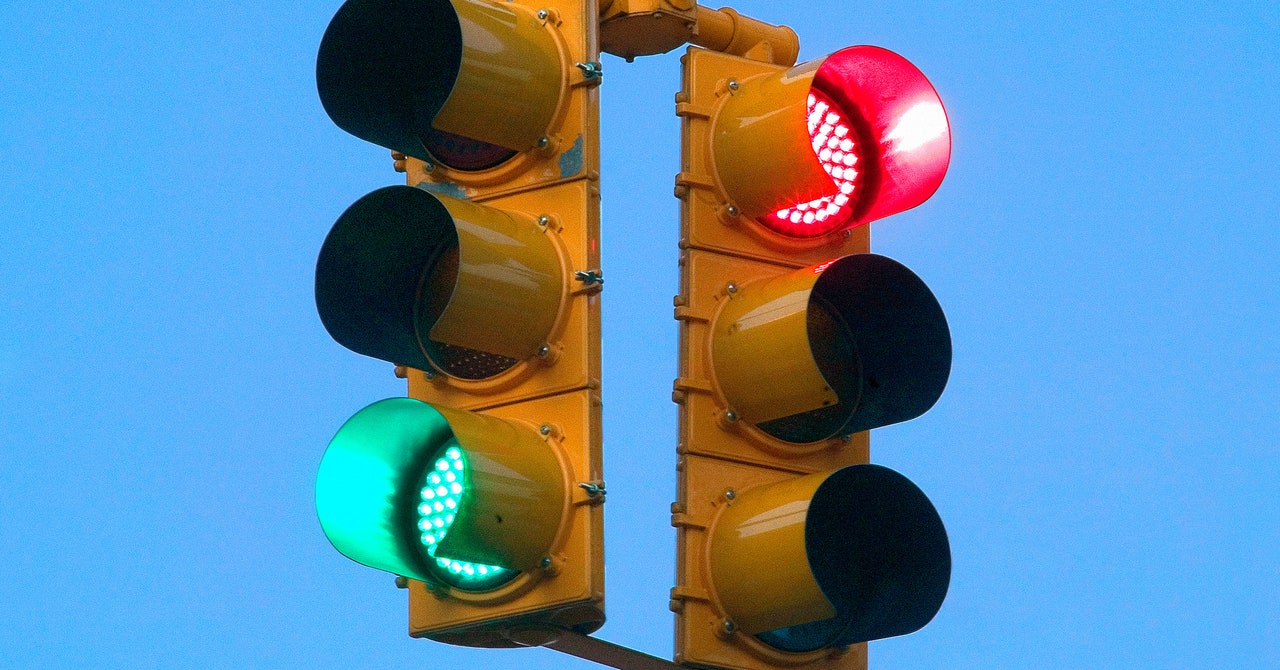
Each time a driver in Seattle meets a red light, they wait about 20 seconds on average before it turns green again, according to vehicle and smartphone data collected by analytics company Inrix. The delays cause annoyance and expel in Seattle alone an estimated 1,000 metric tons or more of carbon dioxide into the atmosphere each day. With a little help from new Google AI software, the toll on both the environment and drivers is beginning to drop significantly.
Seattle is among a dozen cities across four continents, including Jakarta, Rio de Janeiro, and Hamburg, optimizing some traffic signals based on insights from driving data from Google Maps, aiming to reduce emissions from idling vehicles. The project analyzes data from Maps users using AI algorithms and has initially led to timing tweaks at 70 intersections. By Google’s preliminary accounting of traffic before and after adjustments tested last year and this year, its AI-powered recommendations for timing out the busy lights cut as many as 30 percent of stops and 10 percent of emissions for 30 million cars a month.
Google announced those early results today along with other updates to projects that use its data and AI researchers to drive greater environmental sustainability. The company is expanding to India and Indonesia the fuel-efficient routing feature in Maps, which directs drivers onto roads with less traffic or uphill driving, and it is introducing flight-routing suggestions to air traffic controllers for Belgium, the Netherlands, Luxembourg, and northwest Germany to reduce climate-warming contrails.
Some of Google’s other climate nudges, including those showing estimated emissions alongside flight and recipe search results, have frustrated groups including airlines and cattle ranchers, who accuse the company of using unsound math that misrepresents their industries. So far, Google’s Project Green Light is drawing bright reviews, but new details released today about how it works and expansion of the system to more cities next year could yield greater scrutiny.
“It is a worthy goal with significant potential for real-world impact,” says Guni Sharon, an assistant professor at Texas A&M University also studying AI’s potential to optimize traffic signals. But in his view, more sweeping AI and sensor systems that make lights capable of adjusting in real time to traffic conditions could be more effective. Sharon says Google’s traffic light system appears to take a conservative approach in that it allows cities to work with their existing infrastructure, making it easier and less risky to adopt. Google says on its Project Green Light web page that it expects results to evolve, and it will provide more information about the project in a forthcoming paper.
Traffic officers in Kolkata have made tweaks suggested by Green Light at 13 intersections over the past year, leaving commuters pleased, according to a statement provided by Google from Rupesh Kumar, the Indian city’s joint commissioner of police. “Green Light has become an essential component,” says Kumar, who didn’t respond to a request for comment on Monday from WIRED.
Smarter traffic lights long have been many drivers’ dream. In reality, the cost of technology upgrades, coordination challenges within and between governments, and a limited supply of city traffic engineers have forced drivers to keep hitting the brakes despite a number of solutions available for purchase. Google’s effort is gaining momentum with cities because it’s free and relatively simple, and draws upon the company’s unrivaled cache of traffic data, collected when people use Maps, the world’s most popular navigation app.
Juliet Rothenberg, Google’s lead product manager for climate AI, credits the idea for Project Green Light to the wife of a company researcher who proposed it over dinner about two years ago. “As we evaluated dozens of ideas that we could work on, this kept rising to the top,” Rothenberg says. “There was a way to make it a no-brainer deployment for cities.”
Read the full article here