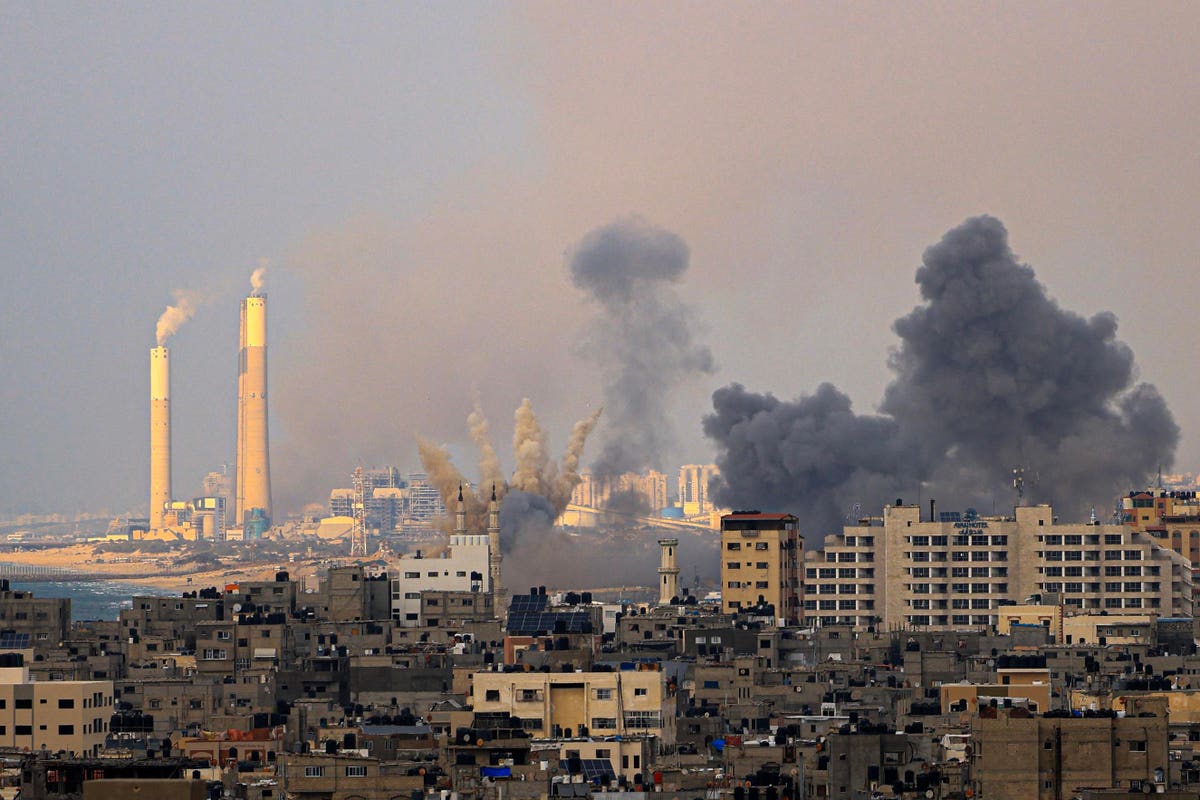
Hundreds or more have already been killed in the ongoing fighting in the Middle East as the Israel Defense Forces responded to a wave of attacks that were carried out by Hamas over the weekend. Israel’s Ministry of Defense ordered a complete siege of Gaza, cutting off electricity, food, fuel and water after the Israeli government formally declared war on the terrorist group on Sunday.
Truth Is The First Casualty Again!
Across social media, this latest war in the Middle East has been among the top trending topics, but once again the first casualty of war has been the truth. Though platforms such as X (formerly Twitter), Instagram and Facebook can allow those on the ground to share real-time reports from the fighting—and highlight that in modern war there are typically no winners—there has been no shortage of finger-pointing, and misinformation regarding the recent fighting as well as the political situation.
“These days, social media disinformation isn’t just an unfortunate byproduct of tragedy; it’s one of the principal tools of warfare. False or misleading audio/video footage is typically prepared in advance of actual combat, and deployed strategically by combatants and their allies using large networks of propagandist accounts that have targeted the gullible, angry, and politically persuadable,” explained Dr. Aram Sinnreich, chair of communications studies at American University.
Too many users on social media are likely to have already made up their minds with many causes and are thus quick to repost the commentary that fits their narrative, which only serves to fan the fire online.
“It’s sadly common that moments of crisis are very good fertilizer for misinformation and disinformation,” warned Dr. Cliff Lampe, professor of information and associate dean for academic affairs in the School of Information at the University of Michigan.
“Sometimes people share information in a heightened emotional state without verifying, and sometimes there are bad actors trying to advance their agenda by taking advantage of crisis,” Lampe added. “Heightened emotions engage a type of thinking in people that usually doesn’t engage with seeking evidence or critically evaluating information.”
It isn’t just the outrage from social media posts that is worrisome today. Commentary online can inflame the violence, and result in real harm.
“These types of crisis-driven bits of misinformation can be disastrous, both in terms of violence but also in terms of diverting or slowing aid or sometimes diverting emergency services. Misinformation is now one of the dangerous by-products of crisis,” Lampe continued.
Not The Time For Commentary?
Several U.S. politicians from both sides of the aisle have also taken to the social media platforms to express their opinions. Though many simply called for a peaceful resolution, it was clear that some U.S. lawmakers were taking sides.
Celebrities, influencers and other high-profile users also have been all too quick to share their thoughts on the political situation in the Middle East. Sinnreich suggested that while everyone has a right to their opinion, in a time of conflict, such commentary may not help the situation in the least.
“Frequently, public figures—even those entrusted with the ownership of social media services themselves—legitimize these propagandist profiles by boosting their posts or even vouching for them publicly,” he noted.
This also goes beyond the sharing of opinions. Lawmakers and celebrities should be especially careful about posting anything that hasn’t been verified by trusted news sources. And users should be cautious of any posts that seem to have an agenda.
“The best that ethical social media users can do is to remember that we ourselves are vulnerable to propaganda, and to think twice before resharing a post, photo, or video if we aren’t 100% certain of its provenance and authenticity,” Sinnreich added. “Also remember that, though far from perfect, legitimate journalism outlets vet their information before they share it with the public, and therefore even though they may be slower to report on breaking news, they are far more ethical and accurate than other information sources.”
Social media has the ability to deliver information to the world at record speed, but we need to ensure that we’re getting the facts—and not just propaganda.
Read the full article here