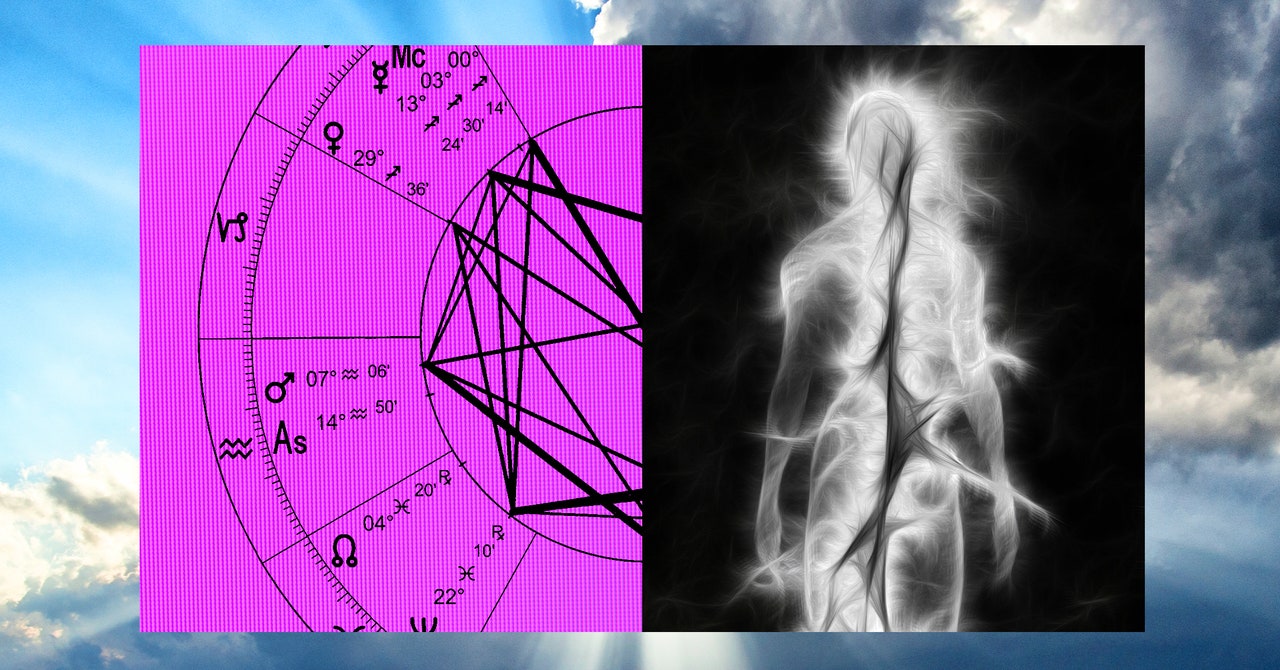
Ten years ago, I used my first post-college paycheck to meet an astrologer. Guided by a rickety stairway, I entered her Alphabet City apartment-turned-sanctum and was greeted by an eccentric Aquarius donning avant-garde garb (she had moved to New York in the 1980s and appeared to still be living in that era). A bathtub in the living room set the scene for a mystical encounter. However, the enchantment quickly dissipated as the reading commenced and I was handed a 33-page printout, which the astrologer read aloud.
I had grown up in a household where astrology was a fervent topic of discussion, and I knew most of my planetary placements by heart. I’d gone there hoping for something more transformative, something I couldn’t generate online.
Fast-forward a decade, and we’re in a spiritual revolution. Access to astrology and other spiritual practices has proliferated across witchy corners of the internet, with many tools fully embracing artificial intelligence as part of the supernatural process. When I tell my story to Banu Guler, CEO of the astrology app Co-Star, she reminds me that I was not accessing spirituality when I visited the astrologer’s apartment. “You might have a spiritual experience as a result of the reading, but they’re not giving you spirituality—that’s not what the exchange is,” she said. The exchange, in fact, is new information, a framework for evaluating emotions in the present moment. Reading about your placements is a different process from practicing spirituality.
The first digital era of astrology lasted from the 1970s to the 2000s, with the development of astrological chart-drawing software and the advent of personal websites like Susan Miller’s Astrology Zone and astrology companies like Astrodienst (astro.com). The decade that began in 2010 ushered in the arrival of astrology memes on Tumblr and Instagram, a cultural uptick in interests like crystals, and the proliferation of astrology startups. Today’s spiritual landscape was formed in the aftermath of the global pandemic and access to large language models, a confusing, transitional era in which new tools are upending every industry. In this period, AI has emerged as a powerful tool that can find new links between the ethereal and the tangible, directing our attention to relationships we might have overlooked and promising to connect us to a higher plane.
The reading I received 10 years ago was generated using Matrix Software, founded in 1977 by programmer and astrologer Michael Erlewine. While both Matrix Software and Co-Star, which was founded in 2017, provide users with customized chart analyses based on a delicate intersection of planets at the time, date, and location of their birth, Co-Star’s readings are more comprehensive and dynamically updated, with horoscopes, readings, and interactive question-and-answer services written in a poetic tone that resonates with a trendy, contemporary audience. The name Matrix Software echoes the detachment that existed between humans and computers in the previous digital age. In this age of AI, however, language has become an increasingly important way to feign connections with human users.
Early on, Co-Star achieved its literary style by having writers train “AI Pets,” large language models developed in-house and trained on their own text messages, always combining a personal voice with the automated delivery. The success of these apps draws on the “Eliza effect,” whereby people humanize computed behavior and form an emotional connection. The effect is named after the first chatbot, Eliza, which was created in 1966 to respond like a therapist to human inputs. Though it’s easy to see why this example is resurfacing today as a cautionary tale, talking to yourself through the lens of an external “guru” can help you pinpoint your own belief system.
Read the full article here