When it comes to artificial intelligence, United States senators are looking to the titans of Silicon Valley to fix a Senate problem—a problem today’s political class perpetuates daily with their increasingly hyper-partisan ways, which generative AI now feeds off of as it helps rewrite our collective future.
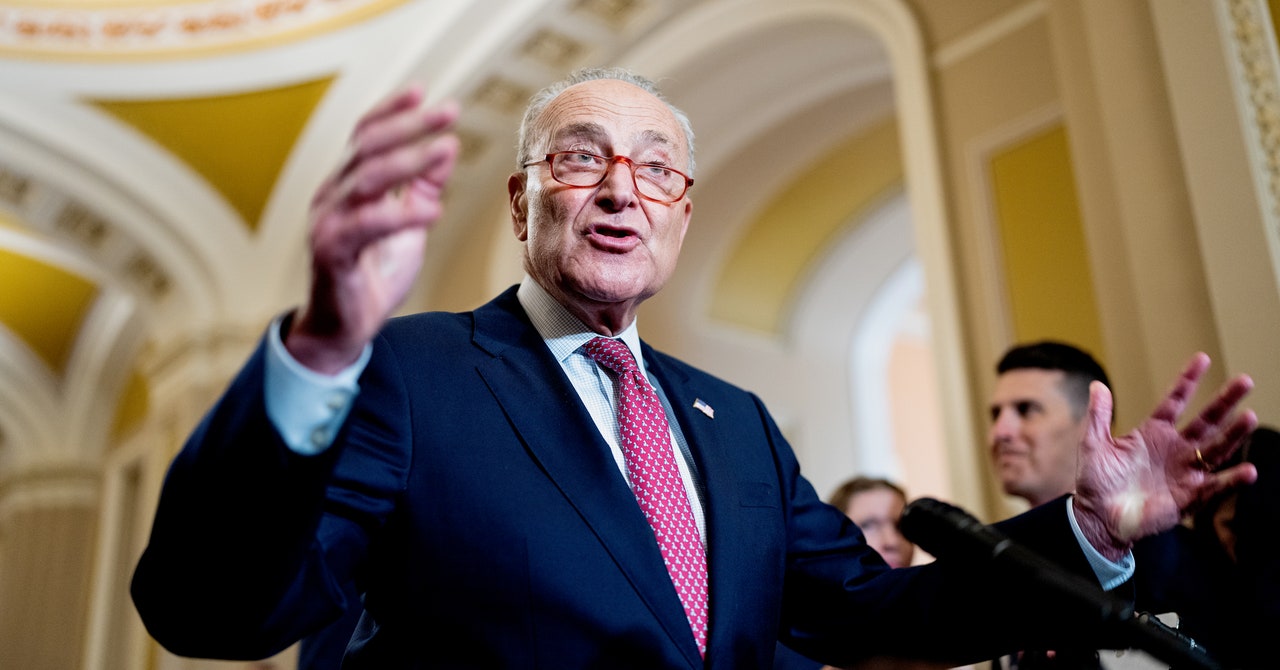
Today, the Senate is hosting a first-of-its-kind, closed-door AI forum led by the likes of Elon Musk, Mark Zuckerberg, Bill Gates, and more than 17 others, including ethicists and academics. Even though they’ll be on the senators’ turf, for roughly six hours, they’ll get microphones while the nation’s elected leaders get muzzled.
“All Senators are encouraged to attend to listen to this important discussion, but please note the format will not afford Senators the opportunity to provide remarks or to ask questions to the speakers,” a notice from majority leader Chuck Schumer reads.
There’s a problem, though: Schumer’s facilitating the wrong conversation. As generative AI is poised to flood the internet with more—and more convincing—disinformation and misinformation, many AI experts say the top goal of the Senate should be restoring faith in, well, the Senate itself.
“The government is, in my opinion, based on a belief in process over a result—that if the process is equitable, we’ll live with the results, whether you agree with it or not,” says Dan Mintz, chair of the Department of Information Technology at the University of Maryland Global Campus. “But people now don’t believe in the process, and they don’t believe in the result.”
Facts are increasingly a quaint notion fading in our collective rearview. In the past few elections, the truth we want—whether myth, reality, or a hodgepodge of the two—has been a couple of clicks away in the recesses of the web. But generative AI is only helping politicians easily create believable fictions that appeal to our most base biases before the same technology is deployed to bring the dark uses of tech into the light of our social media feeds.
But many politicians haven’t gotten the post-fact memo, which is why most lawmakers are praising Google’s recent announcement that it will require disclosure of “synthetic,” AI-generated content in political ads.
“It’s a real concern. We have to have a way for folks to easily verify that what they’re seeing is reality,” says Michigan senator Gary Peters, head of the Democratic Senatorial Campaign Committee.
But can new technology do what today’s political leaders have failed to do and restore faith in the American political system? Doubtful. Americans—with unseen assistance from the algorithms that now run our digital lives—increasingly live in different political universes. Some 69 percent of Republicans now believe US president Joe Biden lost in 2020, while upwards of 90 percent of the GOP thinks news outlets intentionally publish lies. On the other side, 85 percent of Democrats think former president Donald Trump is guilty of interfering with the 2020 election.
“We now truly believe that facts are malleable, and so the ability to move people is becoming more difficult. So I think the big problem of deepfakes is not that it’s going to have this direct impact on the election, it is that it’s going to have an even greater contribution to decreasing the faith of people in institutions,” Mintz says.
Read the full article here