


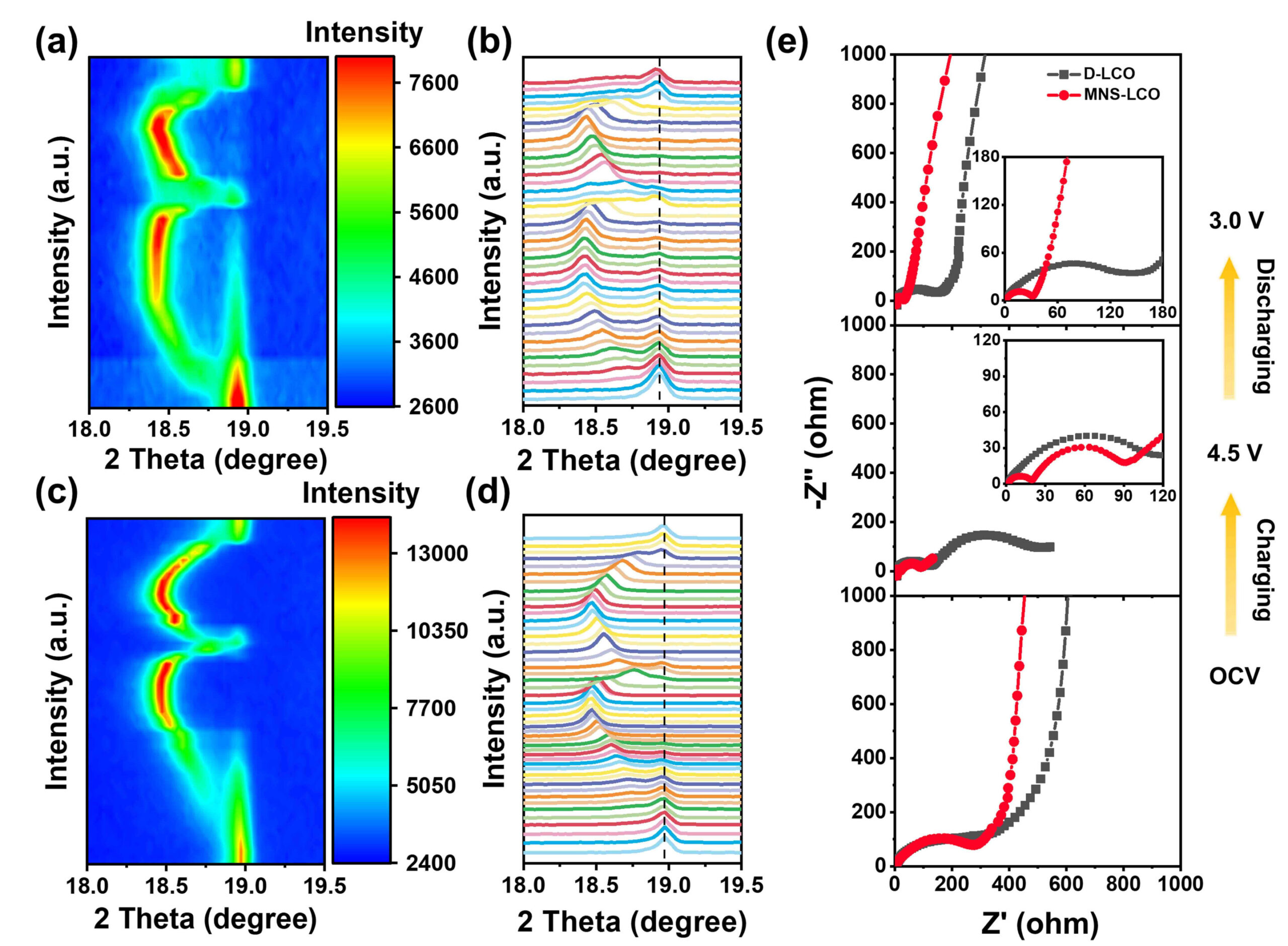
In a study published in Advanced Energy Materials, a research team led by Prof. Zhang Yunxia from the Hefei Institutes of Physical Science of the Chinese Academy of Sciences developed a solid-phase sintering strategy to enable direct conversion of the degraded LiCoO2 (D-LCO) into the high energy density cathode materials.
With the impending influx of end-of-life lithium-ion batteries, it is critical to investigate effective regeneration and upcycling strategies in order to alleviate resource scarcity, reduce environmental pollution and meet the demand for high energy density cathode materials.
In this study, a simple, non-constructive, one-stone-for-three-birds solid-phase sintering strategy was proposed to regenerate the degraded D-LCO cathode and even improve its stability at high voltages.
“It’s like killing three birds with one stone,” said Prof. Zhang, referring to the simultaneous integration of lithium supplementation, Li2SO4 coating, and Mn doping in Co sites, together with N and S doping in Li-O plates, using a one-pot solid-phase sintering approach.
The upcycled cathode not only exhibited a high specific discharge capacity of 188.2 mAh/g at 0.2 C, but also delivered superior cycling performance with 92.5% of capacity retention after 100 cycles at 0.5 C and excellent rate capability at a high cut-off voltage of 4.5 V, superior to the freshly commercialized counterpart.
Apparently, different used LCO cathode materials from different manufacturers or with different Li/Co molar ratios could be effectively upgraded into high performance lithium-ion batteries, highlighting the universality and feasibility of the developed solid-phase sintering method.
“Our study provides meaningful guidance for the up-cycling of D-LCO into high energy density batteries with long-term cycling stability,” said Prof. Zhang, “it can also be extended to upgrade other degraded cathode materials into high performance lithium-ion batteries.”
More information:
Zhenzhen Liu et al, Upcycling of Degraded LiCoO2 Cathodes into High‐Performance Lithium‐Ion Batteries via a Three‐In‐One Strategy, Advanced Energy Materials (2023). DOI: 10.1002/aenm.202302058
Chinese Academy of Sciences
Read the full article here


