

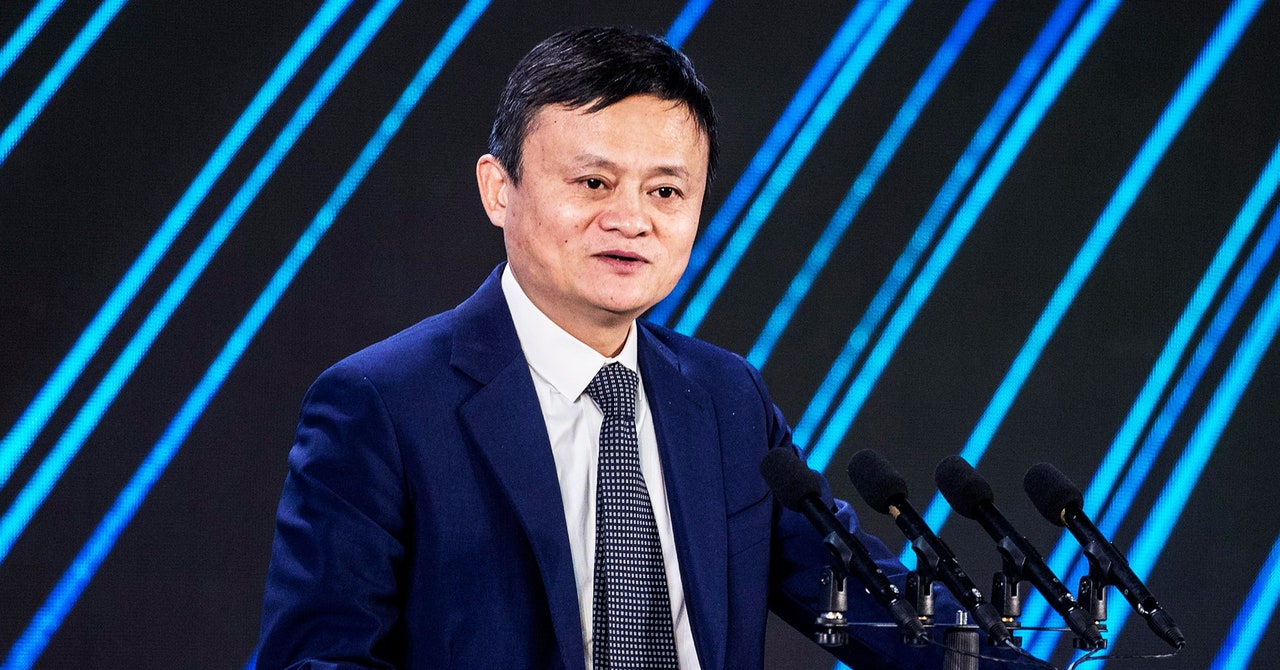
Just under three years ago, Alibaba founder Jack Ma quoted China’s leader, Xi Jinping, in a speech to a finance conference in Shanghai. “Success isn’t up to me,” Ma said, a phrase Xi initially used to get officials to move away from short-term thinking and do more for the country’s long-term interests. Ma threw this quote back on regulators and state-owned banks who, he insinuated, were holding up the financial technology sector with their “pawnshop mentality.”
Ma is an icon in China’s tech industry, one of its most successful and recognizable figures at home and abroad. He was speaking weeks before Alibaba subsidiary Ant Group, owner of the world’s largest digital payments platform, Alipay, was due to go public in Shanghai and Hong Kong. It would have been the biggest initial public offering anywhere in the world. On November 2, 2020, a week after his speech, Ma was summoned for questioning by the same regulators he’d challenged from the stage. Days later, Ant Group’s $34 billion stock market listing was suspended. For nearly three months, Ma disappeared from public view.
Online, the rumor mill began to churn. There were debates about whether his comments were out of line. Had he been placed under house arrest? Had an exit ban been imposed on him? Or had he already left the country to avoid arrest? When Ma did reappear, it was to go into what many saw as a self-imposed exile. He stopped appearing at conferences and giving talks. He was photographed overseas doing normal billionaire things. There was Jack in a golf cart. There he was sailing a yacht. There he was looking at fish farms. Him again, eating lobster with friends. Reporters tracked him to Tokyo’s private clubs, then to Thailand, where he was spotted holding his fists up with a Muay Thai boxing legend.
Ma’s ill-fated speech and withdrawal from public view marked pivotal moments for China’s tech sector. Admiration of Ma went well beyond the normal worship of tycoons. His success was not underpinned by family connections, nor did he have the fancy overseas schooling that’s often required to raise capital from investors. His brand was that he was 100 percent “made in China,” and self-made at that. His rise showed what an average person could do. The public nicknamed him “Ma Baba” or “Daddy Ma,” and the idea was that everyone could bask in Ma’s wealth. His fall from grace sent a message from regulators that they could, and would, limit his power.
Then, on March 27 of this year, Ma flew back to China. On the social media platform Weibo, “Jack Ma has come back” was a top trending topic as users speculated about why he’d returned and why it mattered. Was this, some asked, a sign that the government’s attitude toward the tech sector had shifted? “Did he choose to come back or was he invited back?” one user asked. “Is this just a retired old man coming back?” another asked. “Is it worth this reaction?”
Ma isn’t just a tech icon; he’s a foundational figure for Chinese private enterprise this century. In the early days of Alibaba, which he founded in a small apartment in Hangzhou, potential customers had to be persuaded that the internet wasn’t a scam. According to Alibaba lore, the sales team, nicknamed Iron Soldiers, went door-to-door with leather backpacks sometimes used to fend off guard dogs and convinced businesses to sign up.
Read the full article here