


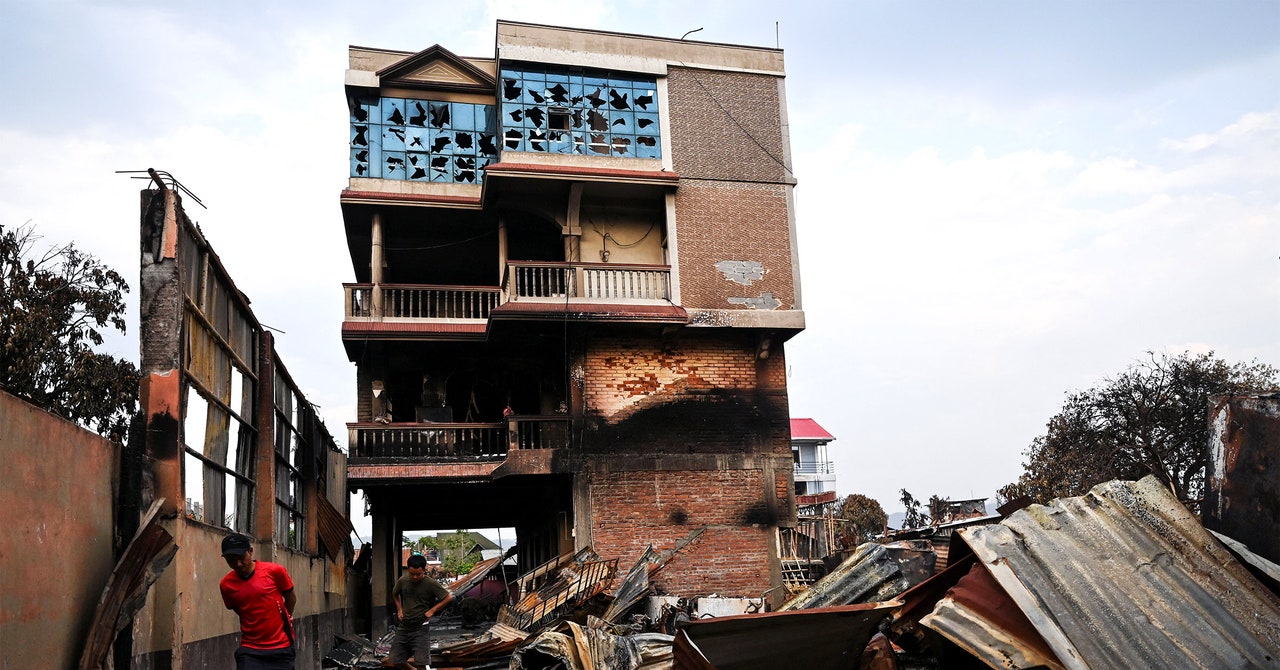
Joshua Hangshing’s 7-year-old son died less than an hour after being shot in the head. But it wasn’t the bullet that killed him.
On June 4, Hangshing set off from a relief camp in the Kangpokpi district of the northeastern Indian state of Manipur. He and his family had moved there for safety after fighting broke out the month before between the state’s majority Meitei community and the minority Kuki-Zo. Clashes had erupted that day just a mile away from the camp, so Hangshing ventured out to fetch water in case they needed to take shelter for a prolonged period.
As he returned to the camp, he saw Tonsing, his youngest child, waving gleefully at him from a first-floor window. Then Tonsing fell, shot in the head. “It couldn’t have been a stray bullet,” Hangshing says. “I suspect it was a sniper.”
Tonsing was still breathing when Hanshing reached him, but he had lost a lot of blood. When an ambulance arrived, Hanshing stayed behind while his wife went with their son to the nearest hospital, 10 miles away in the capital city of Imphal. They were halfway there when they were ambushed by militants, who set fire to the ambulance. Tonsing and his mother, Meena, were burnt alive.
The brutal murder of two innocent people is the kind of horror that should have made the news across India, even across the world. But Hanshing’s story is only coming out now, months on, because of an internet blackout covering the whole of Manipur. At least 180 people have died, and more than 60,000 people have been made homeless. Villages have been set alight and neighbors have lynched neighbors as the authorities fail to control the escalating violence. For three months, hidden from the eyes of the world, Manipur has burned in the dark.
Read the full article here





